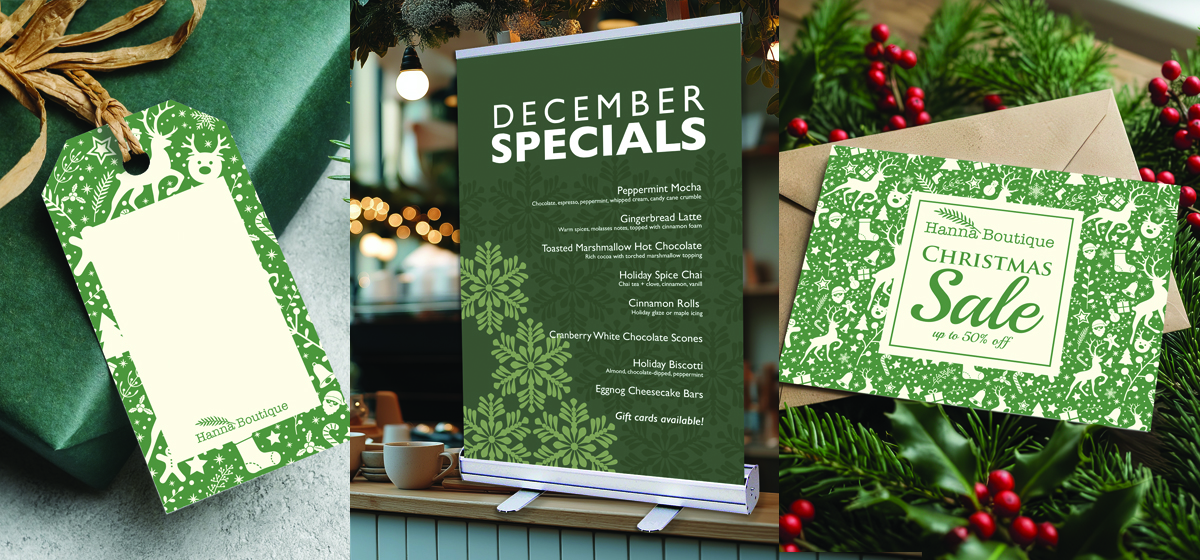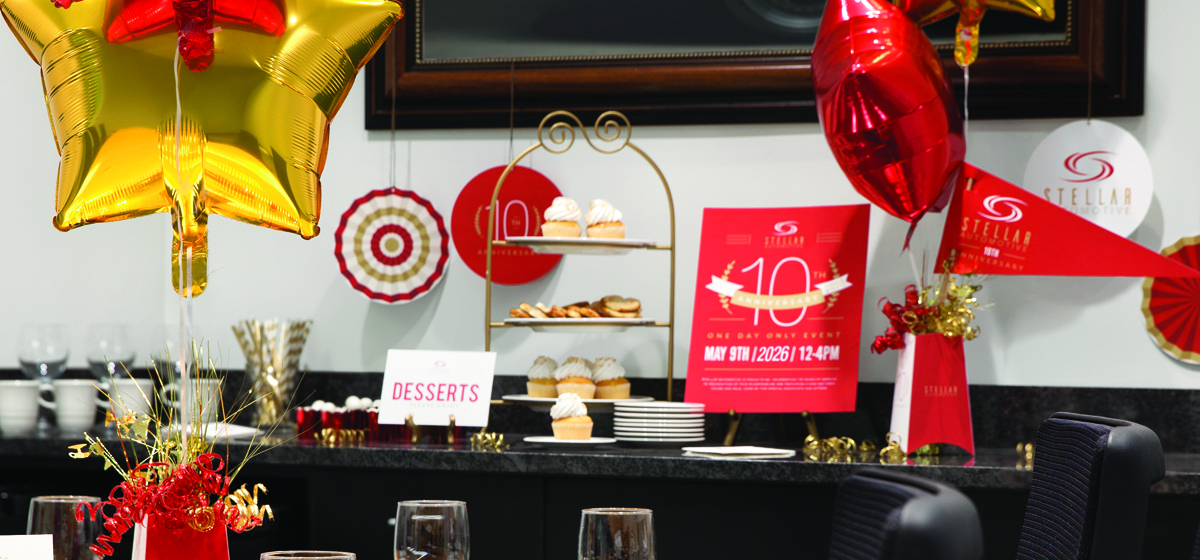
Start With the Occasion: How Personalized Gifts Create More Sales Opportunities

A customer probably isn’t going to call and say, “I need a sublimated metal ornament, personalized coasters, and a custom embosser.”

They’re more likely to say:

“We’re celebrating our 10th anniversary.”

“We’re planning our employee holiday gifts.”

“We have a customer appreciation event coming up.”

“We want the event to feel more special.”

“We need something people will actually remember.”

Those are sales signals.

The opportunity starts by listening for what’s happening in your customer’s world – then helping them find the products that make the occasion more personal, memorable, or complete.

That’s the thinking behind Navitor’s new Gifts & Occasions assortment. With Party Essentials, Personalized Gifts, and Designer Stamps & Embossers, you have more ways to turn everyday customer conversations into new product opportunities – and potentially into broader, more valuable relationships.
Why personalization deserves a closer look

Personalization can turn an ordinary product into something that feels specifically chosen for the recipient.

That matters. According to Custom Ink’s Employee Holiday Gift Survey, 82% of employees say they value a gift more when it’s personalized.

For your customers, that can mean more thoughtful employee recognition, memorable client gifts, more cohesive events, distinctive hospitality experiences, or keepsakes people actually want to hold onto.

For you, it creates another reason to ask about the occasion behind the order rather than waiting for a customer to request a specific product.
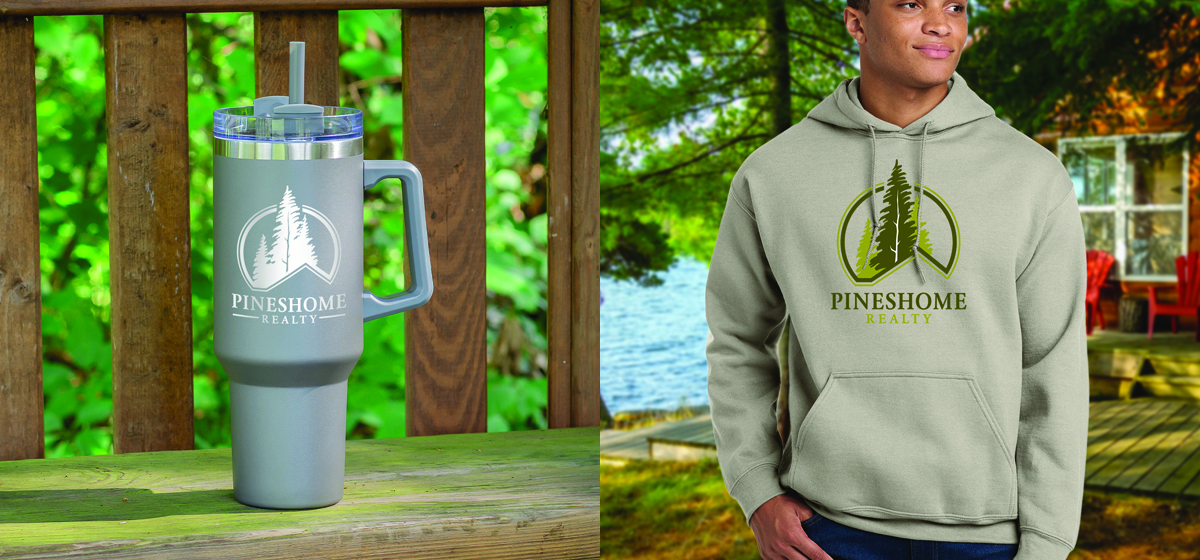
Listen for the occasion, not just the print request

Gifts & Occasions can reach far beyond traditional gift buyers.

Think about a company thanking its employees. A nonprofit recognizing donors. A brewery planning an anniversary. A hotel creating a welcome experience. A school hosting an event. A business decorating a new office. A couple planning a wedding. A real estate agent looking for memorable closing gifts.

The industries are different, but the conversation often starts the same way:

Something is happening.

Your job is to uncover what the customer wants people to experience, remember, or take away from it.

Start with better discovery questions

Instead of asking, “Do you need any personalized gifts?” try questions that uncover the bigger opportunity.

  • What are you celebrating, recognizing, or promoting?
  • Who is it for – customers, employees, donors, guests, or attendees?
  • What do you want them to feel or remember?
  • Will they use the product during the event, take it home, or both?
  • Could a photo, name, message, artwork, or brand element make it more meaningful?
  • What other touchpoints happen before, during, and after the occasion?

And one especially valuable question:

Is this a one-time event, or something you do every year?

That answer can turn a single order into an annual recognition program, recurring fundraiser, customer appreciation event, employee milestone program, or other repeat opportunity.
Match the product to the moment

Match the product to the moment

Once you understand the occasion, choosing products becomes easier.

Party Essentials: Bring the details together

When a customer wants an event to feel thoughtful and coordinated, small details can make a difference.

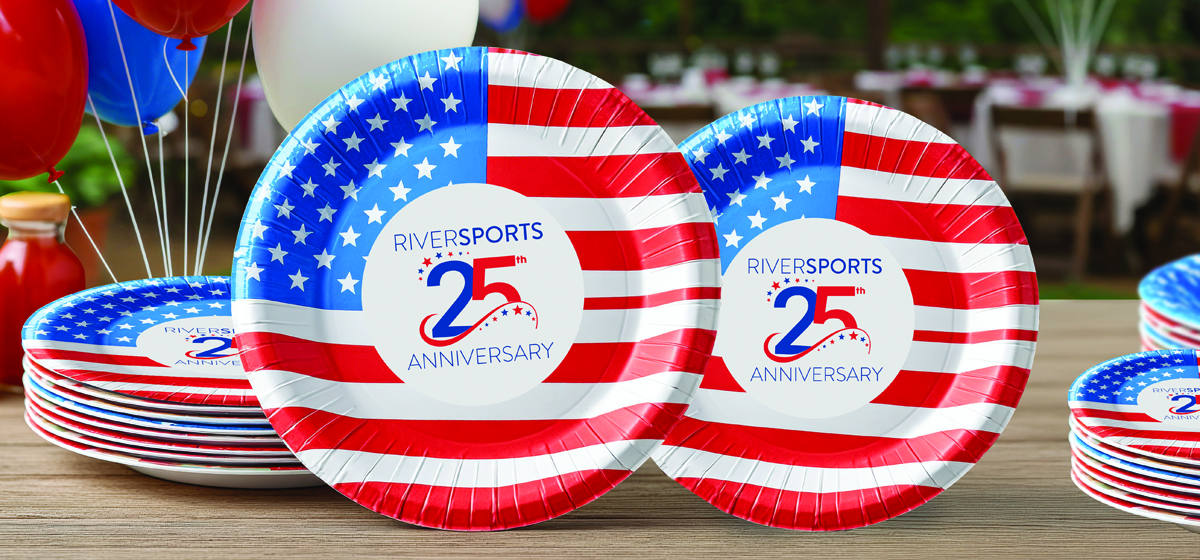
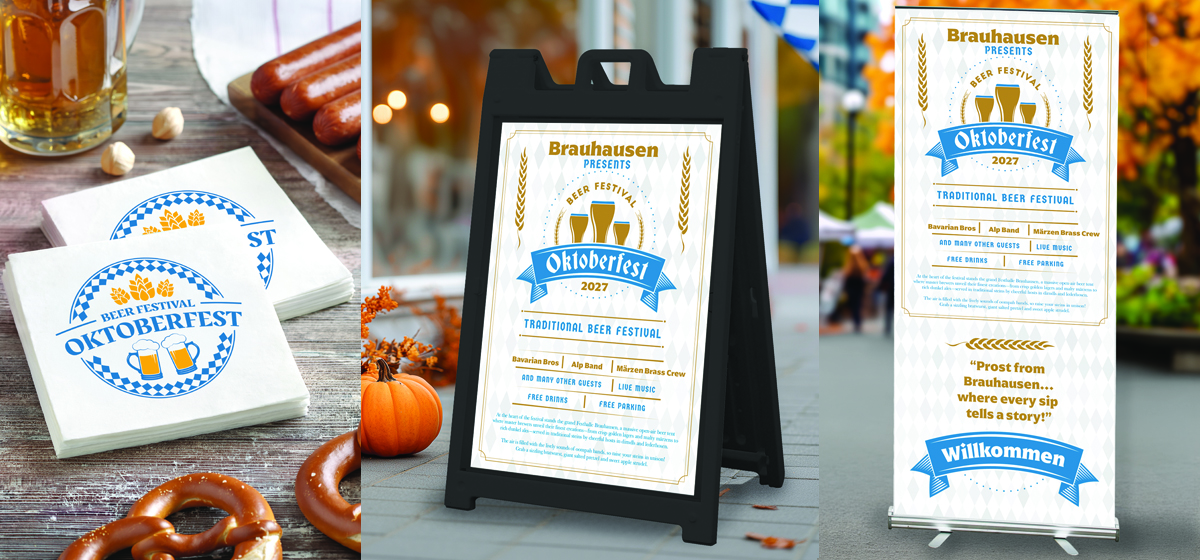
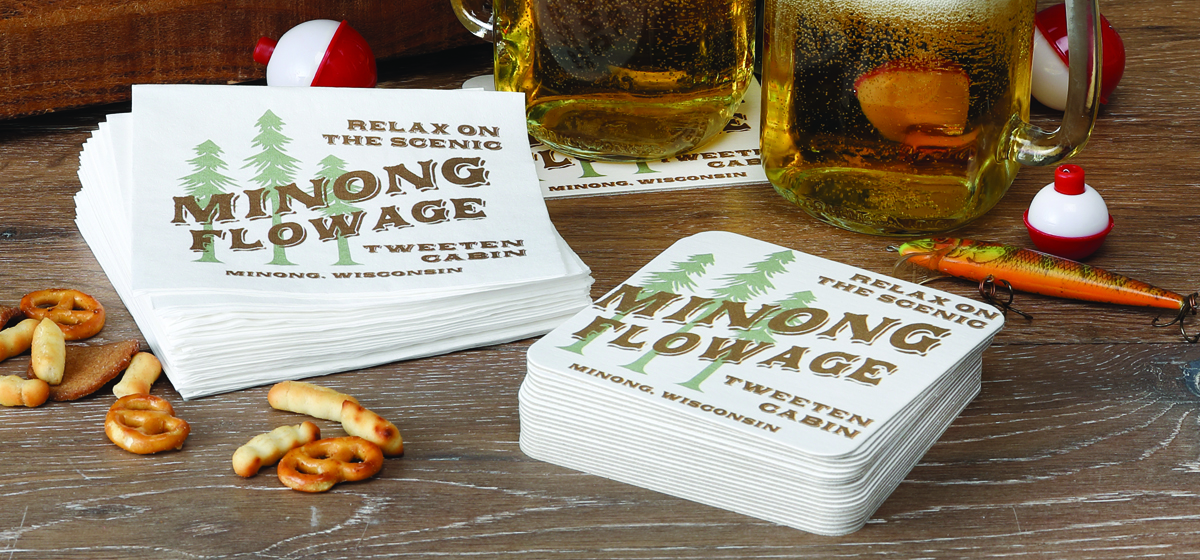
Full Color Napkins add personalized artwork, messages or branding to beverage and luncheon napkins for weddings, showers, celebrations, corporate events, and more.

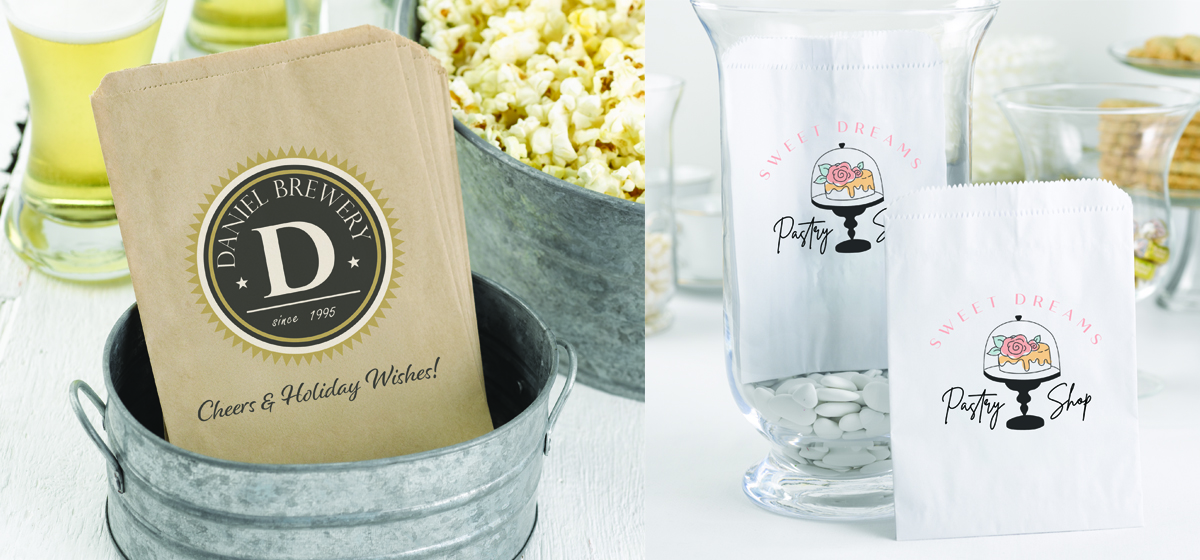
Custom Favor Bags give customers a way to package treats, giveaways, keepsakes, and small gifts while carrying the event theme through one more touchpoint.

These products can open conversations with event planners, venues, hospitality businesses, schools, nonprofits, corporate event teams, and anyone planning a celebration.

Personalized Gifts: Give them something worth keeping

A good gift doesn’t have to be complicated. It does need to feel relevant to the person or occasion.

Full Color Wall Art turns photos, artwork, and custom designs into acrylic or metal displays for gifts, office décor, recognition, commemorative pieces, and branded environments. With quantities as low as one, each piece can be personalized for a specific recipient, milestone, or occasion.

Full Color Sublimated Metal Ornaments can transform photos, names, artwork, and custom designs into holiday gifts and keepsakes that come back out year after year. Available in quantities as low as one, they can be personalized for an individual recipient.

Full Color Chipboard Coasters provide an affordable full-color canvas for photos, artwork, logos, and messaging for events, hospitality, promotions, souvenirs, and gifting.

And don’t limit these conversations to consumers. Personalized products can support employee recognition, client appreciation, donor programs, company anniversaries, hospitality marketing, events, and branded environments too.

Designer Stamps & Embossers: Make everyday communication more personal

Sometimes the opportunity isn’t an event at all.

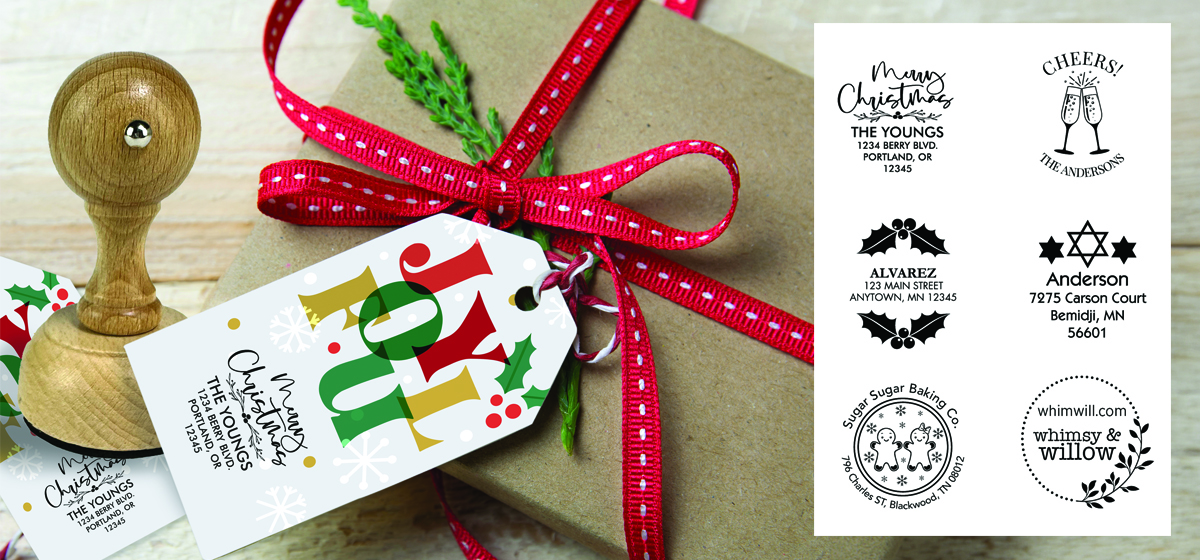
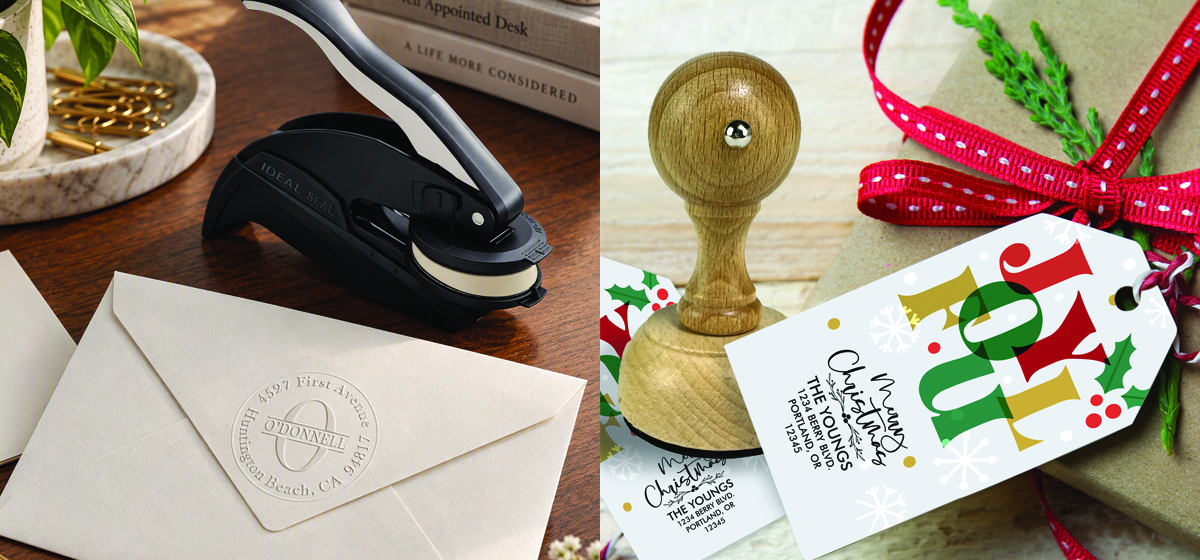
Designer Self-Inking Stamps make frequent impressions convenient while giving customers options for return addresses, monograms, names, and personalized designs.

Premium Wood Stamps provide a classic option for stationery, correspondence, packaging, crafting, and gifting.

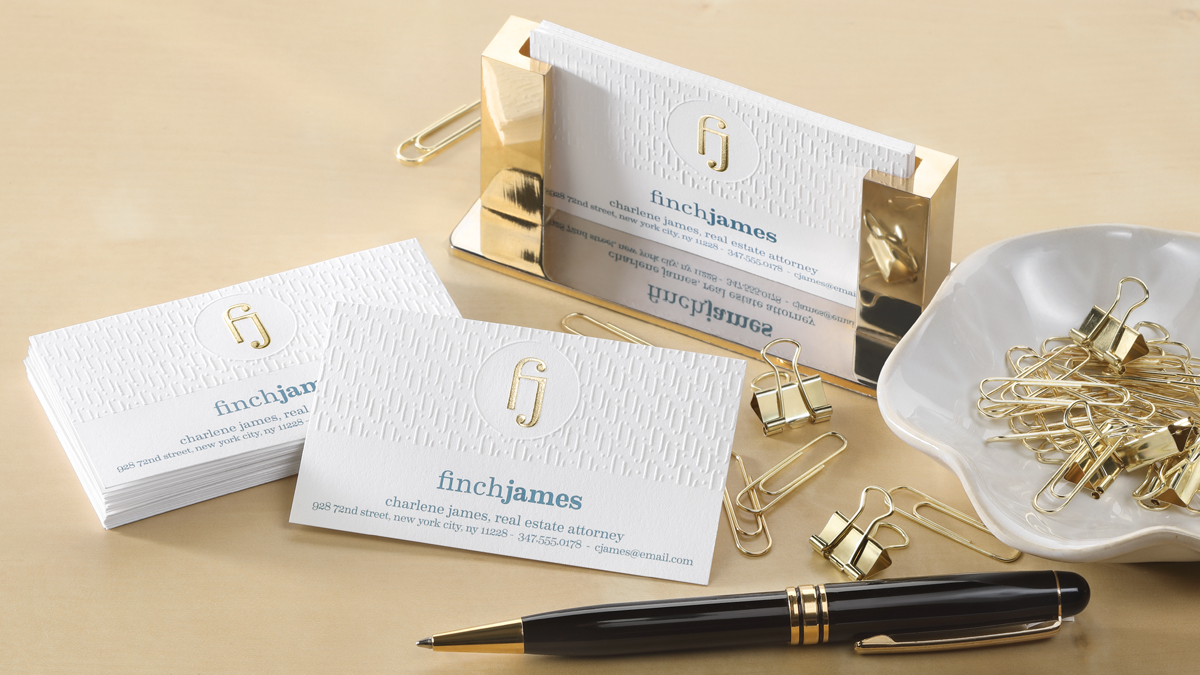
Designer Embossers create a distinctive raised impression on stationery, envelopes, invitations, certificates, and other paper goods.

Think beyond traditional office use. These products can appeal to small businesses, real estate professionals, wedding customers, makers, boutiques, professional offices, and anyone who wants to add a more personal finishing touch.
Don’t stop at the first product

This is where the conversation can get more valuable.

Suppose a customer asks about personalized napkins for an employee anniversary dinner.

You learn that they’re recognizing longtime employees. There will be a dinner. Employees will receive gifts. Historic company photos will be displayed. Guests will take home a small thank-you item.

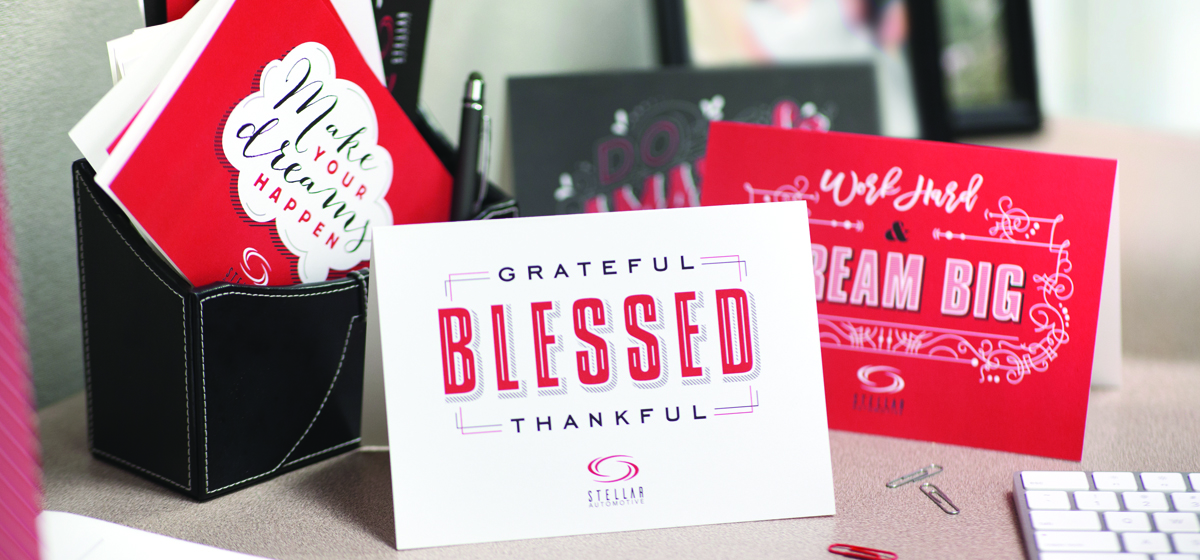
What started as a napkin request might lead to coasters, wall art, personalized keepsakes, or favor bags.

Then look outside the Gifts & Occasions category.

Could they also need invitations? Event signage? Name badges? Programs? Thank-you cards? Packaging?

The goal isn’t to push more products into every order. It’s to understand the whole occasion before recommending the solution.
A simple way to guide the conversation

Think: Occasion → Audience → Experience → Product → Next Need

Occasion: What’s happening?

Audience: Who is it for?

Experience: What should they notice, feel, or remember?

Product: What tangible piece helps create that experience?

Next Need: What else happens before, during, or after it?

That last question is where one project can become a larger solution – and where being able to source across categories can make you more valuable to your customer.

Trusted Resource Tip

Don’t wait for customers to ask for “personalized gifts.”

Ask what they’re celebrating, recognizing, hosting, thanking, or decorating for.

The occasion will often reveal the product opportunity.
The next print opportunity might not sound like one

“We have an anniversary coming up.”

“We want to thank our customers.”

“We’re planning an event.”

“We need a better employee gift.”

“We want this to feel more personal.”

Listen for those phrases.

Then ask another question.

With Party Essentials, Personalized Gifts, Designer Stamps & Embossers – plus the broader Navitor product lineup – you have more ways to help customers turn an idea or occasion into something tangible.

And when you help solve more of the project, you give customers more reasons to call you the next time something is happening.

Ready to start more conversations?

Download the Gifts & Occasions Flyer and share personalized product ideas with customers and prospects.



The Next Order Is Already on the Calendar

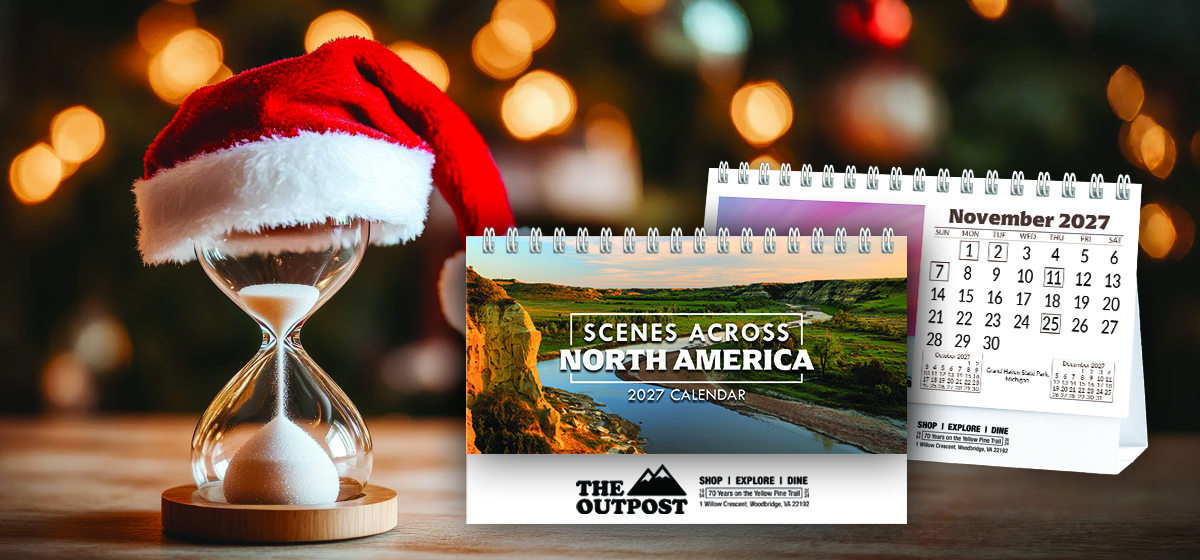
custom printed calendars with company logo

How Dated Products can help you anticipate customer needs, uncover new sales opportunities, and turn occasional orders into repeat business.

Some products have a limited useful life. But the customer relationships they create can last for years.

Think about it. A calendar serves its purpose for 12 months. A calendar card eventually becomes outdated. Yet every new year creates another reason for your customer to order – and another opportunity for you to strengthen the relationship.

That’s the beauty of Dated Products. From calendars and calendar cards to daters and planners, this often-overlooked category can help you recognize predictable purchasing cycles, generate repeat print orders, and establish a more consistent flow of business.

And the bigger opportunity? Learning to recognize those same buying signals across other print categories.

Why Dated Products Deserve a Place in Your Sales Strategy

Repeat business is valuable. Predictable repeat business is even better.

When you know what a customer needs and approximately when they’ll need it, you can reach out with a relevant recommendation instead of waiting for an order to arrive.

For you, that can mean:

  • More predictable sales opportunities. Annual purchasing cycles give you a natural reason to reconnect.
  • An easier path to reorders. Existing artwork, established specifications, and previous order quantities can simplify the next purchase.
  • Greater account potential. A conversation about calendars or daters can uncover needs for greeting cards, envelopes, forms, labels, and other print essentials.
  • Stronger customer retention. Anticipating needs and making reordering easier gives customers another reason to keep working with you.
  • Opportunities to recapture business. Your customers may already purchase these products – just not from you.

And while annual replenishment is a natural opportunity, not every dated product follows the same buying cycle.

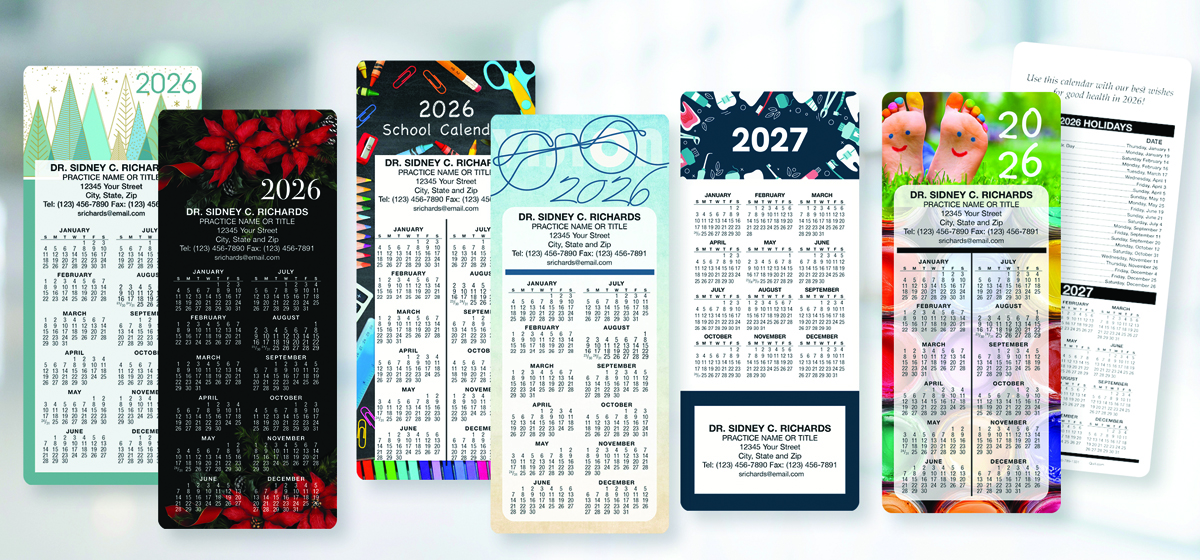
custom printed calendar cards with company name and contact information

Two Products, Two Different Paths to Sales

1. Products that create an annual purchasing opportunity

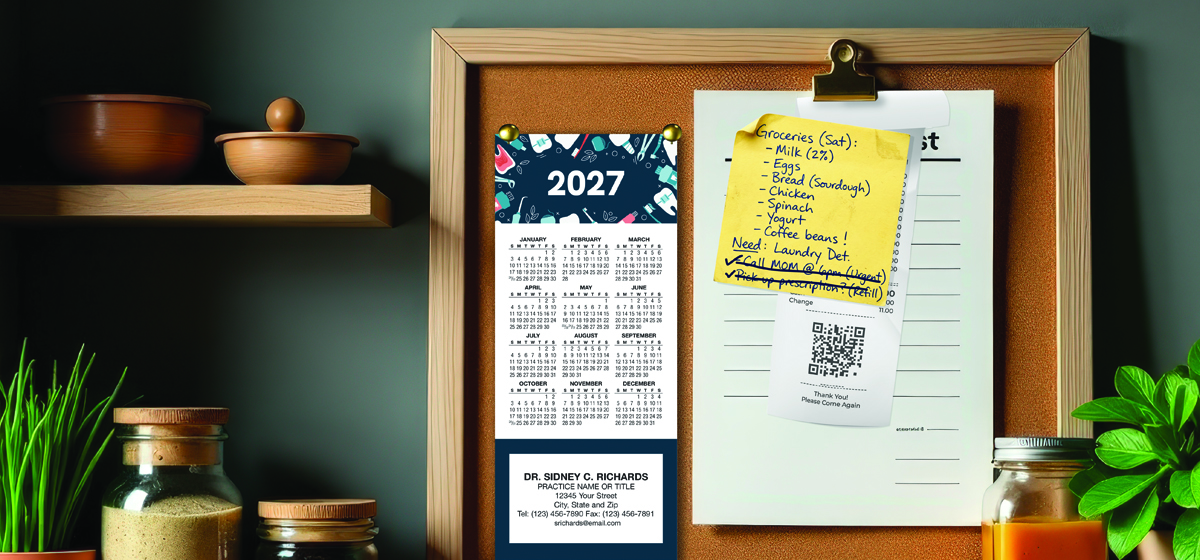
Wall and Desk Calendars, Calendar Cards, and Dated Planners offer practical value while keeping a business’s name and contact information visible throughout the year.

For businesses looking to stay connected with customers, these products can serve as useful reminders long after a holiday greeting or promotional campaign has ended. Calendar cards with magnetic backing, for example, can help keep contact information conveniently displayed.

Don’t overlook another annual reorder opportunity hiding in plain sight: the back of a business card. When customers choose Navitor’s stock calendar backer artwork for their business cards, they’re creating a practical reference that also gives you a natural reason to reconnect and suggest an updated order before the new year.

The sales opportunity: Help customers plan an annual outreach program, then make the next year’s order easier by keeping track of artwork, quantities, and purchasing timelines.

2. Products that support ongoing business operations

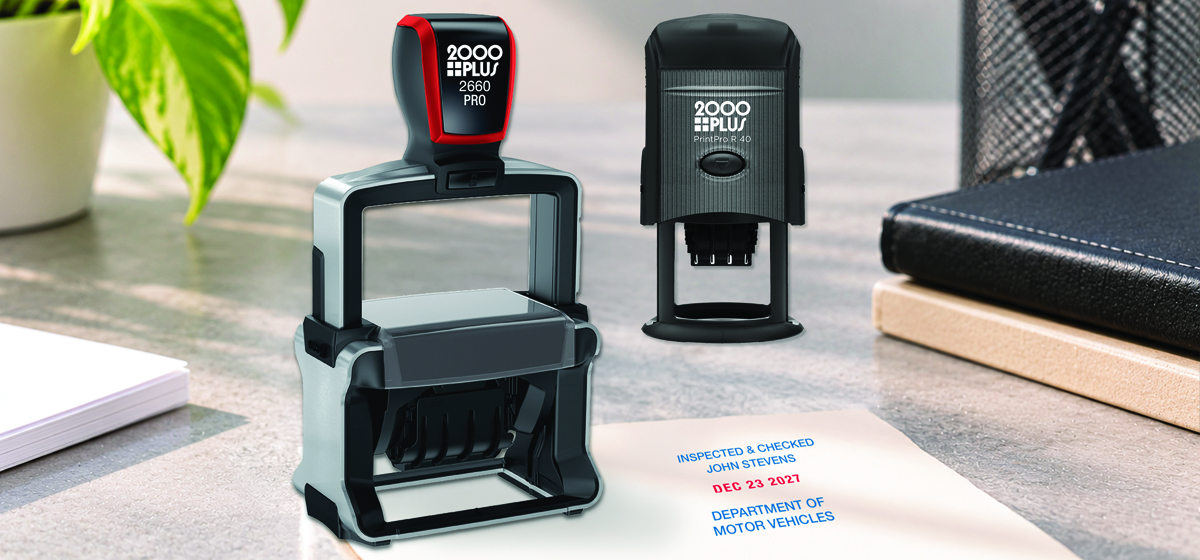
Self-Inking Daters, Pre-Inked Daters, and Traditional Rubber Daters help businesses date paperwork, packages, approvals, and other documents.

Unlike calendars, many daters are designed to last for years. But growing departments, new employees, changing workflows, and replacement supplies can create additional purchasing needs.

The sales opportunity: Use an annual operations check-in to find out whether customers need additional daters, replacement ink or pads, or related office products. The goal isn’t to replace something that still works – it’s to uncover what the business actually needs.

custom printed magnet-backed calendar with company name, logo and contact information

Who’s Buying? Start With the Problem, Not the Product.

One of the easiest ways to uncover new business is to look at the challenges your customers already face. Here are four promising markets and conversation starters.

Home Service Businesses: Be the Name Customers Remember

HVAC companies, plumbers, electricians, and other home service providers rely heavily on repeat customers and referrals. Their challenge? Remaining top of mind between service calls.

A magnetic-backed calendar card can keep their name and phone number handy when a homeowner needs help again.

Ask: “How do you make it easy for customers to find your number when they need service again?”

Insurance, Financial Services, and Real Estate: Stay Connected Between Transactions

These businesses depend on relationships that continue long after a policy is issued, an account is opened, or a home is sold.

Branded calendars and calendar cards offer a practical way to maintain visibility between appointments, renewals, and future opportunities.

Ask: “What are you giving clients that keeps your name visible throughout the year?”

Healthcare, Dental, and Veterinary Practices: Support Patients and Daily Operations

Practices need ways to stay connected with patients and clients while keeping administrative processes organized.

Branded calendars can provide a useful patient appreciation item, while daters can support appropriate paper-based administrative workflows.

Ask: “Are there opportunities to improve how you stay connected with patients or handle routine paperwork?”

Professional Services and Administrative Offices: Make Routine Processes Easier

Law firms, accounting practices, and other offices often handle incoming paperwork, approvals, and records that require dates.

Daters can help streamline repetitive manual tasks, while calendars offer another way to maintain client relationships.

Ask: “Which routine tasks still require employees to manually stamp dates, and do they have the right tools?”

Five Ways to Turn a Timely Conversation into Repeat Business

Recognizing an opportunity is one thing. Turning it into an order – and potentially another one next year – takes a little planning.

1. Look Back Before You Reach Out

Review previous orders for products with a seasonal or recurring purchasing pattern.

A simple, proactive message can reopen the conversation:

“You ordered 500 calendar cards last fall. Would you like to update your artwork and review quantities for 2027?”

Or:

“I noticed your business cards have this year’s calendar on the back. Would you like to update it for next year and review how many cards you’ll need?”

You’ve identified a likely need, removed some of the guesswork, and given your customer an easy next step.

2. Look for the Products You’re Not Selling

Your existing customers may already buy calendars, daters, or other recurring print products from another supplier.

A customer who regularly orders business cards might also need calendar cards for client outreach. Someone purchasing forms may need daters for processing and tracking.

Sometimes the easiest product to sell is one your customer already buys – just not from you.

3. Sell the Value of Being Useful

Instead of asking customers if they want promotional calendars, ask what they want their recipients to remember.

A useful calendar earns a place on a desk, wall, or refrigerator. When the business name and contact information are easy to find, that everyday usefulness can support future customer interactions.

Help customers choose products based on who will receive them, where they’ll be used, and what action they hope to encourage.

4. Look Beyond the Individual Item

A calendar order can open the door to a coordinated customer appreciation effort. Think greeting cards, envelopes, mailing materials, and other marketing essentials. If your customer already sends holiday greetings, explore ways to extend that connection into the new year. Our Business Holiday Cards: A Sales Guide for Print Resellers offers additional prospecting ideas, conversation starters, and tips for planning a successful year-end customer appreciation program..

Likewise, a conversation about daters could reveal a need for forms, labels, stamps, or replacement supplies.

The question isn’t simply, “What else can I sell?” It’s “What else does this customer need to accomplish the job?”

5. Make the Next Order Easier Than the First

Save artwork and specifications. Document preferred quantities. Note when the customer typically orders and establish a reminder to check in ahead of that date.

When the next purchasing cycle approaches, you’re prepared with a relevant recommendation instead of starting from scratch.

The first order gets you the sale. Remembering the next one helps you keep the customer.

see what triggers the next order for custom printPut Your Reorder Radar to Work
Dated products offer a perfect example of a broader selling strategy: Recognize what triggers the next purchase before the customer places the order.

Look for three signals:

  • Time triggers: New years, seasonal campaigns, annual events, and membership renewals.
  • Usage triggers: Supplies running low, equipment wear, or increases in production and administrative activity.
  • Change triggers: New locations, employees, departments, workflows, or branding.

These signals extend well beyond calendars and daters. In 5 Print Staples Retailers and Small Businesses Keep Coming Back For, we explore how new employees, changing promotions, product launches, and other everyday business developments create recurring print opportunities.

The more you recognize these buying signals, the easier it becomes to anticipate customer needs and proactively pursue the next order.

help customers prepare for next year

Your Next Opportunity May Already Be in Your Customer List

Here’s a challenge: Review five existing customer accounts.

Look for a business that sends annual customer gifts, relies on manual date tracking, or has ordered seasonal or time-sensitive print in the past.

Identify one need you can help address before the customer has to ask. Then start the conversation.

You don’t have to wait for customers to need more print. Learn what creates the need, and you can be part of the conversation before the next order even exists.

The calendar changes. A good customer relationship doesn’t have to.

Ready to Help Your Customers Prepare for 2027?

Explore Navitor’s Calendars and Calendar Cards and Custom Daters to discover practical solutions, uncover new sales opportunities, and give customers more reasons to keep coming back.

Year-End Fundraising Print: Who to Call, What to Offer, and How to Win the Order

Fall fundraisers are underway. Holiday giving campaigns are taking shape. And nonprofit organizations everywhere are preparing for one of their most important fundraising periods of the year.

According to M+R Benchmarks 2026, nonprofits in the study received 37% of their 2025 online fundraising revenue in December alone. With GivingTuesday coming December 1, 2026, and year-end appeals close behind, there’s plenty of reason for organizations to get their messages out now.

For you, that means opportunities to help customers attract supporters, encourage donations, and make fundraising events more successful.

The key? Sell solutions to fundraising challenges, not just individual print products. Here’s where to look and how to turn those opportunities into orders.

Who’s Buying Fundraising Print This Fall?

Start with organizations that have seasonal campaigns, scheduled events, or year-end giving goals.

  • Community nonprofits: Food banks, shelters, animal rescues, and local charities may be organizing holiday donation drives, volunteer campaigns, and year-end appeals.
  • Schools, PTAs, and booster clubs: Fall festivals, auctions, benefit dinners, and school fundraising campaigns create needs for promotional materials, event signage, and donation collection.
  • Faith-based organizations: Seasonal giving campaigns, holiday outreach, community events, and donation drives bring opportunities for printed appeals and supporting materials.
  • Healthcare foundations and community organizations: Benefit events, donor recognition programs, membership campaigns, and annual appeals often involve multiple printed touchpoints.

Who should you contact? Depending on the organization, look for development or fundraising directors, executive directors, event coordinators, marketing staff, or volunteer leaders.

And don’t overlook existing customers. A school, church, or community organization you already serve may be planning a fundraiser you haven’t heard about yet.

Start With the Campaign, Not the Catalog

You don’t have to be a fundraising expert to start a useful conversation. You just need to understand what the organization is trying to accomplish.

Try opening with:

“What fundraising events or giving campaigns are you planning between now and year-end?”

Then dig a little deeper:

  • “Are you most focused on increasing attendance, donations, or participation?”
  • “How are you reaching potential supporters, and how do they respond?”
  • “What’s been challenging about promoting or managing these campaigns?”
  • “What needs to happen by your event or mailing deadline?”

Listen for gaps between what the customer wants to accomplish and what’s happening today.

Low event awareness? They may need more ways to reach people.

Donations aren’t coming in as expected? They may need a more compelling printed appeal or an easier way to give.

Event logistics getting complicated? They may need signage, identification, and printed forms.

Those answers give you a reason to recommend print – and help you avoid offering products that don’t address a real need.

Match Print Solutions to Fundraising Goals

Navitor’s product lineup supports multiple stages of the fundraising process. Think about where print can make the biggest difference.

1. Get the Word Out
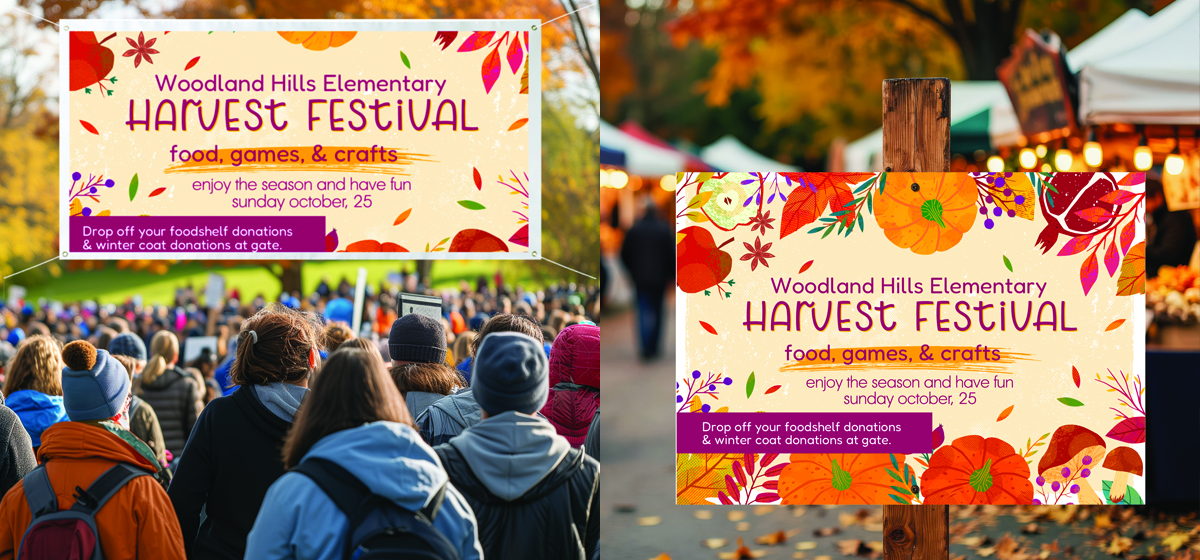
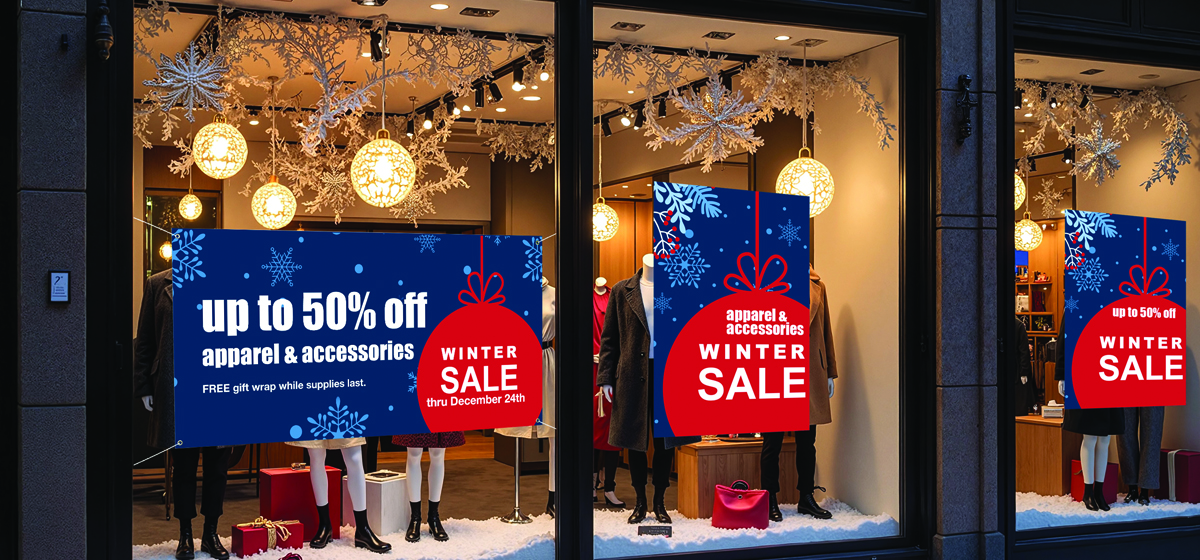
For campaigns that need more visibility, consider Yard Signs, Banners, Window Decals, Magnetic Signs, and Door Hangers. These can help promote community drives, announce benefit events, and direct supporters to donation locations.

Postcards and Flyers can also reach prospective donors with a specific request, event invitation, or reminder.

Sales opportunity: Ask where people are most likely to encounter the campaign – at home, around town, at an event, or at the organization’s location. Recommend the formats that fit those settings.

2. Make It Easy to Participate and Give
Once you’ve captured attention, help customers turn interest into action.

Invitations
and Event Tickets encourage attendance, while Brochures and Flyers explain the mission and impact of a contribution.

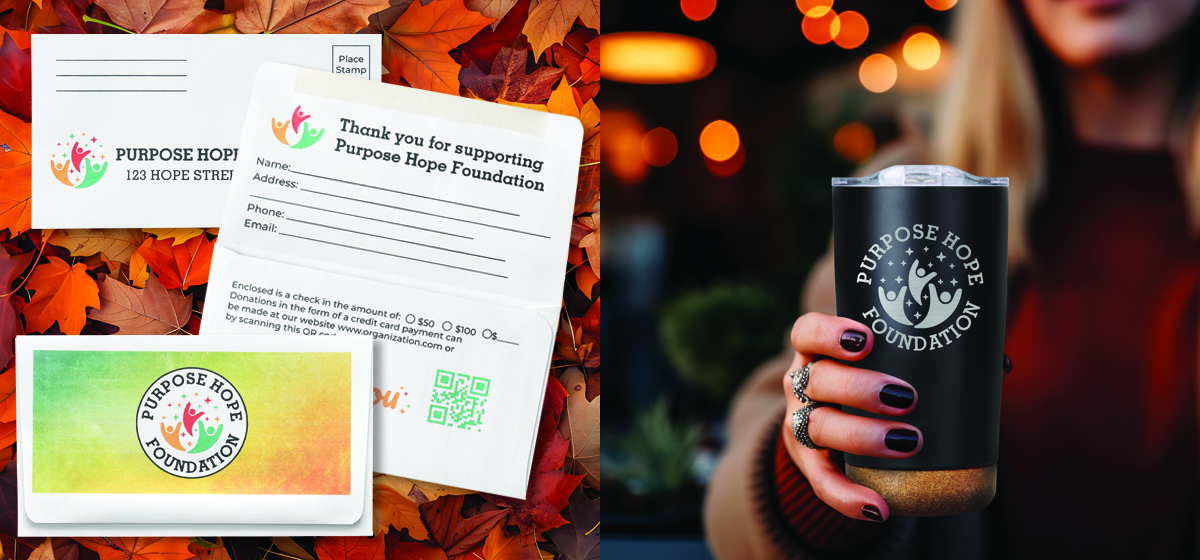
For donation campaigns, Custom Donation and Remittance Envelopes, Printed Inserts, and Forms can help supporters contribute and organizations process gifts.

And don’t overlook the connection between print and digital giving. A QR code on a postcard, flyer, or event sign can direct supporters to the organization’s online donation page.

Sales opportunity: Ask whether supporters can easily understand what they’re being asked to do and how to take the next step.

3. Keep Events and Campaigns Organized
Successful fundraisers require plenty of behind-the-scenes coordination.

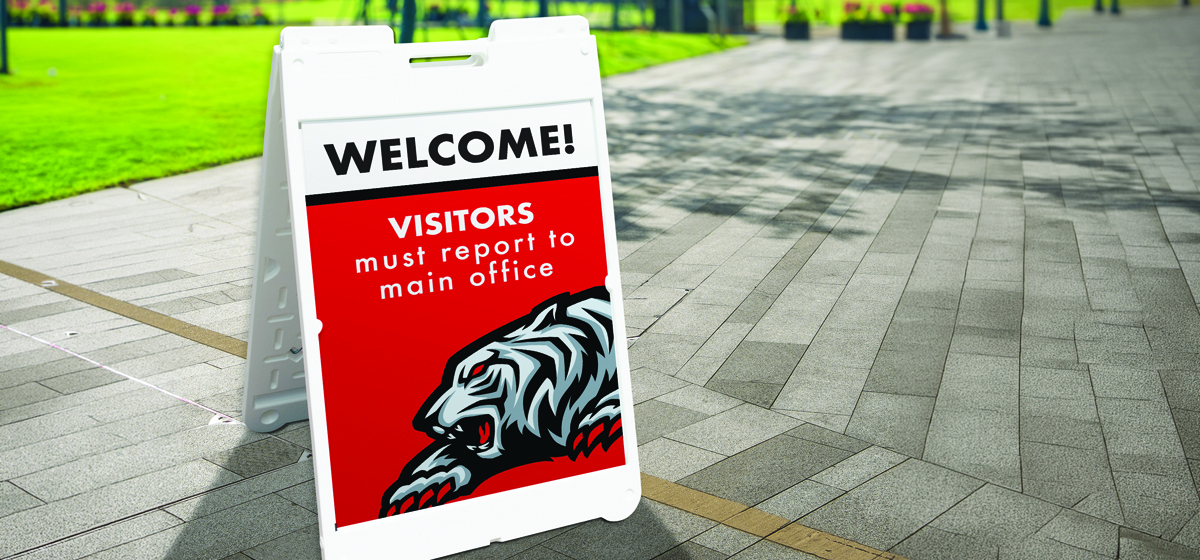
Name Badges and Branded Apparel help attendees identify staff and volunteers. Retractable Banners, A-frame Signs, and Decals can direct people to registration, donation stations, and event activities.

Meanwhile, Custom Forms, Labels, Stamps, and Daters can simplify routine administrative tasks.

Sales opportunity: Ask what’s taking the most time to coordinate and what the organization wishes ran more smoothly.

4. Give Supporters a Reason to Stay Connected
A contribution shouldn’t be the end of the relationship.

Personalized Thank-you Notes, Calendars, Magnets, and Branded Gifts can help organizations recognize donors and volunteers. Printed appreciation pieces also give nonprofits another opportunity to share their mission and encourage future involvement.

Sales opportunity: Ask what happens after someone donates, volunteers, or attends an event. Is there a follow-up plan?

Turn Individual Needs into a Campaign Proposal

Here’s where a consultative conversation can become a larger sale.

Instead of quoting only the product a customer initially mentions, look for complementary materials that support the same goal.

Consider two examples:

The year-end giving campaign: A local nonprofit wants to reach past donors and encourage another contribution. Recommend a coordinated package of personalized postcards, donation or remittance envelopes, printed inserts, and thank-you notes. QR codes can connect the printed appeal to online giving.

The fall fundraising event: A school booster club needs to increase attendance and keep its upcoming fundraiser organized. Suggest invitations, event tickets, yard signs, retractable banners, volunteer name badges, and thank-you cards.

Each product serves a purpose. Together, they support more of the organization’s campaign.

You don’t need to recommend everything. Start with what addresses the immediate challenge, then suggest the additions that offer meaningful value.

Make the Next Step Easy

Fundraising budgets may be tight, and campaign deadlines are often nonnegotiable. A straightforward proposal can help move the sale forward.

Try presenting two options:

The Essentials: The priority materials needed to launch or run the campaign.

The Complete Campaign: The essential pieces plus complementary materials for outreach, event support, and donor follow-up.

Explain what each option accomplishes, not simply what’s included.

Before finalizing the quote, confirm quantities, artwork, budget, approval responsibilities, and the date materials must arrive. Check production and shipping timelines before committing to delivery.

Then ask a specific closing question:

“If we can meet your budget and deadline, are you ready to move forward with this plan?”

A clear recommendation and a clear next step can make the decision easier.


Your Next Fundraising Sale Could Start This Week

You don’t need an extensive prospecting campaign to get started. Identify five organizations in your market with upcoming fundraising activities. Check their websites, newsletters, or event calendars for clues about what they’re planning.

Then reach out with one timely question about their campaign. Listen for an unmet need, recommend a practical solution, and offer a proposal that fits their goals and schedule.

Remember, fundraising doesn’t stop when the event ends or the year closes. Donor appreciation, volunteer recognition, and next year’s campaigns create reasons to stay in touch.

Ready to help more organizations reach their fundraising goals?

Navitor has print solutions for promoting campaigns, encouraging participation, managing events, and recognizing supporters.

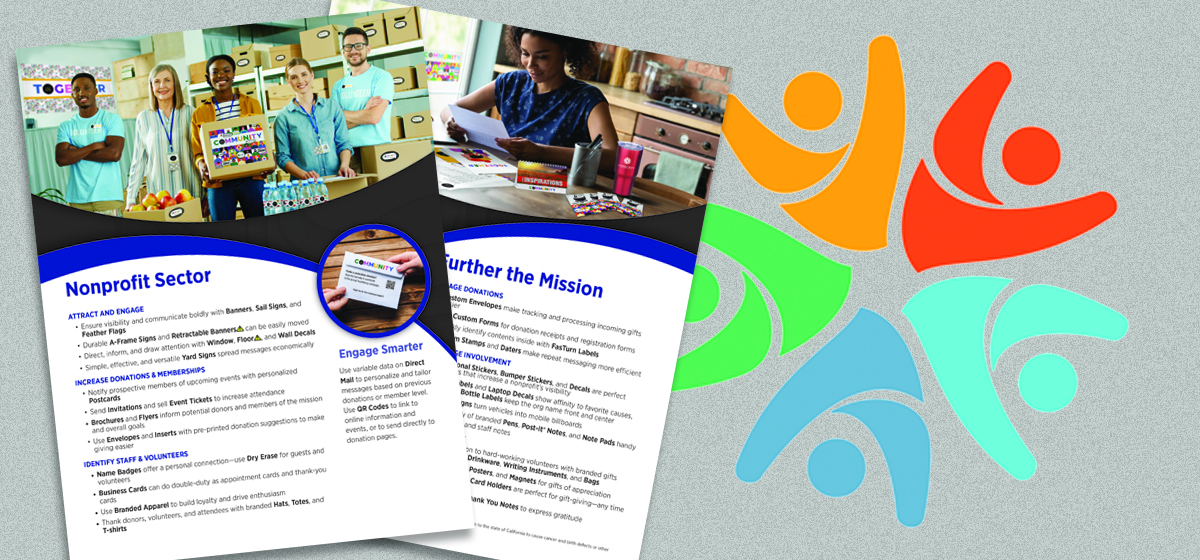
Download the Nonprofit Sector Flyer to explore products you can recommend and start more productive customer conversations.


Carry the Brand Further: Packaging and Product Presentation Ideas

Help customers strengthen the experience around the product – from the label and bag to the insert and shipment.

A product may be the reason someone buys, but it’s not the only thing they experience. Before they use it, they notice how it’s labeled, bagged, tagged, delivered, and what comes along with it. Each of those details is another chance to make the brand feel more consistent, useful, and intentional.

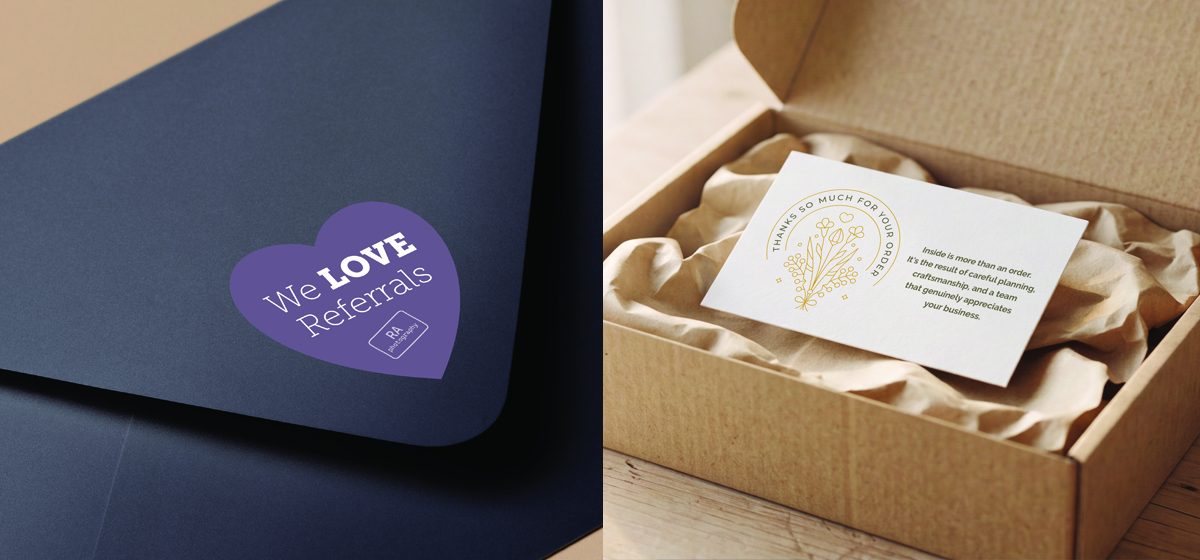
For print resellers and distributors, that means more places to bring ideas, solve needs, and uncover opportunities inside accounts you already serve. Many opportunities live on, around, inside, and traveling with the product – Labels, Hang Tags, Favor Bags, branded tape, shipping envelopes, printed inserts, and more.

Consumers notice these details, too. According to Ryder’s 2025 E-Commerce Consumer Study, 52% of respondents said a premium unboxing experience makes a brand seem more upscale, while 46% said it makes them more excited to open the package.

For you, that creates a useful question to take into existing accounts: What else could we brand around the product?

THE OPPORTUNITY: Think beyond the individual product. How is it labeled, presented, packaged, shipped and received? Each answer can reveal another way to help.

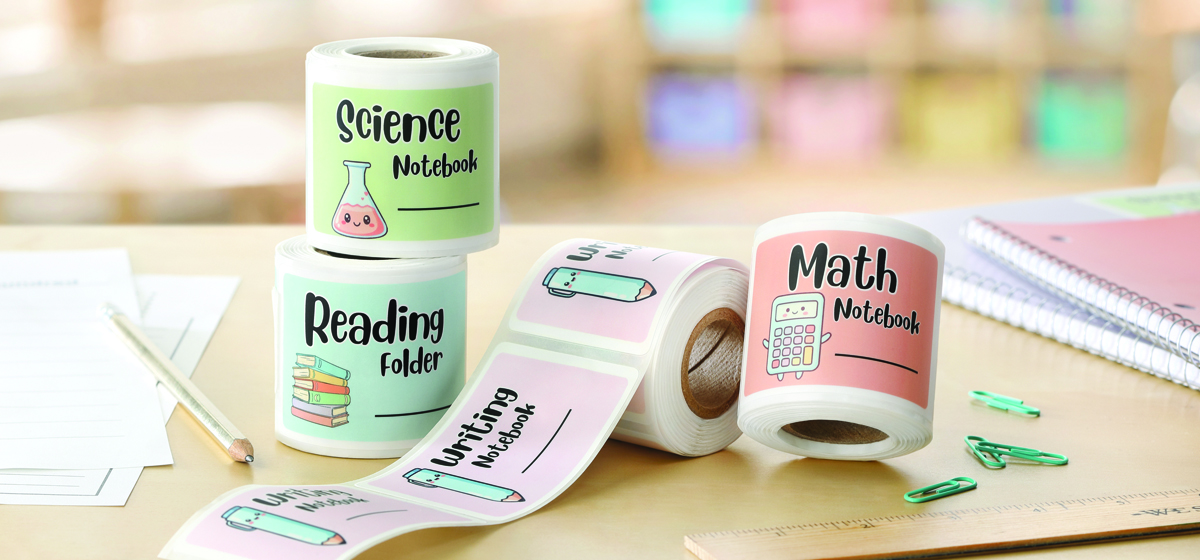
custom printed labels for retail products

Start where the brand meets the product: Custom Labels

For many customers, the most direct packaging opportunity is also one of the most versatile: the label.

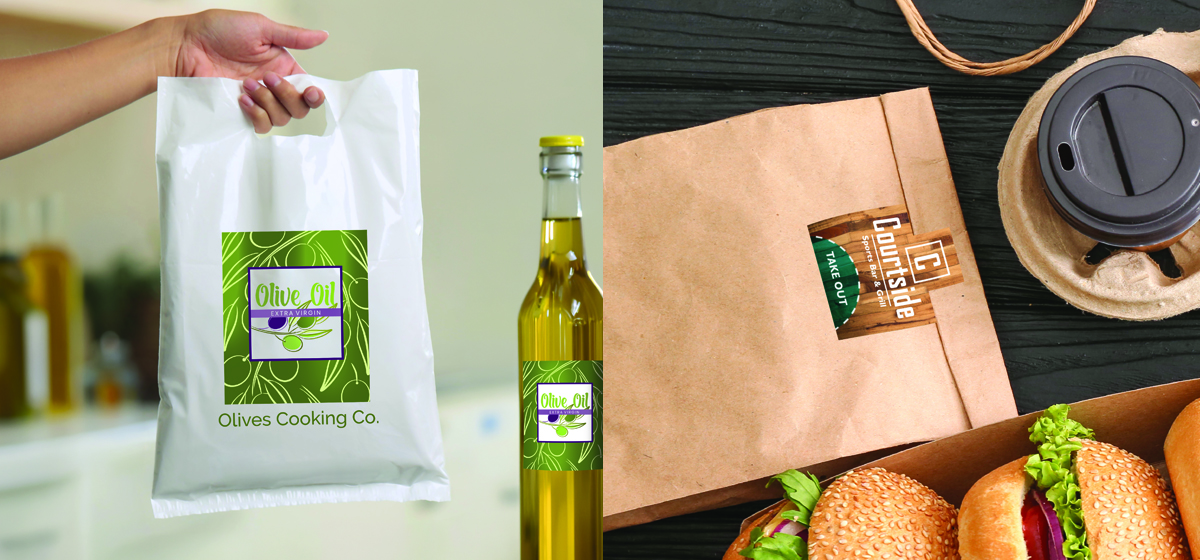
Labels can identify a product, carry required or useful information, reinforce visual identity, seal tissue or packaging, or add a finishing detail to bottles, jars, boxes, bags, and other surfaces.

When the customer wants something more distinctive, Label Works’ freeform™ Labels offer a competitive advantage worth bringing into the conversation. Customers can create labels in nearly any shape without the cost of custom dies or tooling, with quantities starting at 100. That makes them a practical option for short-run product packaging, new launches, seasonal varieties, specialty products, and smaller brands that want more flexibility.

You don’t need to wait for a customer to ask for a custom-shaped label. A better question might be: Does the label need to follow the shape of the logo, product, or package?

WHEN THE LABEL JOB GETS SPECIFIC: Custom shape? Short run? Specialty packaging application? Those details can lead to a solution the customer may not know is available – and give you another reason to be the resource they call first.


custom printed hang tags for retail products

Add the finishing details customers can see and use

Custom Hang Tags can add pricing, product details, care instructions, features, a story, or a short message without crowding the primary label or product. They work especially well for apparel, gifts, retail merchandise, handmade goods, and other items where the tag becomes part of the presentation.

Favor Bags offer another simple way to carry branding into the handoff. Printed in full color and available in quantities as low as 50, they can package party favors, event giveaways, small retail purchases, product samples, gifts, or treats. For a launch, event, boutique, or hospitality program, the bag itself becomes part of what the customer receives.

Neither product has to be elaborate to make the experience feel considered. Sometimes the value is simply making sure the brand doesn’t disappear at the point of purchase or handoff.

Give the package a life beyond the delivery

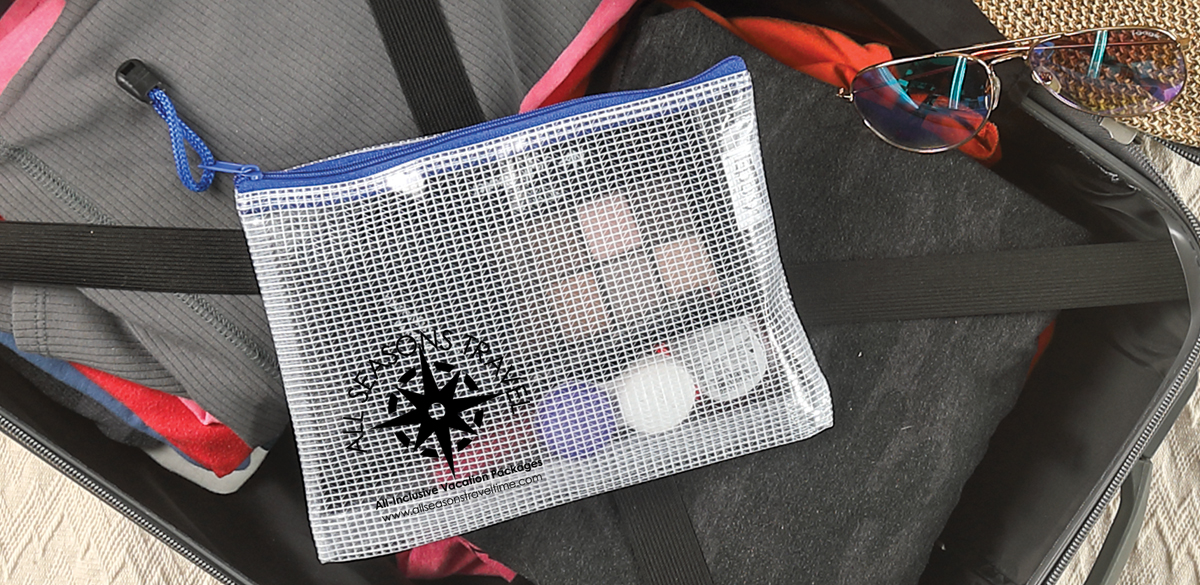
Some packaging earns extra value when the customer keeps using it. Epoly® PolyWeave® Zip Bags bring durability to the conversation with strong PolyWeave® material and zipper closures. Options include a medium/document-size zip bag and a TSA quart-size zip bag.

That opens up applications beyond a one-time package: document kits, onboarding materials, travel accessories, event kits, samples, product sets, instruction materials, and other items that benefit from organization and protection.

For you, the selling idea is simple: if the customer is already putting several items together, could the container itself become part of the branded solution?

custom printed water-activated packaging tape with logos

Carry the brand through the trip to the customer

For ecommerce sellers and businesses that ship directly to customers, the delivery package creates another set of touchpoints.

Custom Shipping Envelopes combine protection with visible branding. Full-color or spot-color printing can keep a logo, design, or message present from the moment the shipment arrives.

Water-Activated Packaging Tape turns another purely functional item into branded real estate. The reinforced tape creates a strong, tamper-evident seal while carrying a logo or message across the shipping carton.

The shipping container itself may be standard. The experience doesn’t have to be.

Don’t waste the space inside: Printed package inserts

One of the easiest packaging opportunities may not look like packaging at all. Standard printed pieces can do double duty as package inserts, giving customers another way to communicate after the sale.

Depending on the message and available space, consider:

  • Business Cards for a compact thank-you card, referral prompt, support contact, or QR code.
  • Postcards for a thank-you message, reorder reminder, related-product offer, loyalty message, or next-purchase incentive.
  • Flyers when customers need more room for instructions, product care, setup information, a how-to, a product story, or complementary recommendations.

An insert can answer a question, make the product easier to use, encourage a second purchase, or simply say thank you. It can also connect the physical delivery to digital content through a QR code leading to instructions, registration, support, social content, or another next step.

THINK INSIDE THE PACKAGE: The best insert doesn’t add clutter. It gives the recipient a useful reason to keep reading – information, appreciation, an offer, a next step, or help getting more value from the purchase

custom printed labels with original and unique shapes

Listen for the opportunity hiding in the conversation

Customers may never say, “I need more branded product touchpoints.” They’re more likely to say:

  • “We’re launching a new product.”
  • “We just started selling online.”
  • “We’re rebranding.”
  • “We need packaging for samples or giveaways.”
  • “We’re putting together kits.”
  • “We want the packaging to feel more unique, but we don’t need huge quantities.”
  • “Customers keep asking the same question after they receive the product.”
  • “We want to encourage reorders or referrals.”
  • “We’re shipping directly to customers now.”

Those comments are signals. Follow them with questions: How is the product labeled? What goes with it? How is it handed out or shipped? Is anything included inside? What does the recipient see first? What do they need to know next?

That’s how a packaging conversation becomes a broader customer-experience conversation – and how you can uncover needs the customer may not have thought to bring to them.

Custom printed favor bags

Why these touchpoints deserve a place in your sales conversations

For distributors, the opportunity isn’t simply adding more products to an order. It’s seeing more of the customer’s business.

Many of these products also lend themselves to repeat business. Labels get used. Tape leaves with shipments. Inserts go into every order. Bags and tags move with products and events. As customers grow, launch new items, or change campaigns, those needs change with them.

And one need can reveal the next. A customer asking for a product label may need a custom shape. A boutique ordering Hang Tags may need Favor Bags. An ecommerce seller may need Packaging Tape, Die Cut Handle Plastic Bags, or Shipping Envelopes. A team assembling kits may benefit from a branded PolyWeave® Zip Bag plus printed instructions inside.

That’s the larger opportunity: becoming the resource who thinks about the full experience around the product, not just the individual piece the customer happened to request.

TRUSTED RESOURCE TIP: Don’t wait for customers to know which print product they need. Ask what they are selling, shipping, gifting, handing out, or putting inside the package. The opportunity often starts there.

Look beyond the package itself

A branded customer experience doesn’t depend on one big packaging component. Often, it’s the combination of smaller details that makes everything feel connected.

A label on the product. A tag with useful information. A bag for the handoff. A durable zip case that keeps serving a purpose. A shipping envelope or a box with branded tape on the way to the customer. A thoughtful insert waiting inside.

Every one of those touchpoints is a reason to ask another question, uncover another need, and bring another useful idea to the account.

So the next time a customer talks about a product, launch, shipment, event, or kit, look beyond what holds it.

Ask what travels with it.


Ready to find more branded touchpoints inside your customer accounts?

Explore Navitor Products


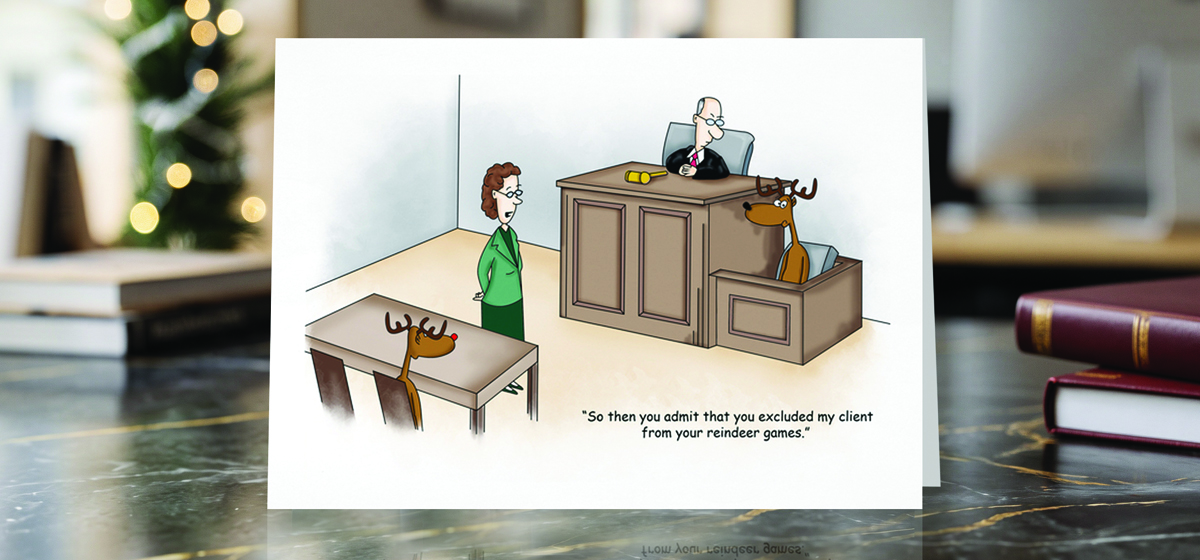
Business Holiday Cards: A Sales Guide for Print Resellers

Who to Target, When to Sell, and How to Win the Order

Printed holiday cards are easy to underestimate.

They arrive during a season dominated by promotional emails, social posts, and digital offers. Yet that contrast is precisely what gives a physical card its value. It requires a little more intention – and recipients notice.

For print resellers and distributors, holiday cards offer more than a short-lived seasonal sale. They can open conversations about customer appreciation, retention, segmentation, and year-round relationship programs.

The key is knowing where to look.

Holiday cards are still part of the business landscape

A national study published by the Greeting Card Association found that approximately one-third of U.S. small businesses sent greeting cards during the winter holiday season. Of the cards they sent, 87.6% were physical rather than electronic. The study estimated that small businesses collectively mailed nearly 150 million winter holiday cards. (source: omsgca.wpenginepowered.com)

The research was conducted in 2022, so its market estimate shouldn’t be treated as an exact 2026 count. More recent findings, however, reinforce the continued appeal of printed cards.

In a 2026 survey of Americans who recalled receiving business holiday cards, 85% said they enjoyed receiving them. Physical cards were preferred by 53% of respondents, compared with only 9% who preferred digital cards. Half said holiday cards reinforced a positive impression of the sender, and 49% said receiving one made them more likely to continue using that business.

These findings reflect self-reported attitudes, not a guaranteed return on every mailing. But they do challenge the assumption that customers view printed holiday cards as outdated or unwelcome.

A printed card isn’t trying to beat email on speed. Its advantage is intention.

Think retention before promotion

Most business holiday cards aren’t sent to strangers.

The Greeting Card Association study found that 91.4% of card-sending small businesses mailed them to current customers. Another 65% included former customers, while 39% sent cards to prospective customers. The most common reasons businesses gave for sending them centered on relationships and gratitude. (source: omsgca.wpenginepowered.com)

That makes holiday cards a natural fit for customer retention, reactivation, and referral strategies.

They give businesses a timely reason to:

  • Thank customers for their continued support
  • Recognize long-standing relationships
  • Reconnect with past customers
  • Acknowledge referral partners
  • Strengthen relationships with vendors and community partners
  • Remain visible as customers enter a new planning year

Unlike a promotional postcard, a holiday card can create goodwill without immediately asking for another purchase. The branding is present, but appreciation leads the message.

That distinction matters. If the card feels like a disguised advertisement, much of its relational value can disappear.

The best prospects have “clients with files”

Which businesses should you approach?

Industry is helpful, but business model is an even better indicator.

The national study found that businesses with “clients with files” – such as insurance agencies with individual customer policies – sent holiday cards at significantly higher rates than businesses serving primarily anonymous or walk-in customers.

In other words, the best prospects tend to know exactly who their customers are.

Their revenue may depend on renewals, referrals, repeat appointments, recurring purchases, memberships, donations, or long-term accounts. These organizations already possess the most important ingredient for a holiday-card program: a meaningful recipient list.

Prospect categories include:

  • Insurance agencies
  • Financial advisors, banks, and credit unions
  • Medical, dental, veterinary, and senior-care organizations
  • Law, accounting, and consulting firms
  • Real estate, mortgage, title, and property-management companies
  • Manufacturers, distributors, and logistics providers
  • Contractors and home-service businesses
  • Salons, spas, gyms, and membership-based businesses
  • Nonprofits and associations
  • Franchise and multi-location organizations
  • Retailers and restaurants with customer loyalty programs

Recent recipient research follows a similar pattern. Consumers most frequently recalled receiving holiday cards from insurance, healthcare, personal-service, financial, retail, restaurant, professional-service, nonprofit, real-estate, and home-service organizations.

Before deciding whether an account is a good prospect, ask:

  • Does the company maintain a customer, patient, member, donor, or partner list?
  • Are those relationships expected to continue?
  • Do retention and referrals matter?
  • Would a message of appreciation feel natural coming from the organization?
  • Does it have at least 50 people worth recognizing?

The opportunity may already be sitting inside your account list.

Don’t overlook modest quantities

Holiday-card opportunities are not limited to national corporations mailing tens of thousands of pieces.

Among small businesses that sent winter holiday cards, the median mailing quantity was 50–99 cards. Approximately 37% sent 50–199, while another 20.6% sent 200–999. A smaller segment mailed quantities ranging from 1,000 to nearly 25,000.

That creates room for several types of orders:

  • Shorter, segmented orders for professional firms
  • Mid-sized programs for established local businesses
  • Larger orders for associations, franchises, institutions, and multi-location organizations
  • Premium cards for smaller lists of high-value clients
  • Multiple versions for different customer or employee groups

A 75-card order may not look like a major opportunity in isolation. But if it includes customization, envelopes, labels, and an annual reorder, its value changes. It may also introduce broader needs for thank-you cards, welcome cards, anniversary communications, and other relationship-focused print.

Start the conversation before the customer feels the deadline

Businesses generally want holiday cards to arrive in late November or early December, but the work begins much earlier.

An analysis of six years of B2B holiday-card orders found that demand started in September, increased through October, peaked around mid-to-late November, and tapered through December. Finance orders peaked in late October, while real estate, healthcare, and industrial/manufacturing orders peaked around mid-November. Legal firms tended to order later, peaking in early December.

Waiting until customers begin actively searching in November leaves less time for thoughtful personalization, list preparation, and internal approvals.

A more effective sales calendar looks like this:

Late Summer/Early Fall: Identify prospects, review previous orders, introduce ideas, and check out designs online.

September: Discuss audience, quantity, budget, design direction, messaging, and mailing requirements.

October: Finalize quantities, collect logos and signatures, approve artwork, and place orders.

November: Follow up with late buyers and focus on options that fit the remaining production window.

December: Redirect customers with tight timelines toward New Year cards, which can arrive after the most crowded portion of the holiday season.

Early conversations do more than protect production time. They give customers space to make the card more meaningful.

Sell the program – not only the card

One of the biggest barriers to sending holiday cards is not a lack of interest. It’s the perceived amount of work.

Businesses may need to choose a design, find a logo, write a message, gather signatures, clean a mailing list, address envelopes, apply postage, and get everything into the mail during an already busy quarter.

The Greeting Card Association study found that the most common reasons businesses didn’t send cards were time, cost, uncertainty about their value, and concerns about whether cards fit their customers.

You can reduce those barriers by offering a more complete program:

  • Design and message guidance
  • Company logo and brand-color customization
  • Printed employee or leadership signatures
  • Multiple versions for different audiences
  • Return address labels
  • Coordinating envelopes
  • Saved artwork and specifications for easier annual reordering

The conversation changes when a customer hears, “We can help you manage more elements,” instead of, “Would you like to order some cards?”

Personal touches create the value

A bulk order doesn’t have to feel mass-produced.

In the 2026 recipient survey, the most memorable attributes of business holiday cards were effort and care, messages of gratitude, and thoughtful or creative design. 63% of respondents considered handwritten messages or signatures very or extremely important. 57% placed the same level of importance on including the recipient’s name.

You can help customers make a more meaningful impression by recommending:

  • A sincere thank-you rather than a sales-heavy message
  • A design that reflects the organization’s brand and audience
  • Designing an entirely custom card, unique to their organization
  • Printed signatures from the people customers know
  • A team photo or brief year-end update
  • Premium paper or a specialty finish for high-value lists
  • Inclusive language when recipients have varied backgrounds
  • Separate messages for customers, employees, partners, or donors

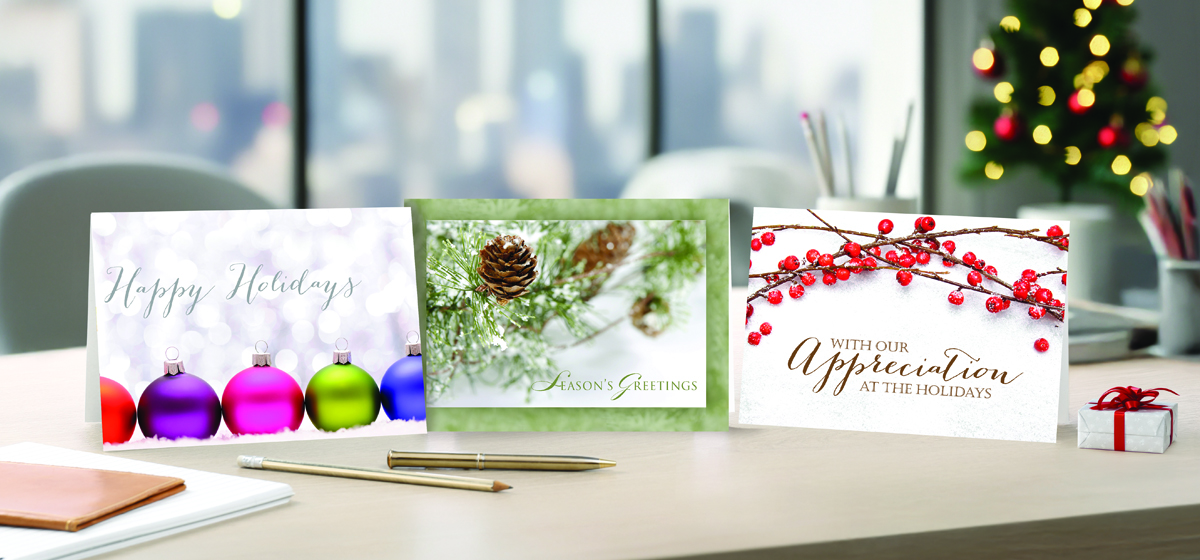
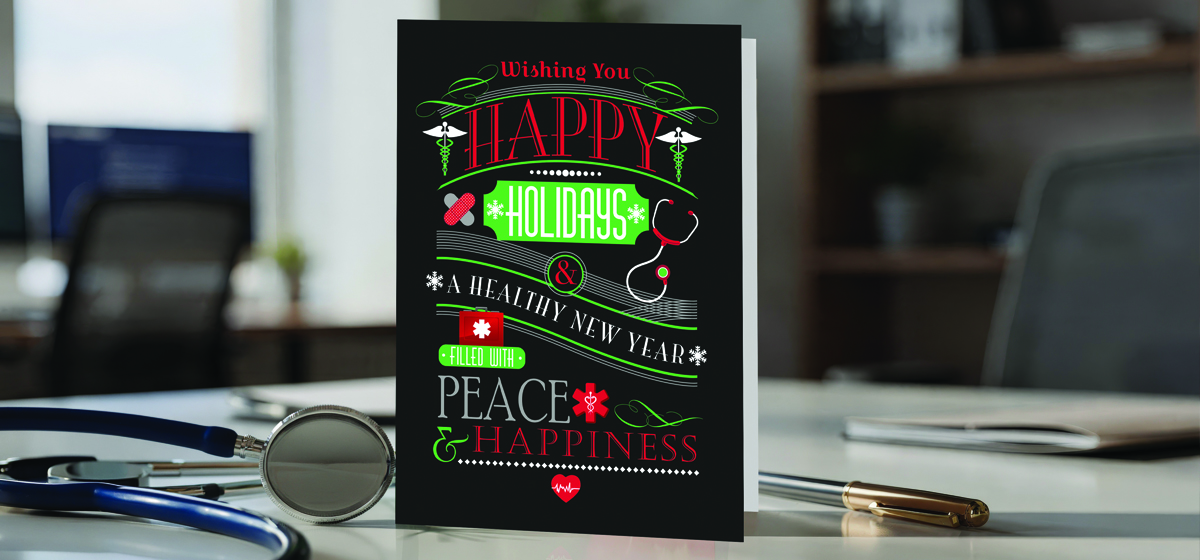
“Happy Holidays,” “Season’s Greetings,” and neutral winter imagery offer broad appeal. Christmas-specific, faith-based, Hanukkah, Thanksgiving, and New Year options may be appropriate for more clearly defined audiences.

The goal is not to choose one greeting that works for every business. It’s to help each customer choose the right message for its relationships.

One holiday order can lead to a year-round program

The most valuable conversation may begin with holiday cards but continue well beyond December. Why stop at holiday greetings? Explore how calendars, calendar cards, and other dated products can extend customer connections into the new year while creating repeat sales opportunities in The Next Order Is Already on the Calendar.

Businesses that depend on relationships have other reasons to connect throughout the year:

  • Customer birthdays
  • Account anniversaries
  • New-customer welcomes
  • Referral thank-yous
  • Employee recognition
  • Membership renewals
  • Donor appreciation
  • Milestones and congratulations
  • Reconnection with inactive customers

For customers who want their holiday message to last beyond the season, Calendar Cards offer another option. They combine a thoughtful greeting with a practical calendar that can remain on the recipient’s desk throughout the year – keeping the sender’s name, logo, and contact information visible long after traditional holiday cards are put away.

A holiday order can help a reseller learn who the customer wants to recognize, which messages fit its brand, and what level of support it needs. Those insights can lead to a more consistent customer-appreciation program – and more dependable print demand.

Find the relationships worth recognizing

Printed holiday cards are not right for every organization. They’re especially valuable for businesses that can name the customers, patients, members, donors, employees, or partners they want to keep connected.

That’s the real prospecting opportunity.

Look across your accounts for organizations with an established customer base and relationships measured in years rather than transactions. Start the conversation before those lists become a December deadline. Then help the customer create something that feels less like a seasonal obligation and more like what it should be: a genuine expression of appreciation.

Explore Holiday Cards

Before, During, After: Finding the Print Around Every Event

An event may last a few hours. The print opportunity usually starts much earlier – and can continue well after everyone goes home.

That’s worth remembering when a customer calls looking for a banner, some postcards, name badges, or another event-related piece. The requested item may be exactly what they need. But it may also be only one part of a much larger picture.

A better question is: What needs to happen before the event, while people are there, and after it’s over?

That simple framework can help you uncover a more complete set of customer needs without turning the conversation into an unnecessary upsell. Think of it as an Event Opportunity Map:

Before: Attract and inform
During: Welcome, direct, and engage
After: Follow up and extend the connection

Use that lens on fall and holiday events – or just about any event throughout the year – and one requested product can quickly reveal a more comprehensive print plan.

BEFORE: Help People Know, Care, and Show Up

Long before anyone walks through the door, customers need to create awareness and give people a reason to attend.

That can involve invitations, announcements, promotions, reminders, and event details spread across several touchpoints.

Potential print applications include:

The right mix depends on the event and the audience.

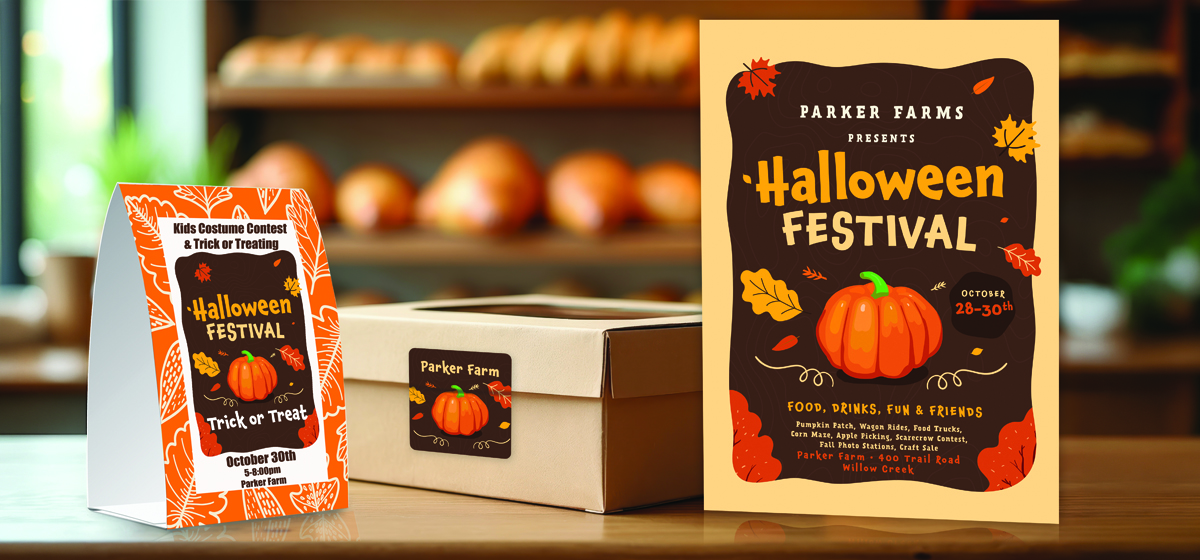
A retailer holding a holiday open house may need postcards to invite customers, posters to promote the date in advance, and flyers that employees can hand out in the weeks leading up to it.

A nonprofit planning a fall fundraiser may need event tickets, flyers, posters, and banners.

A company holding a customer appreciation event may need announcements or postcards along with printed materials that explain what attendees can expect.

You don’t need to guess. Ask:

  • Who needs to know about the event?
  • How are they hearing about it?
  • Where will the event be promoted?
  • Is registration or admission required?
  • Is there a special offer or incentive tied to attendance?
  • What action should someone take after seeing the printed piece?

That last question is especially useful.

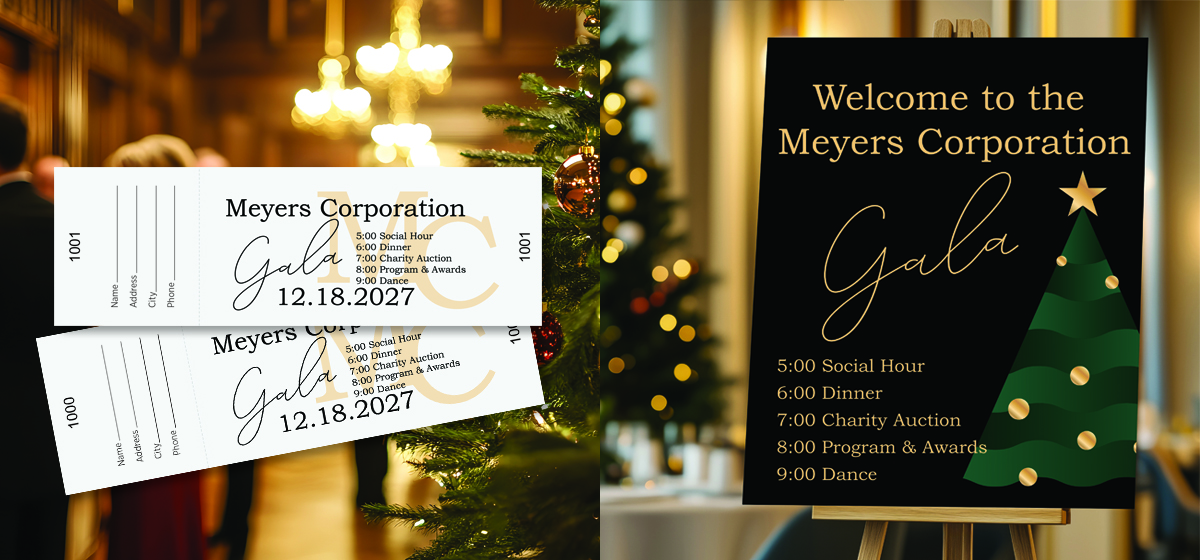
Print can also point people toward digital content. A QR code on a postcard, poster, flyer, label, or ticket might lead to registration, directions, a schedule, an online offer, an event page, or additional information.

The goal isn’t to add technology simply because you can.

Give every printed piece a job.

Start With the Occasion

Need ideas for the kinds of events your customers may be planning?

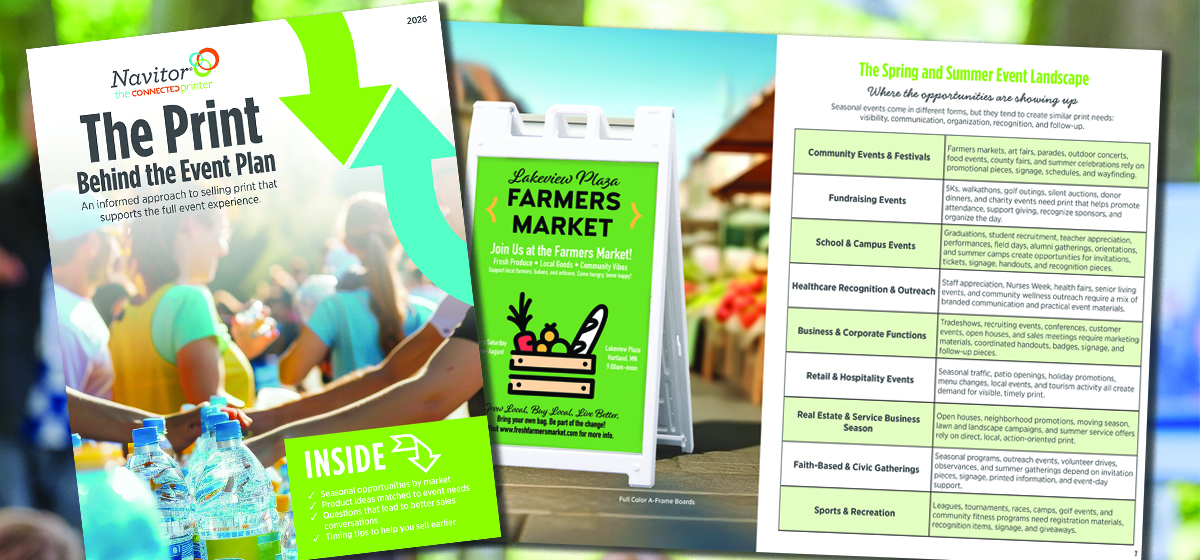
The Print Behind the Event Plan highlights seasonal events, meetings, celebrations, promotions, fundraisers, and other occasions that can create print opportunities throughout the year.

Explore the Event Guide

DURING: Help the Experience Work

Once attendees arrive, print takes on a different role.

Now it can help people know where to go, what to notice, who they are talking to, and what to do next.

That creates opportunities across several print categories:

Instead of thinking only about how the event should look, think about how it needs to function.

The best event print isn’t just decoration. It gives people cues about where to go, what to notice, and what to do next.

Ask customers:

  • How will attendees know where to enter?
  • Do guests need directional signage?
  • What information should be visible throughout the event?
  • Do employees, volunteers, or attendees need identification?
  • What will people pick up or take with them?
  • Will products, gifts, samples, or giveaways be involved?
  • Are sponsors or partners being recognized?
  • Is there a message that needs to carry through several areas of the event?

Those questions can expose needs that never surfaced in the initial request.

Think Beyond the Banner

Imagine a retailer calls asking for a banner for a holiday open house.

That may be the entire job.

But a few questions might reveal the event also needs:

Before:
Postcards announcing the date
Posters promoting it in the store

During:
An A-frame sign outside
Table tents highlighting specials
Labels for packaged giveaways

After:
A thank-you postcard with a follow-up offer

Nothing about that conversation requires pushing products the customer doesn’t need.

You simply considered the full customer journey.

That same thinking works across many fall and holiday events.

Fall Fundraiser

Before: Flyers, posters, event tickets
During: Banners, directional signs, name badges
After: Donor thank-you materials, donation envelopes

Employee Holiday Celebration

Before: Announcements or invitations
During: Custom napkins, event programs, signage, branded promo items
After: Employee appreciation gifts

Holiday Market or Pop-Up

Before: Flyers, posters, postcards
During: A-frame signs, banners, labels, hang tags, packaging
After: A postcard or rack card promoting online shopping or a future offer

Customer Appreciation Event

Before: Invitations or postcards
During: Signage, table materials, branded packaging or giveaways
After: Thank-you cards and follow-up offers

One event. Several moments. Several different jobs for print.

Planning for Holiday Events?

Fall often moves quickly into year-end promotions, customer celebrations, employee events, seasonal retail activity, and holiday gatherings.

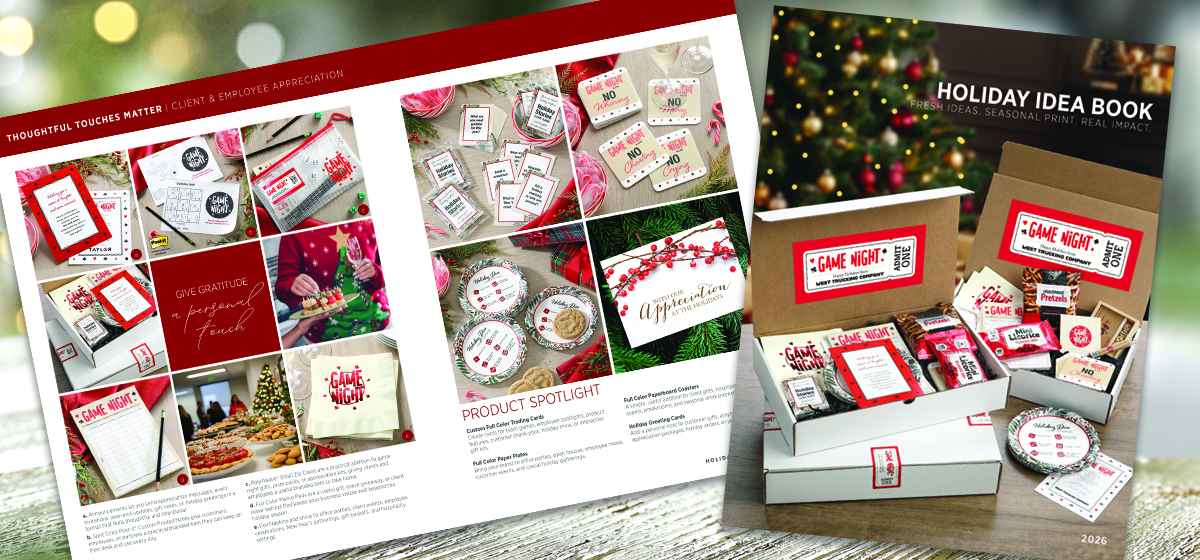
Once you identify the event opportunity, Navitor’s Holiday Idea Book can help spark ideas for product applications that fit the occasion – from promotional print and signage to labels, packaging, branded materials, and customer communications.

Explore the Holiday Idea Book

The two resources work especially well together:

The Event Guide helps you spot the opportunity.
The Holiday Idea Book helps you picture what can support it.

Your job is to connect the dots.

AFTER: Keep the Connection Going

This is one of the easiest stages to overlook.

The event ends. That doesn’t always mean the communication should.

Customers may want to thank attendees, follow up with prospects, extend an offer, provide additional information, or begin promoting the next event.

Potential print applications include:

Ask:

  • What should happen after someone attends?
  • Does the customer want to thank them?
  • Are leads being followed up with?
  • Is there an offer that can extend beyond the event itself?
  • Will attendees receive additional materials?
  • Is another event already on the calendar?

That final question is especially important.

The “after” stage of one event can become the “before” stage of the next.

A holiday open house may lead to a January promotion. A fundraiser may become an annual event. A conference may create follow-up meetings. A customer appreciation event may generate new sales conversations.

This is where event-related print can move from an isolated order to a recurring opportunity.

Five Questions That Can Reveal the Whole Event

The next time a customer mentions an event, try moving beyond:

“What do you need printed?”

Ask:

  1. How are people hearing about the event?
  2. What needs to happen when they arrive?
  3. What will they interact with while they are there?
  4. What will they take with them?
  5. How will you follow up afterward?

Those five questions can provide a much clearer picture of what the event actually requires.

And they position you differently.

You’re not simply quoting a banner, ticket, postcard, or sign.

You’re helping the customer think through the event.

One Event Can Open More Than One Door

Events create concentrated moments when businesses need to attract attention, communicate information, reinforce their brand, guide people through an experience, and keep the connection going afterward.

Print can support every stage.

For you, the opportunity isn’t to squeeze more products into every event order. It’s to recognize when the customer has described only one part of the need.

So the next time someone calls asking for a single event piece, consider one more question:

“What else is happening around the event?”

Then think:

Before. During. After.

You may find that the print opportunity is much bigger than the event itself.


One School. Many Buyers. Year-Round Print Opportunity.

Back-to-school may receive top billing, but it represents only one part of the education print calendar. For distributors interested in selling print to schools, that makes education a year-round market – not a one-season opportunity.

Throughout the year, schools communicate with prospective students, current students, families, faculty, staff, alumni, donors, and community members. They recruit, welcome, inform, direct, promote, fundraise, recognize, and celebrate – and nearly every one of those activities creates a need for print.

For you, the opportunity is significant. The United States has approximately 99,300 public schools and 29,700 private schools, along with thousands of colleges, universities, technical schools, and other postsecondary institutions.

Yet the number of institutions tells only part of the story. The greater opportunity is found inside them.

How to Find More Print Business Inside Every Education Account

It’s easy to think of a school, district, college, or university as a single account. In practice, each may contain numerous departments, organizations, and decision-makers with their own audiences, objectives, budgets, and deadlines.

Within a K–12 account, potential buyers may include:

  • District administration and communications
  • Individual school offices
  • Athletics and extracurricular programs
  • Parent organizations and school foundations
  • Performing arts departments
  • Food service and transportation
  • Fundraising committees
  • Summer and community education programs

A college or university can open even more doors:

  • Admissions and enrollment
  • Orientation and student services
  • Academic departments
  • Athletics and student organizations
  • Campus events and conferences
  • Housing and dining
  • Alumni relations
  • Advancement and development
  • Continuing education
  • Facilities and campus operations

An existing relationship with one contact can become an introduction to several others. The reseller who supplies folders for admissions, for example, may also be able to help orientation prepare welcome materials, athletics promote upcoming events, and advancement coordinate a donor mailing.

The key is to stop asking, “What can I sell this school?” and start asking, “Who does this institution need to reach next – and what are they trying to accomplish?”

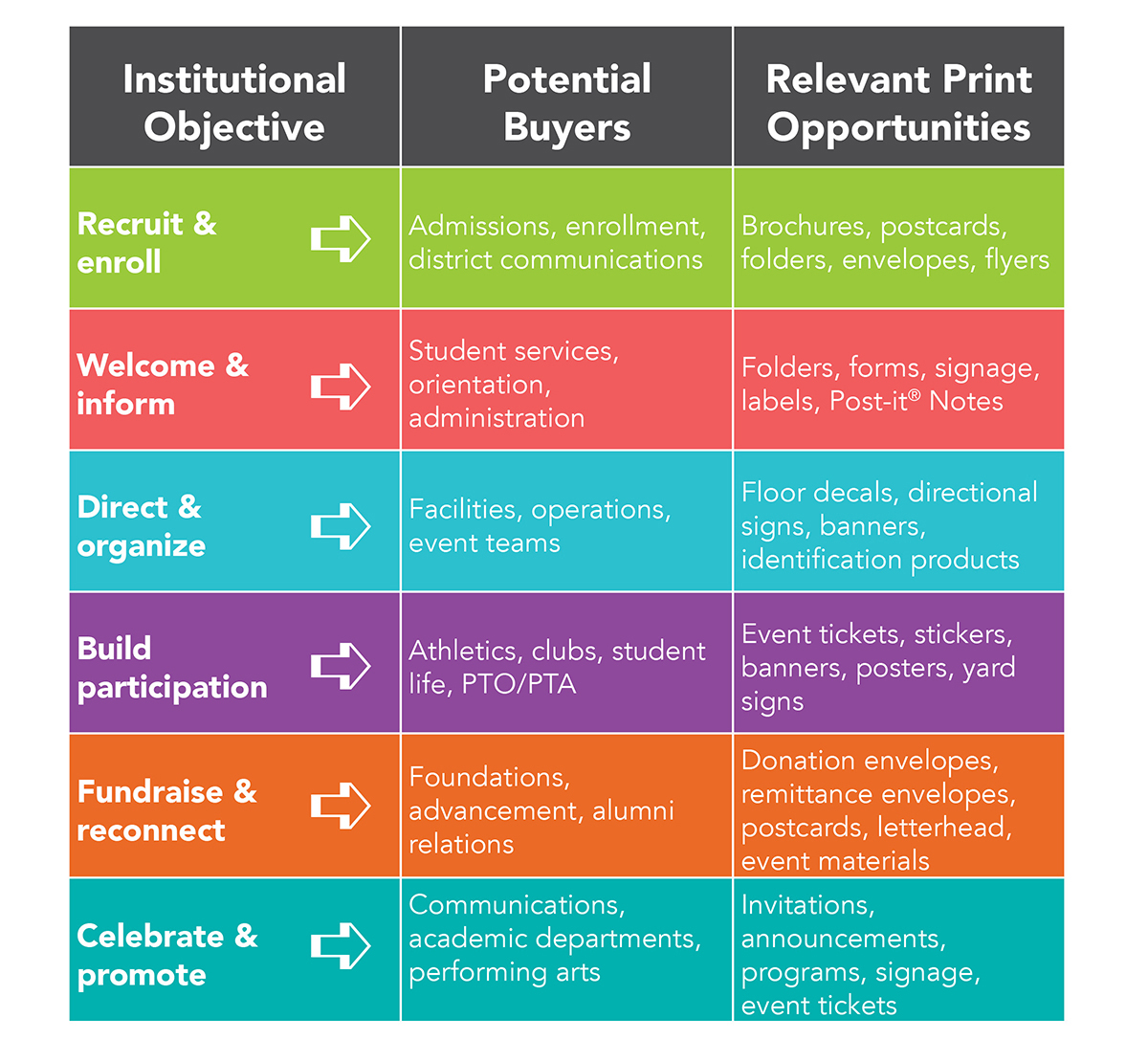
Connect Print to the Institution’s Objective

Education buyers are rarely looking for print simply for the sake of print. They’re trying to recruit students, communicate information, increase attendance, guide visitors, raise funds, or strengthen a connection with their community.

Leading with that objective makes the sales conversation more relevant – and often reveals a larger, coordinated opportunity.

Recruit and enroll

Admissions and enrollment teams may need brochures, postcards, flyers, presentation folders, envelopes, and event signage to reach prospective students and guide them through the decision process.

Instead of quoting one brochure, ask how the school communicates before and after a campus visit. A recruitment campaign might include an introductory postcard, program brochure, information folder, promotional products, and signage for an admissions event.

Welcome and inform

Student services, orientation teams, school offices, and academic departments continually share instructions, schedules, policies, and resources.

Folders can organize orientation materials. Forms and envelopes support administrative communication. Labels help identify materials and manage supplies. Post-it® Notes offer a useful branded item for students, teachers, faculty, and staff.

Direct and organize

Schools and campuses are busy physical environments. Students, families, visitors, and employees need to know where to go and what to do when they arrive.

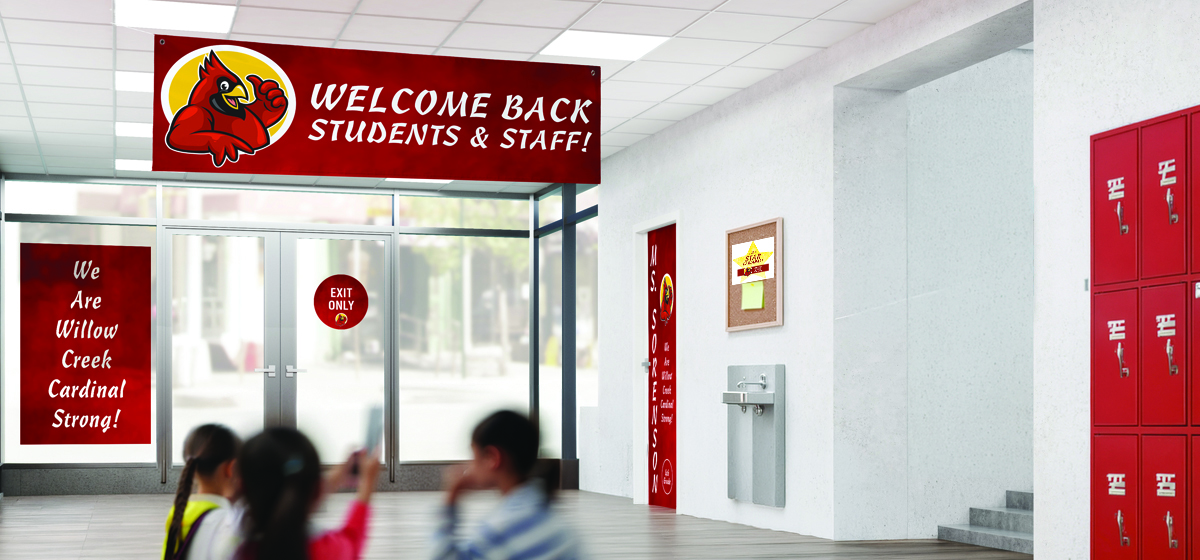
Floor decals, banners, posters, and directional signs can support registration, campus tours, conferences, athletic events, performances, graduations, and everyday navigation.

Encourage participation

Athletics, student organizations, performing arts programs, clubs, and parent groups depend on participation from students, families, and the surrounding community.

Postcards, flyers, posters, banners, decals, bumper stickers, yard signs, calendar cards, and event tickets can help promote activities, manage attendance, recognize sponsors, and encourage school pride.

Fundraise and reconnect

K–12 foundations, parent groups, advancement teams, and alumni departments rely on communication to maintain relationships and generate support.

Donation and remittance envelopes, custom letterhead, postcards, event invitations, and supporting campaign materials can work together to make an appeal more visible, personal, and easy to respond to.
A product request may be the starting point, but the institution’s objective reveals the full campaign.

education print products

Beyond Back-to-School: Education Print Sales Follow a Year-Round Calendar

Distributors who contact education customers only before the first day of school miss much of the market.

Schools have recurring communication needs across every season:

  • Summer: Registration, orientation, enrollment communication, classroom preparation, campus updates, back-to-school events, and new signage
  • Fall: Athletics, homecoming, parent events, student activities, performances, fundraisers, and annual giving
  • Winter: Admissions recruitment, course registration, conferences, recognition programs, indoor events, and spring planning
  • Spring: Graduation, alumni events, donor outreach, summer-program promotion, year-end fundraising, and enrollment for the coming year

The most effective outreach starts well before the event. Review school and campus calendars, identify what’s approaching, and work backward from the date the materials will be needed.
A spring graduation project may require a conversation during winter. Fall recruitment materials may be planned during summer. Annual campaigns often return at roughly the same time each year.

Once a recurring need is identified, record the likely reorder date and follow up before planning begins again.

Learn How the Institution Buys

The opportunity may be broad, but education purchasing can be structured. Before recommending products, learn how decisions are made.

Ask:

  • Is purchasing centralized through a district or institutional office?
  • Can individual schools or departments manage their own budgets?
  • Do we need to complete a vendor-registration process?
  • Who requests the materials?
  • Who approves the artwork and expense?
  • Who ultimately places the order?
  • Are there brand standards that every department must follow?
  • When does the budget year begin or end?
  • Which projects repeat each semester or school year?

One especially useful question is: “Who else is involved in approving, ordering, or using these materials?” The answer may uncover an additional decision-maker, a different department, or an opportunity to coordinate several related pieces.

Understanding the process also helps you provide greater value. Education customers often appreciate help maintaining consistency, selecting practical specifications, meeting firm event dates, and preparing repeat orders without starting over each time.

Try the 10-3-90 Education Plan

The education market can feel enormous. A simple prospecting framework makes it manageable.

Choose 10 institutions

Identify 10 schools, districts, colleges, universities, prep schools, charter schools, technical schools, or community education organizations in your market.

These could include current customers as well as prospects. An existing customer may provide the fastest opportunity because you already have a relationship and order history.

Find three potential buying groups in each

Research the institution’s website, staff directory, event calendar, news, and social channels. Select at least three departments or organizations that regularly communicate with students, families, alumni, donors, or the public.

For example:

  • Admissions
  • Athletics
  • Student services
  • Advancement
  • Performing arts
  • Parent organizations
  • Continuing education

Ten institutions multiplied by three buying groups creates 30 focused opportunities – without requiring a massive prospecting list.

Look ahead 90 days

Review what each institution has scheduled during the next three months. Look for enrollment events, performances, fundraisers, athletics, orientation, conferences, parent programs, alumni gatherings, or graduation activities.

Then choose one timely objective and suggest a coordinated group of products that can support it.

For each opportunity:

  1. Identify the audience and desired response.
  2. Recommend two or three complementary print products.
  3. Contact the appropriate department before its planning deadline.
  4. Ask about related events or communication needs.
  5. Record the likely reorder date.

The goal isn’t to pitch every available product at once. It’s to begin one relevant conversation, complete the project successfully, and use what you learn to find the next opportunity.

Start Mapping Your Education Accounts

More departments = more needs = more opportunity for you. Navitor’s Education Products page brings together print ideas for both K–12 and higher education. You can also download separate K–12 and Higher Education flyers to guide prospecting conversations and introduce customers to additional possibilities.

Choose one nearby education account. Identify three departments. Look at what’s coming up on the calendar. Then start with the department that has the clearest need and the nearest deadline.

Education never stops communicating. Neither does its need for print. The next education order may already be on the calendar. You simply need to find the person planning it.

Explore Top-Selling Products for Education


How to Turn a Customized Digital Catalog into a Year-Round Sales Tool

A customer may know you for Business Cards but not realize you can also help with Labels, Packaging, Folders, Signs, Event Tickets, or holiday print. That gap represents an opportunity – and a customized digital catalog can help you close it.

Personalized digital catalogs give customers an easy way to explore more of what you offer while keeping your company name, logo, and contact information connected to the experience. But creating the catalog is only the beginning. Its value grows each time you use it to support prospecting, follow-up, account reviews, seasonal outreach, and cross-selling.

Let’s walk through how to turn a customized Navitor catalog into a sales resource you can use throughout the year.

Your customers may know only part of what you sell

Most customers develop a narrow picture of their vendors based on what they’ve already purchased. A customer who orders Business Cards may think of you primarily as a stationery resource. One who buys Labels may not realize you can also help with Packaging Tape, Hang Tags, or other packaging products.

Sending a customer an entire catalog without context may not change that perception.

Instead, connect what the customer already buys to a logical next category.

For example:

Each relevant category you introduce creates another opportunity to expand the account, increase order frequency, and keep more of the customer’s print business connected to you.

A digital catalog gives you a convenient way to show those connections. Rather than simply saying, “We offer more,” you can direct the customer to specific pages that relate to an upcoming project, business need, or conversation.

Personalization keeps the opportunity connected to you

A supplier catalog may contain useful product information, but your customer should also know whom to contact when an idea catches their attention.

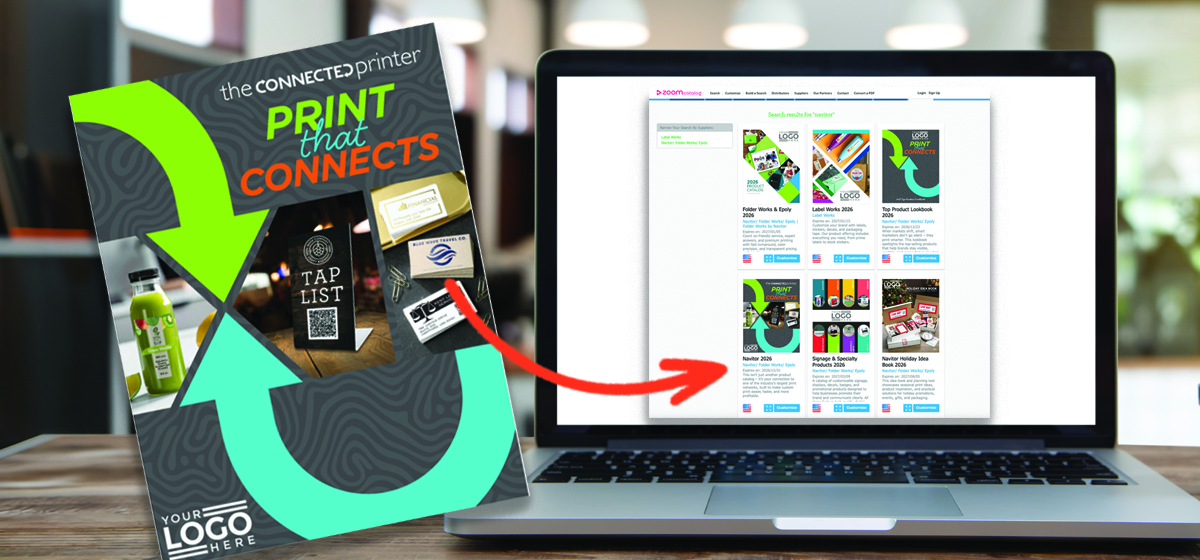
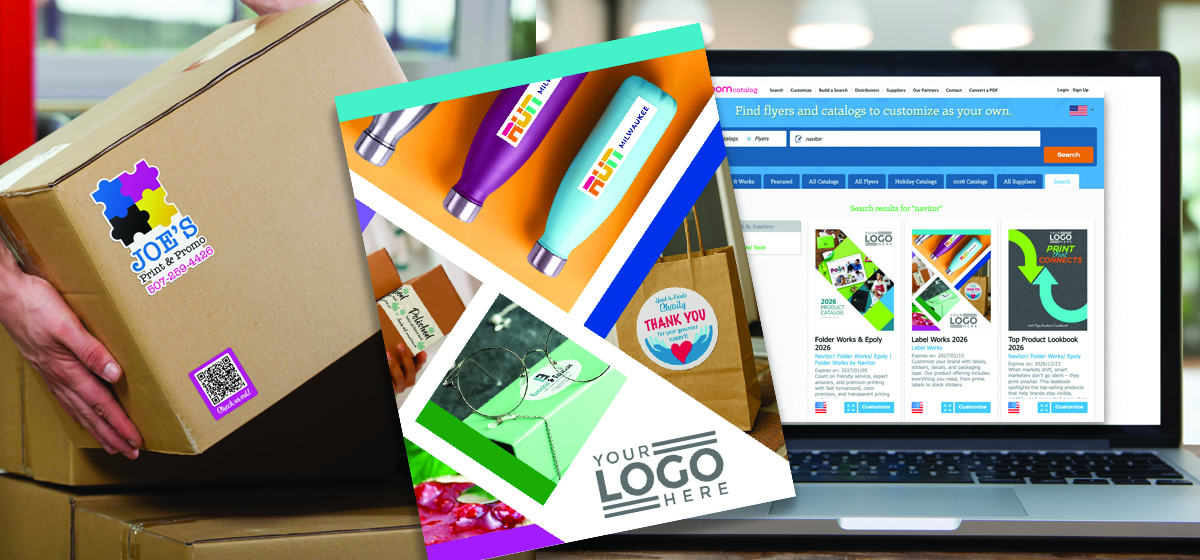
ZOOMcatalog allows you to personalize Navitor catalogs with your company information, including your logo and contact details. The result is a customer-facing resource that keeps your business visible as customers browse products and consider possibilities.

That personalization serves several practical purposes:

  • It gives customers a clear path back to you.
  • It reinforces your role as their print resource.
  • It helps the catalog feel relevant to your business relationship.
  • It allows you to share professionally presented product content without creating a catalog from scratch.

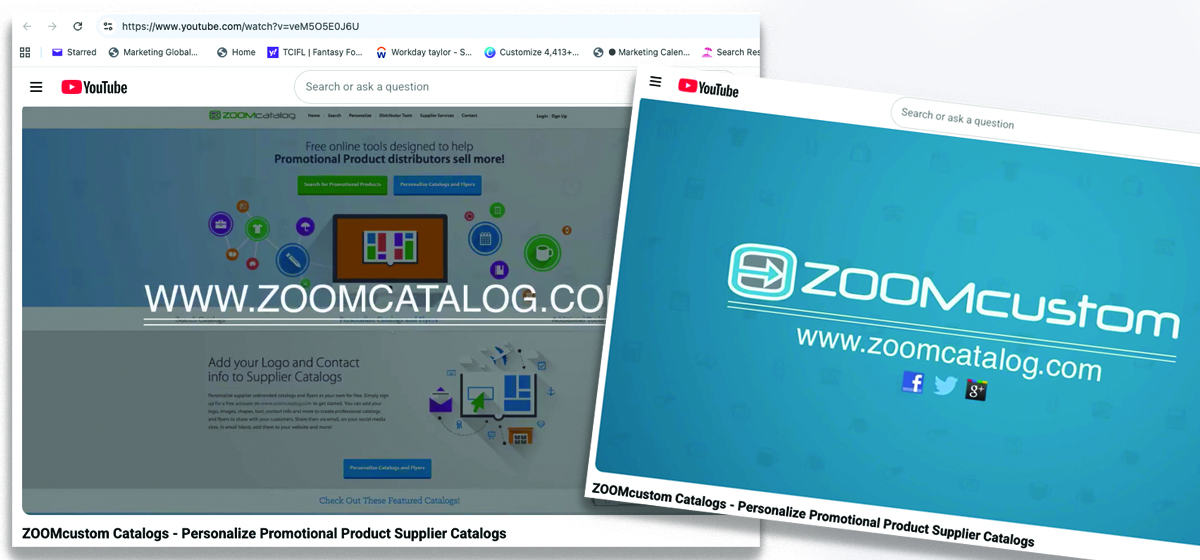
If you haven’t customized a catalog before – or could use a quick refresher – watch this short catalog-customization tutorial.

The live link gives customers the latest catalog version

Navitor’s 2026 Digital Catalog receives quarterly updates on ZOOM. When you share your customized ZOOMcatalog link, those updates flow into the online version your customers see.

A downloaded PDF works differently. It is a static copy saved at the time of download, just like any other file stored on a computer. Changes made later can’t be added to a PDF that has already been downloaded.

That makes the live link the best choice for most ongoing sharing:

  • Customers see the latest available catalog version.
  • You don’t have to redistribute a new file after each quarterly update.
  • The same link can continue working in emails, proposals, social posts, and website resources.
  • Customers can browse online without managing a large attachment.

A PDF can still be helpful when someone needs an offline or printed copy. For everyday digital sharing, however, use your live ZOOMcatalog link whenever possible.

Customize a Navitor Catalog on ZOOM

Digital catalogs are easier to keep in circulation

Printed catalogs have an important place in sales conversations, especially when customers prefer a physical resource. Digital catalogs add another advantage: they can travel almost anywhere your customer communications go.

A single catalog link can support:

  • Prospecting emails
  • Post-meeting follow-up
  • Proposals and quotes
  • Account-review conversations
  • Newsletters
  • Social media
  • Email signatures
  • Resource sections on your website
  • Seasonal campaigns

Because the catalog is available through a link, you can share it repeatedly without attaching a large file. You can point customers to the categories or page numbers most relevant to them rather than expecting them to search through the entire catalog.

The goal is not merely to make the catalog available. The goal is to give it a specific role in your sales activity.

Suggested pricing provides a starting point

Navitor digital catalogs include suggested retail pricing to give customers a useful reference as they explore products and consider their needs. These prices are suggestions only; you remain in control of the final prices you quote to your customers.

Actual pricing may vary based on quantity, product specifications, customization, production requirements, shipping, service needs, local market conditions, and other factors. This flexibility allows each distributor to price appropriately for their business, market, and the value they provide.

When sharing a catalog, you can set expectations with a simple message such as: “The catalog includes suggested retail pricing for general planning purposes. Contact us for recommendations and a personalized quote based on your specific project.”

Seven practical ways to share your customized catalog

Once your catalog is personalized, put it into circulation with these seven approaches.

1. Add it to account follow-up emails

After a meeting or sales call, send the catalog with a brief note directing the customer to products related to your conversation. Try: “Based on what we discussed, pages XX–XX may give you a few additional ideas. If something catches your attention, I can help you explore the options.”

2. Share it before planning meetings

Send the catalog before an annual, quarterly, or seasonal planning conversation. Giving customers time to browse may lead them to identify needs that would not have surfaced during the meeting alone.

3. Include it with proposals

A proposal may focus on one immediate project, but the catalog can introduce additional ways you can help. Position it as an ideas resource rather than an unrelated attachment.

4. Feature one product category at a time

Don’t feel obligated to promote the entire catalog in every message. Highlight a different category in monthly emails, newsletters, or social posts, then link customers to the relevant section.

A focused introduction is often more useful than a general invitation to browse hundreds of products.

5. Add it to your website

Include your customized catalog in a resources, products, or capabilities section. This gives current customers and prospects a convenient way to explore your print selection while keeping your contact information within reach.

6. Reconnect with inactive customers

A personalized catalog gives you a practical reason to reach out beyond the usual “checking in” message.

Try: “I wanted to share our current digital print catalog. It includes a wide range of ideas we can help you explore, and I thought it might be useful as you plan upcoming projects.”

7. Use focused editions when timing matters

A comprehensive catalog supports year-round discovery. A seasonal idea book gives you a more timely reason to initiate a conversation.

Use both roles strategically: the main catalog can remain in regular circulation, while focused editions can support specific campaigns, industries, or selling seasons.

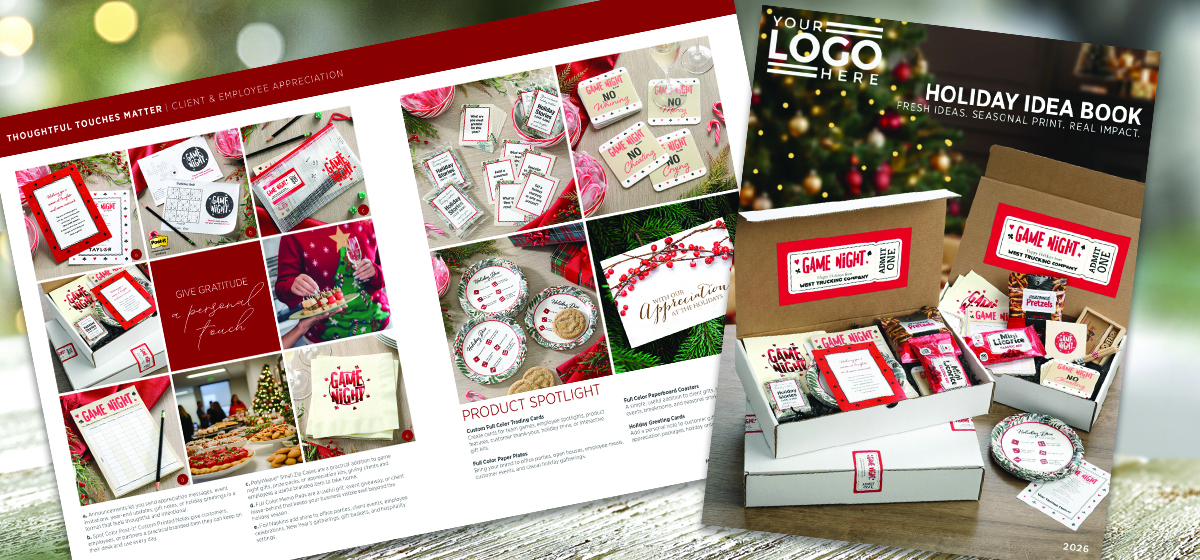
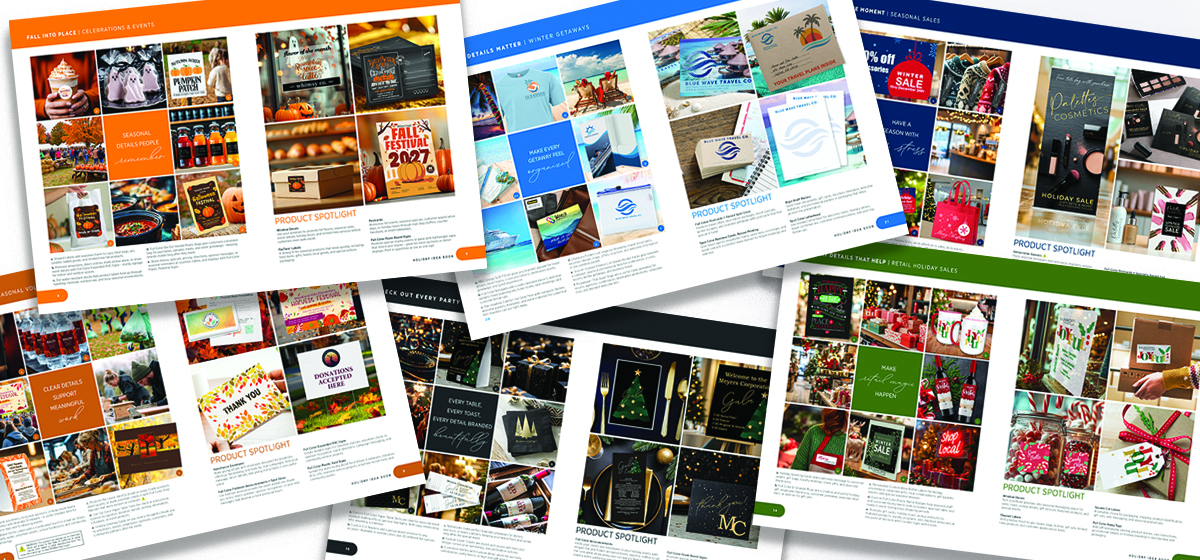
Use the Holiday Idea Book to start timely conversations

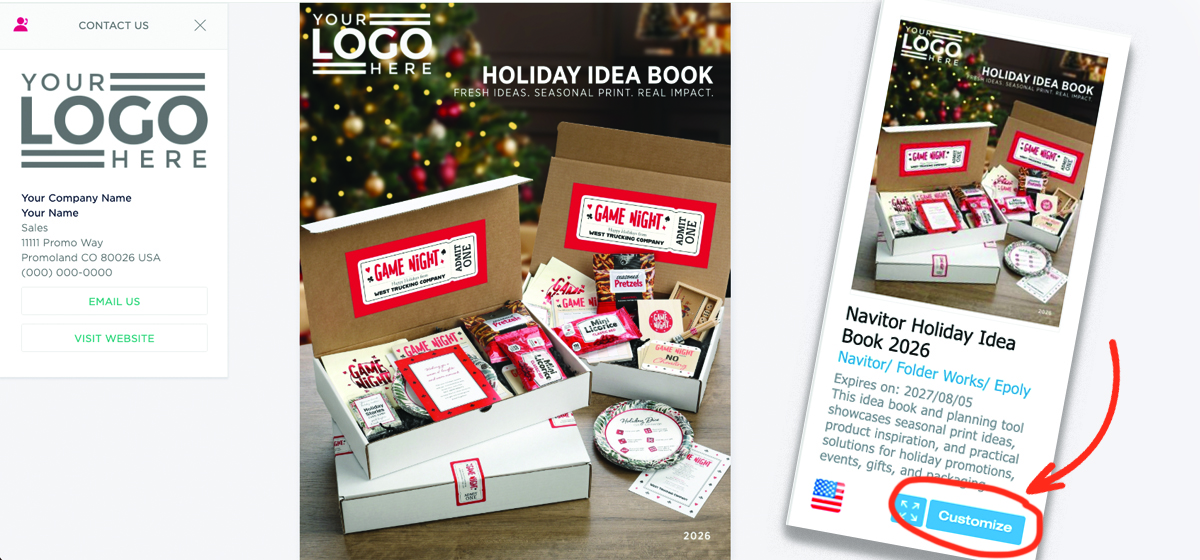
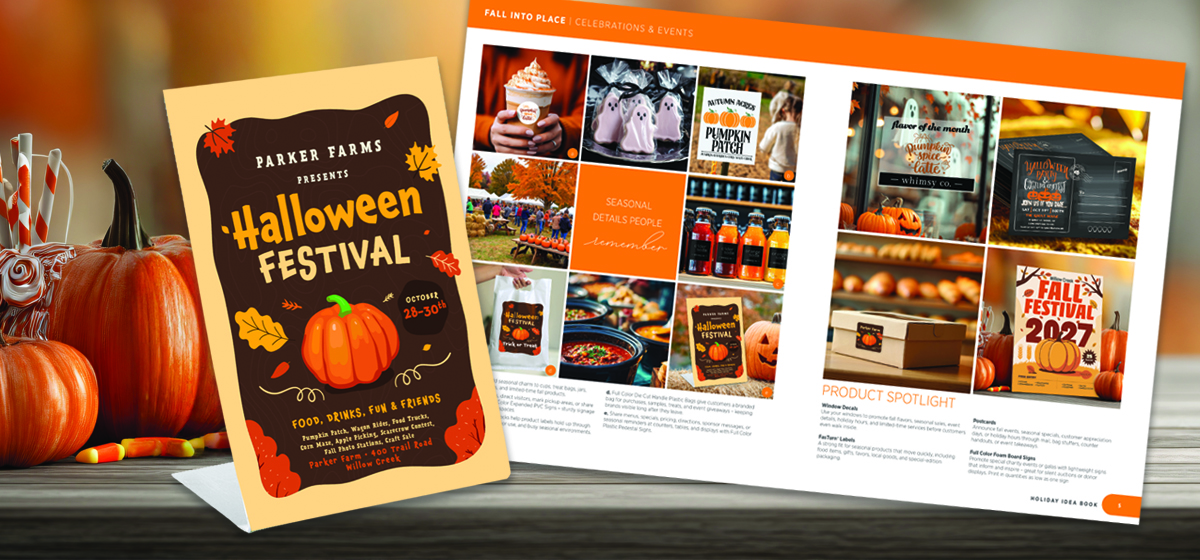
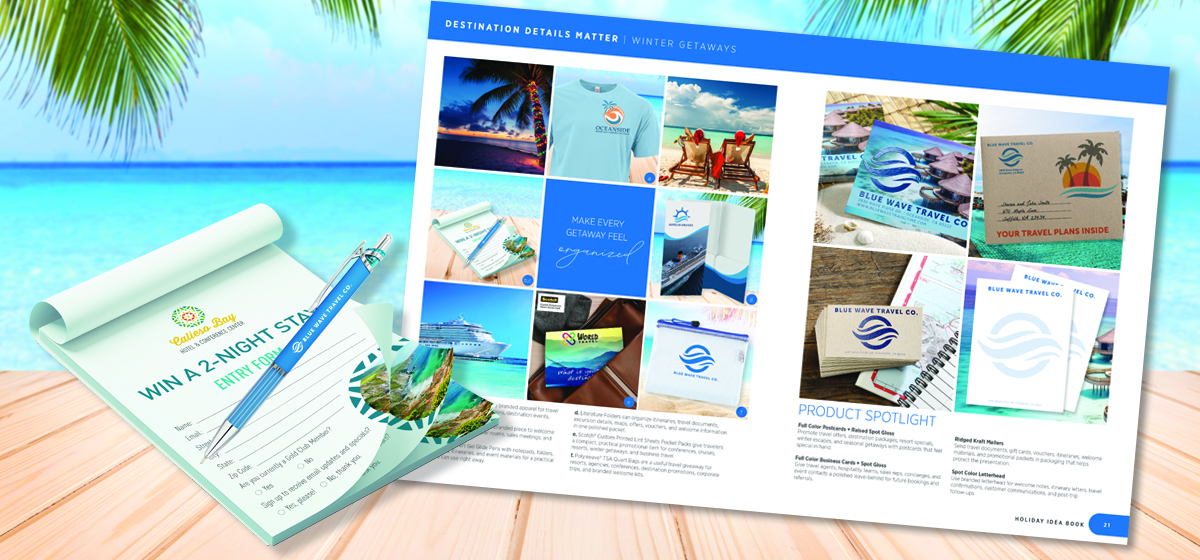
The new Holiday Idea Book is also now available on ZOOM. It brings together print ideas for celebrations, appreciation, events, gifting, packaging, promotions, and year-end communications.

Customize it with your company information and use it to begin conversations before seasonal plans and deadlines are firmly set.

You might introduce it with a message like this:

Holiday planning is starting, so I wanted to share a collection of print ideas for upcoming events, gifting, packaging, promotions, and year-end communications. If something catches your attention, I can help you explore the options.

The Holiday Idea Book can support several types of outreach:

  • Email it to customers who ordered holiday print last year.
  • Share it before seasonal planning meetings.
  • Highlight one product spread at a time on social media.
  • Add it to quotes and follow-up emails.
  • Send it to organizations planning employee, donor, or customer appreciation programs.
  • Use it to introduce holiday categories to customers who currently purchase only year-round essentials.

Seasonal relevance provides a natural reason to reach out now without relying on artificial urgency.

Customize once. Keep finding reasons to share

A personalized digital catalog shouldn’t just sit quietly on a website waiting to be discovered. Treat it as an active part of your sales process.

Use it to answer “What else do you offer?” Direct customers to categories related to what they already buy. Add it to follow-up messages and proposals. Share focused editions when the timing supports a new conversation.

Most importantly, share the live ZOOMcatalog link whenever possible so customers can access the latest available version, including Navitor’s quarterly updates.

Extend Your Outreach Beyond the Catalog

Your customized catalog can serve as the centerpiece of a larger marketing effort. Navitor’s searchable image library gives you access to product imagery you can use in your own emails, website content, and social media posts. Choose images that support the products or markets you want to promote, then link your content back to your customized catalog so customers can continue exploring.

Explore the Image Library

Customize the 2026 Navitor Digital Catalog and Holiday Idea Book on ZOOM, add your company information, and give customers more print ideas to explore – with your company information connected to every idea.


5 Print Staples Retailers and Small Businesses Keep Coming Back For

Retailers and small businesses don’t usually wake up thinking, “We should order more print today.”

They realize they have a new employee who needs business cards. A seasonal promotion that needs to be announced. A product that needs a label. An event that needs signage. Or a stack of envelopes that’s getting dangerously low.

The print order follows the change.

For you, that’s an important distinction. The best opportunity may not begin with a customer asking for a specific printed product. It may begin with a new hire, an updated offer, a product launch, a busy season, or a change in how the business serves its customers.

Pay attention to what’s changing, and you will often find the next print need.

Consider it your Reorder Radar: a way to recognize the business moments that lead retailers and small businesses back to practical, frequently used print products.

Here are five categories that deserve a regular place in those conversations.

1. Business Cards: When the Team or Contact Information Changes

Business cards remain one of the most familiar printed pieces, but the opportunity extends well beyond placing a name and phone number on cardstock.

They support networking, appointments, sales calls, vendor meetings, events, referrals, and everyday introductions. They also give you an easy reason to check whether other branded materials need attention.

Common business card order triggers include:

  • A new employee joins the team.
  • An existing employee receives a new title.
  • The company changes its address, phone number, or website.
  • A new location opens.
  • The business refreshes its branding.
  • A conference, trade show, or networking event is approaching.

Rather than moving directly to quantity and stock, ask:

“Is this update for one person, or are there other team members and materials that need the same changes?”

A new business card order may uncover outdated name badges, letterhead, envelopes, presentation folders, or notepads. If the logo, address, or contact information has changed in one place, it may need to change in several others.

Business cards are often the first request. A coordinated brand update may be the bigger opportunity.

2. Flyers, Brochures, and Postcards: When the Offer Changes

Retailers and small businesses are constantly giving customers reasons to pay attention.

They introduce services, run promotions, prepare for community events, update menus, announce openings, explain products, and remind customers what makes the business useful.

Flyers, brochures, and postcards can support all those needs.

These pieces may be handed out, displayed at the counter, inserted into bags or shipments, included in presentation folders, distributed at events, or used by sales representatives as leave-behinds.

Listen for order triggers such as:

  • “We’re launching a new service.”
  • “We have a summer promotion coming up.”
  • “We’re participating in a local event.”
  • “Our pricing or product selection has changed.”
  • “We need something customers can take with them.”
  • “We need to explain this more clearly.”

A helpful follow-up question is:

“Where will customers encounter this message, and what do you want them to do next?”

The answer can help determine whether the customer needs a flyer, brochure, postcard, rack card, door hanger, table tent, poster, or combination of pieces.

It may also create an opportunity to connect print with digital content. A QR code on a brochure, flyer, table tent, label, or postcard can send customers to an appointment page, menu, online store, product demonstration, special offer, event registration form, or review site.

The printed piece gets attention. The digital destination provides the next step.

More Ways to Support Small Business Customers

From everyday brand materials to promotional pieces and customer communications, Navitor’s Small Business Industry Flyer can help you start broader conversations and identify more ways to support local businesses.

Explore Small Business Ideas

3. Labels and Hang Tags: When the Product Changes

For retailers and product-based businesses, the product itself creates a steady stream of print needs.

New varieties need labels. Seasonal merchandise needs hang tags. Updated packaging needs revised information. Special editions, product launches, and expanded inventory may require entirely new versions.

Custom labels and hang tags can help businesses communicate:

  • Product names and varieties
  • Pricing
  • Ingredients or instructions
  • Sizes and specifications
  • Promotional messages
  • Brand information
  • Seasonal or limited-edition details

Because products and inventory change, these pieces often create solid reorder potential.

When a customer requests labels or hang tags, ask:

“Where does the product go after this piece is applied?”

Does it sit on a shelf? Hang on a display? Go into a shipping envelope? Get packed into a folded carton? Travel directly to the customer? Appear at a market, event, or retail counter?

That one question can broaden the packaging conversation.

A label request may lead to hang tags, decals, branded packaging tape, shipping envelopes, or folded cartons. The right combination depends on what the product needs to communicate, how it is sold, and how it reaches the buyer.

Your role is not to add packaging elements simply to increase the order. It is to help the customer identify which pieces make the product easier to recognize, understand, handle, display, or ship.

4. Posters, Banners, and A-Frames: When the Space Changes

Retailers and local businesses need to communicate with customers before they enter, as they move through the space, and when they reach the point of purchase.

That makes signs and displays a recurring need rather than a one-time purchase.

Posters, banners, and A-frame or sandwich-board signs can help announce:

  • Sales and limited-time offers
  • Grand openings
  • Seasonal promotions
  • New products or services
  • Events
  • Business hours
  • Pickup instructions
  • Wayfinding information
  • Temporary operational changes

The right sign depends on where the message needs to work.

Ask:

“Where does someone need to see this – from the street, at the entrance, inside the location, or near the point of purchase?”

A message aimed at passing traffic may call for an A-frame sign or a banner. A customer already inside the business may be better reached with a poster, pedestal sign, table tent, counter sign, or decal.

The need may also extend beyond the sign itself.

A sidewalk sign announcing a promotion could be supported by matching posters inside, flyers customers can take home, counter materials that explain the offer, and labels that carry the promotion through to the product.

Think about the full path:

What gets someone to stop? What helps them understand the message? What gives them a next step?

That’s where one signage request can become a more coordinated promotion.

Take the Retail Conversation Beyond One Product

Navitor’s Retail Industry Flyer brings together print ideas for storefront visibility, in-store promotions, product presentation, packaging, and everyday customer communication.

Explore Retail Ideas

5. Letterhead, Envelopes, and Notepads: When the Business Changes

Promotional print may receive more attention, but the materials businesses use every day can create some of the most dependable reorder opportunities.

Letterhead, envelopes, and notepads support customer correspondence, proposals, estimates, appointments, internal communication, sales meetings, and routine business operations.

They’re practical, visible, and frequently replenished.

Order triggers may include:

  • A change in branding
  • New contact information
  • A new office or location
  • Updated customer packets
  • Growth in staff or sales activity
  • Changes to business processes
  • Inventory running low
  • A new need for branded correspondence

A useful question is:

“Which materials does the business use repeatedly, and which ones still show outdated branding or information?”

A letterhead update may reveal that envelopes, folders, forms, business cards, notepads, or stamps also need attention.

This is especially helpful for customers who update items one at a time. A quick review can help them avoid using an old address on one piece, a former logo on another, and current branding everywhere else.

The opportunity is not about making everything match for appearance alone. It is about helping the business communicate accurately and consistently wherever customers encounter it.

Listen for the Change Behind the Request

The five categories above are useful because they connect to events that happen repeatedly in retail and small business.

When a customer says:

  • “We hired someone new.”
  • “We are running a promotion.”
  • “We added a product.”
  • “We have an event coming up.”
  • “We changed our logo.”
  • “We are opening another location.”

A print conversation is probably close behind.

The product they request may be only the first item they have considered.

What They Asked For – and What May Come Next

Imagine a local boutique contacts you for labels for a seasonal product line.

The immediate need is clear. But a few questions may reveal that the collection will also have hang tags, an in-store launch, and online orders.

Now the conversation may include:

  • Product labels
  • Hang tags
  • An A-frame sign announcing the launch
  • Posters inside the store
  • Promotional postcards placed in customer bags
  • Branded packaging tape for online shipments

Or consider a service-based small business ordering business cards for a new employee.

A conversation about how the employee will work with customers may uncover a need for:

  • Presentation folders for estimates
  • Branded notepads for appointments
  • Door hangers for neighborhood outreach
  • Flyers explaining key services
  • Updated name badges or stationery

Neither conversation requires an aggressive sales pitch. It requires curiosity.

You ask: “What changed, where the printed piece will be used, and what else supports the same goal?”

Build Repeat Business by Making the Next Need Easier to See

Retailers and small businesses keep returning to these print staples because their businesses keep moving.

Employees join. Offers change. Products launch. Promotions rotate. Information gets updated. Supplies run out.

Dated Products offer another way to anticipate customer needs. Discover how calendars, calendar cards, and daters can help you turn predictable purchasing cycles into repeat business in The Next Order Is Already on the Calendar.

Resellers who understand those patterns can become more useful long before the customer searches for a specific product.

On your next customer call, try asking:

“What is changing in the business right now?”

The answer may point directly to the product they requested. It may also reveal a need they have not considered yet.

That’s where repeat business often begins – not with a product pitch, but with a better question.


Discover all that Navitor has to offer today. You’ll be glad you did.


The Idea Book That Helps Customers See the Whole Season

The holiday season has a way of arriving early.

Retail displays appear before the weather changes. Restaurants start planning seasonal menus while customers are still enjoying summer. Nonprofits begin mapping out year-end giving campaigns months before donations peak. Companies schedule appreciation events, customer gifts, employee celebrations, and holiday mailings long before the first invitation goes out.

That early planning window matters.

For many businesses, holiday print isn’t just about one greeting card, one sale sign, or one shipping label. It’s about creating a complete seasonal experience that helps them attract customers, promote offers, organize events, thank important people, package products, and stay visible during one of the busiest times of the year.

That’s where the Holiday Idea Book can help.

This white-labeled digital asset gives you an easy, visual way to start customer conversations before timelines get tight. It’s filled with seasonal print ideas, vivid product imagery, and customer-friendly product descriptions that help buyers picture what they may need for holiday sales, fall events, appreciation gifts, seasonal packaging, shipping, winter travel promotions, and more.

Use it as more than a product showcase. Use it as a planning tool.

Start the Conversation Before Customers Feel Rushed

Many customers wait until they have an immediate need.

  • They ask for a banner because the sale starts next week.
  • They need labels because products are already being packed.
  • They remember announcements after the mailing list is due.
  • They realize they need event signage once the event is almost here.

Last-minute needs will always happen, but holiday print works better when it’s planned with the whole season in mind. Earlier conversations give customers more room to think through quantities, designs, approvals, timing, and add-on pieces that support the same goal.

A simple message can open the door:

“I know many businesses are already planning for the holiday season. I thought this idea book might help you think through signage, packaging, cards, gifts, events, and customer touchpoints before things get busy.”

That note is helpful, timely, and easy to act on. It also positions you as a resource before your customer is in urgent mode.

Help Customers See the Bigger Need

Customers don’t always ask for print in product language. They usually start with a business goal.

They want more people in the store.
They want an event to feel organized.
They want a gift to feel more thoughtful.
They want packaging to look more seasonal.
They want customers to remember an offer.
They want employees, donors, or partners to feel appreciated.

The Holiday Idea Book helps translate those goals into practical print ideas.

Instead of asking, “Do you need holiday cards this year?” you can ask:

“What are you doing this season to thank customers, employees, donors, or partners?”

Instead of asking, “Do you need any signs?” try:

“Are you planning any seasonal sales, special hours, pickup options, or events that customers will need to know about?”

Those questions lead to better conversations because they focus on what the customer is trying to accomplish, not just what they ordered last year.

Use the Idea Book by Customer Type 

Because the idea book is visual and white-labeled, it’s easy to share with different types of customers as your own seasonal planning resource. To make it more effective, point customers toward the ideas that match their business.

For retail customers, highlight holiday signage, window decals, counter signs, hang tags, labels, custom bags, gift packaging, postcards, and loyalty punch cards. These products help shoppers find offers, understand product details, notice gift options, and enjoy a more complete shopping experience.

For restaurants, venues, and hospitality businesses, focus on table tents, napkins, coasters, rack cards, drinkware, event signage, posters, menus, and holiday cards. These pieces help support seasonal dining, private events, customer appreciation, and branded guest experiences.

For nonprofits, churches, and community organizations, point to banners, yard signs, remittance envelopes, donation materials, thank-you cards, event tickets, table tents, and sponsor signage. These items help promote causes, organize volunteers, support fundraising, and make giving easier.

For corporate customers, share ideas for appreciation gifts, announcements, greeting cards, memo pads, drinkware, napkins, paperboard coasters, event programs, and holiday party materials. These products help businesses recognize the people who supported their year.

For travel, resort, and hospitality clients, use the winter getaway ideas to start conversations about folders, postcards, notepads, pens, apparel, TSA bags, badges, and welcome kits. These pieces help prepare travelers, improve customer experiences, and create branded takeaways.

The more specific your outreach feels, the more useful the idea book becomes.

Turn One Request into a More Complete Plan

One of the biggest opportunities in holiday print is helping customers see what naturally belongs together.

  • A customer who asks for a holiday card may also need mailing labels, envelopes, gift tags, stickers, or appreciation gifts.
  • A customer who asks for a banner may also need window decals, counter signs, postcards, table tents, or directional signage.
  • A customer who asks for labels may also need hang tags, bags, packaging tape, mailing labels, or gift packaging.
  • A customer planning an event may need announcements, rack card programs, napkins, paperboard coasters, table tents, signs, tickets, and thank-you cards.
  • A customer preparing seasonal shipments may need packaging tape, mailing labels, greeting cards, door hangers, or inserts.

This approach isn’t about adding products just to add products. It’s about helping customers create a more complete experience around the thing they are already trying to do.

A Simple Step-by-Step Plan

Here’s a practical way to use the Holiday Idea Book throughout the season.

Step 1: Choose your first group of customers.
Start with customers who are most likely to have seasonal needs: retailers, restaurants, nonprofits, schools, hospitality businesses, churches, corporate accounts, salons, boutiques, real estate offices, travel agencies, and anyone who hosts events, sends mailings, sells gifts, or ships products.

Step 2: Send the idea book with a short note.
Don’t just attach a link to the lookbook and hope they browse it. Give them a reason to open it. Mention that it includes ideas for holiday sales, seasonal events, customer appreciation, gifting, packaging, shipping, and year-end communication.

Step 3: Ask one good planning question.
Keep it simple. Try: “Are you planning any holiday promotions, customer gifts, events, or special packaging this year?” One focused question is easier to answer than a long list of possibilities.

Step 4: Point to one or two relevant sections.
Make the asset easier to use. For a retailer, call out the retail holiday sales and seasonal sales sections. For a nonprofit, suggest the volunteer events and shipping sections. For a corporate customer, point to client and employee appreciation or holiday events.

Step 5: Recommend a connected set of pieces.
Once you know the goal, suggest the print that supports it. For example, a holiday open house could include invitations, window decals, counter signs, table tents, napkins, paperboard coasters, custom labels, and thank-you cards.

Step 6: Talk timing early.
Help customers work backward from their event date, sale launch, mailing deadline, or shipping window. Early planning helps reduce rushed decisions and gives them more time for approvals, revisions, and reorders.

Step 7: Follow up with a specific idea.
Avoid the generic “just checking in.” A stronger follow-up sounds like: “I noticed a few ideas in the idea book that could work well for your customer appreciation gifts this year. Would it help if I pulled together a few options?”

Best Practices for Better Holiday Conversations

The idea book works best when it’s used with intention.

Share it early, before customers are under pressure.
Personalize your message by customer type.
Focus on the goal behind the print piece.
Use the visuals to help customers imagine the finished experience.
Ask about events, gifting, packaging, signage, shipping, and promotions.
Recommend pieces that support the same need.
Bring up timelines before the season gets crowded.
Follow up with one useful idea, not a broad product list.

Holiday print touches almost every part of the season: sales, events, gifting, packaging, customer appreciation, employee recognition, fundraising, and year-end communication. The more customers can see those connections, the easier it is for them to plan with confidence.

Make the Season Easier to Plan

The Holiday Idea Book gives you a ready-to-share resource that helps customers think earlier and more completely about the season ahead. It gives them ideas they can see, products they can understand, and a better way to connect print with the moments that matter most to their business.

Start with one customer. One seasonal event. One promotion. One appreciation gift. One packaging need.

Then use the idea book to help them see what else could make the season smoother, more memorable, and more successful.


View the Holiday Idea Book