A customer may know you for Business Cards but not realize you can also help with Labels, Packaging, Folders, Signs, Event Tickets, or holiday print. That gap represents an opportunity – and a customized digital catalog can help you close it.
Personalized digital catalogs give customers an easy way to explore more of what you offer while keeping your company name, logo, and contact information connected to the experience. But creating the catalog is only the beginning. Its value grows each time you use it to support prospecting, follow-up, account reviews, seasonal outreach, and cross-selling.
Let’s walk through how to turn a customized Navitor catalog into a sales resource you can use throughout the year.
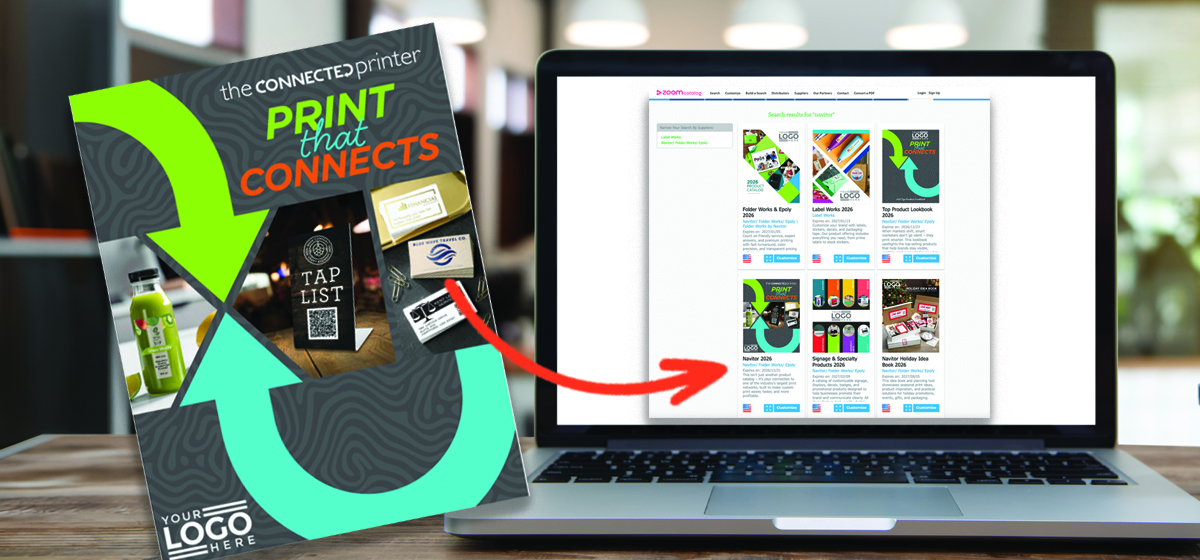
Your customers may know only part of what you sell
Most customers develop a narrow picture of their vendors based on what they’ve already purchased. A customer who orders Business Cards may think of you primarily as a stationery resource. One who buys Labels may not realize you can also help with Packaging Tape, Hang Tags, or other packaging products.
Sending a customer an entire catalog without context may not change that perception.
Instead, connect what the customer already buys to a logical next category.
For example:
- Business Cards can lead to Stationery, Folders, and Name Badges.
- Labels can lead to Packaging Tape, Hang Tags, and packaging products.
- Event Tickets can lead to Banners, Signs, Badges, and Flyers.
- Holiday Cards can lead to Envelopes, Labels, Packaging, and Promo Products.
Each relevant category you introduce creates another opportunity to expand the account, increase order frequency, and keep more of the customer’s print business connected to you.
A digital catalog gives you a convenient way to show those connections. Rather than simply saying, “We offer more,” you can direct the customer to specific pages that relate to an upcoming project, business need, or conversation.
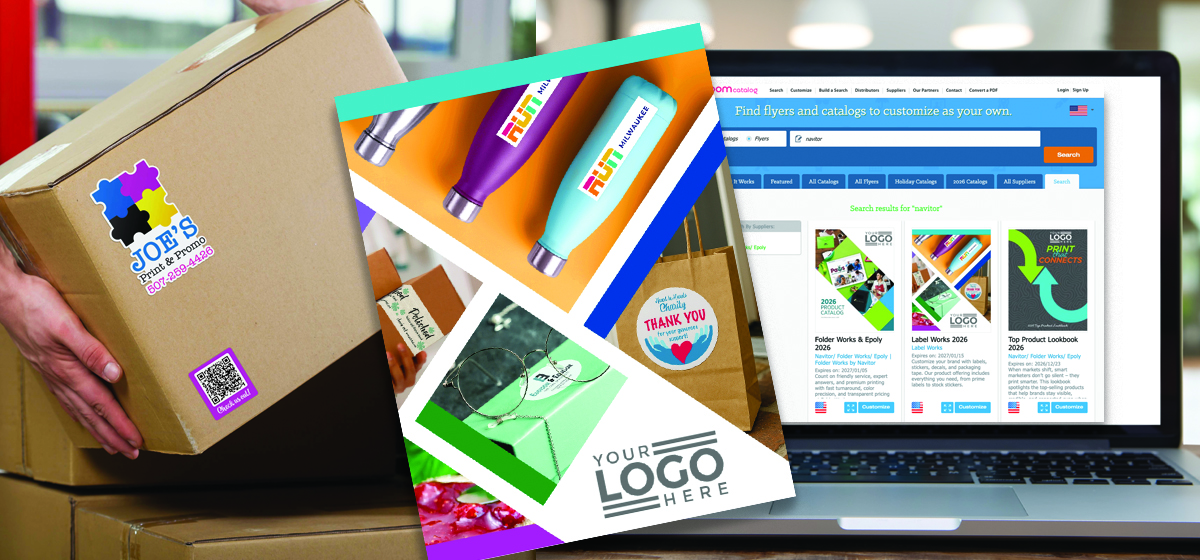
Personalization keeps the opportunity connected to you
A supplier catalog may contain useful product information, but your customer should also know whom to contact when an idea catches their attention.
ZOOMcatalog allows you to personalize Navitor catalogs with your company information, including your logo and contact details. The result is a customer-facing resource that keeps your business visible as customers browse products and consider possibilities.
That personalization serves several practical purposes:
- It gives customers a clear path back to you.
- It reinforces your role as their print resource.
- It helps the catalog feel relevant to your business relationship.
- It allows you to share professionally presented product content without creating a catalog from scratch.
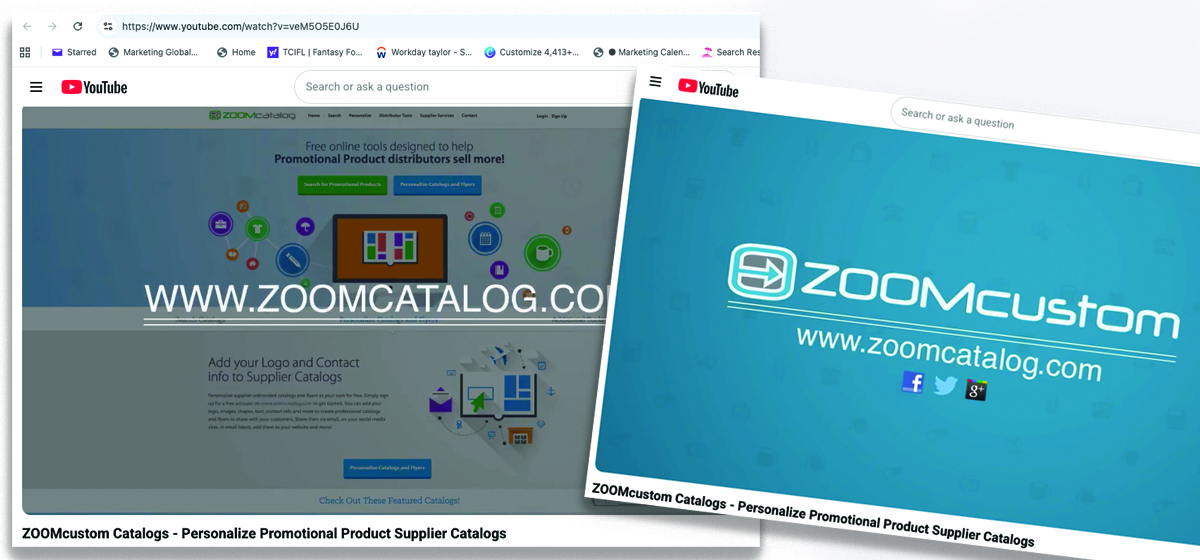
If you haven’t customized a catalog before – or could use a quick refresher – watch this short catalog-customization tutorial.
The live link gives customers the latest catalog version
Navitor’s 2026 Digital Catalog receives quarterly updates on ZOOM. When you share your customized ZOOMcatalog link, those updates flow into the online version your customers see.
A downloaded PDF works differently. It is a static copy saved at the time of download, just like any other file stored on a computer. Changes made later can’t be added to a PDF that has already been downloaded.
That makes the live link the best choice for most ongoing sharing:
- Customers see the latest available catalog version.
- You don’t have to redistribute a new file after each quarterly update.
- The same link can continue working in emails, proposals, social posts, and website resources.
- Customers can browse online without managing a large attachment.
A PDF can still be helpful when someone needs an offline or printed copy. For everyday digital sharing, however, use your live ZOOMcatalog link whenever possible.
Customize a Navitor Catalog on ZOOM
Digital catalogs are easier to keep in circulation
Printed catalogs have an important place in sales conversations, especially when customers prefer a physical resource. Digital catalogs add another advantage: they can travel almost anywhere your customer communications go.
A single catalog link can support:
- Prospecting emails
- Post-meeting follow-up
- Proposals and quotes
- Account-review conversations
- Newsletters
- Social media
- Email signatures
- Resource sections on your website
- Seasonal campaigns
Because the catalog is available through a link, you can share it repeatedly without attaching a large file. You can point customers to the categories or page numbers most relevant to them rather than expecting them to search through the entire catalog.
The goal is not merely to make the catalog available. The goal is to give it a specific role in your sales activity.
Suggested pricing provides a starting point
Navitor digital catalogs include suggested retail pricing to give customers a useful reference as they explore products and consider their needs. These prices are suggestions only; you remain in control of the final prices you quote to your customers.
Actual pricing may vary based on quantity, product specifications, customization, production requirements, shipping, service needs, local market conditions, and other factors. This flexibility allows each distributor to price appropriately for their business, market, and the value they provide.
When sharing a catalog, you can set expectations with a simple message such as: “The catalog includes suggested retail pricing for general planning purposes. Contact us for recommendations and a personalized quote based on your specific project.”

Seven practical ways to share your customized catalog
Once your catalog is personalized, put it into circulation with these seven approaches.
1. Add it to account follow-up emails
After a meeting or sales call, send the catalog with a brief note directing the customer to products related to your conversation. Try: “Based on what we discussed, pages XX–XX may give you a few additional ideas. If something catches your attention, I can help you explore the options.”
2. Share it before planning meetings
Send the catalog before an annual, quarterly, or seasonal planning conversation. Giving customers time to browse may lead them to identify needs that would not have surfaced during the meeting alone.
3. Include it with proposals
A proposal may focus on one immediate project, but the catalog can introduce additional ways you can help. Position it as an ideas resource rather than an unrelated attachment.
4. Feature one product category at a time
Don’t feel obligated to promote the entire catalog in every message. Highlight a different category in monthly emails, newsletters, or social posts, then link customers to the relevant section.
A focused introduction is often more useful than a general invitation to browse hundreds of products.
5. Add it to your website
Include your customized catalog in a resources, products, or capabilities section. This gives current customers and prospects a convenient way to explore your print selection while keeping your contact information within reach.
6. Reconnect with inactive customers
A personalized catalog gives you a practical reason to reach out beyond the usual “checking in” message.
Try: “I wanted to share our current digital print catalog. It includes a wide range of ideas we can help you explore, and I thought it might be useful as you plan upcoming projects.”
7. Use focused editions when timing matters
A comprehensive catalog supports year-round discovery. A seasonal idea book gives you a more timely reason to initiate a conversation.
Use both roles strategically: the main catalog can remain in regular circulation, while focused editions can support specific campaigns, industries, or selling seasons.
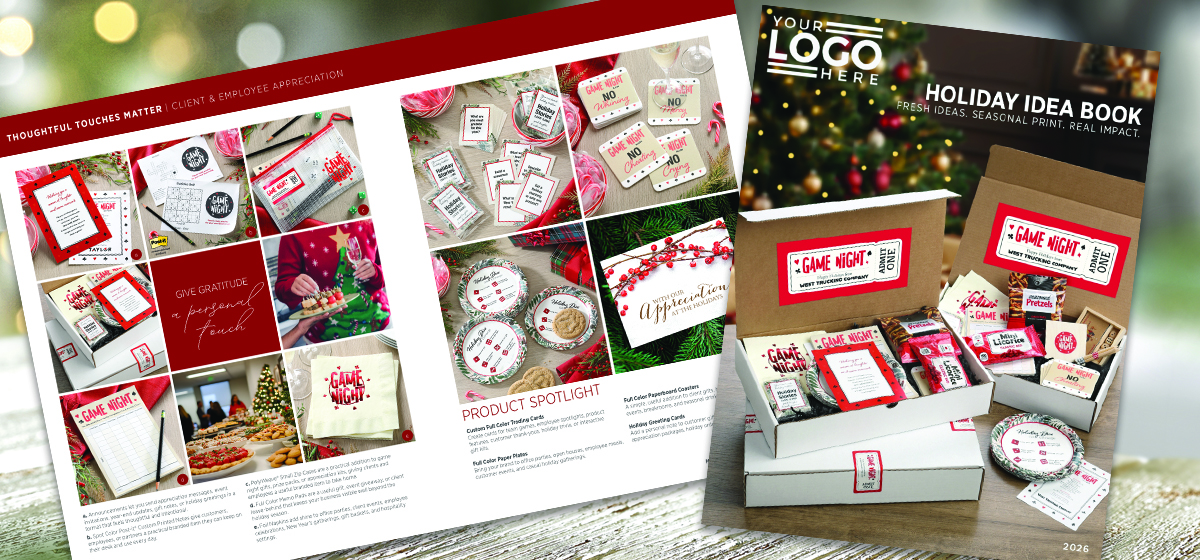
Use the Holiday Idea Book to start timely conversations
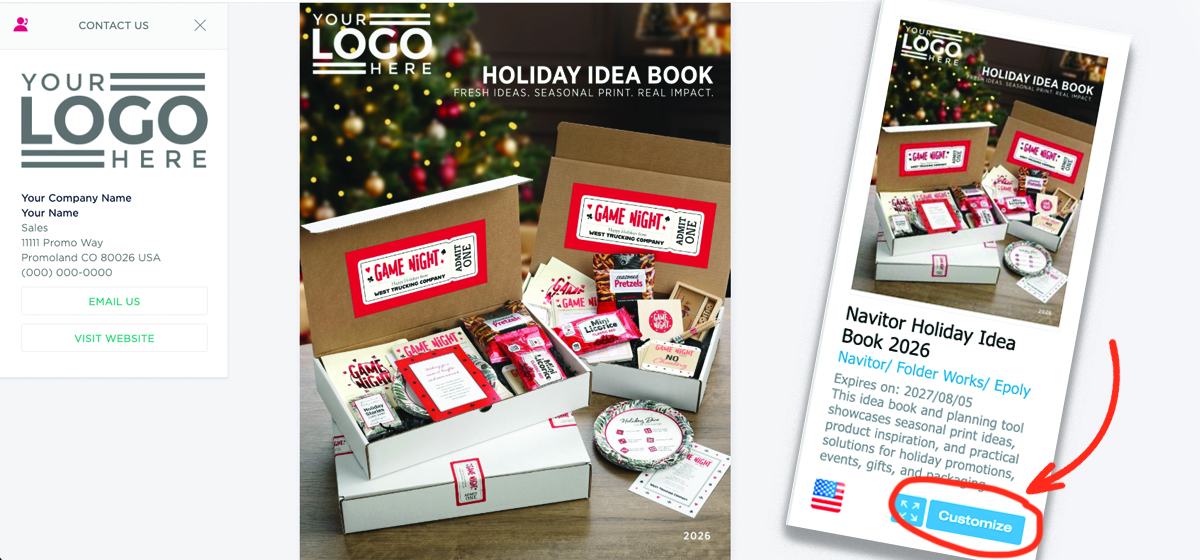
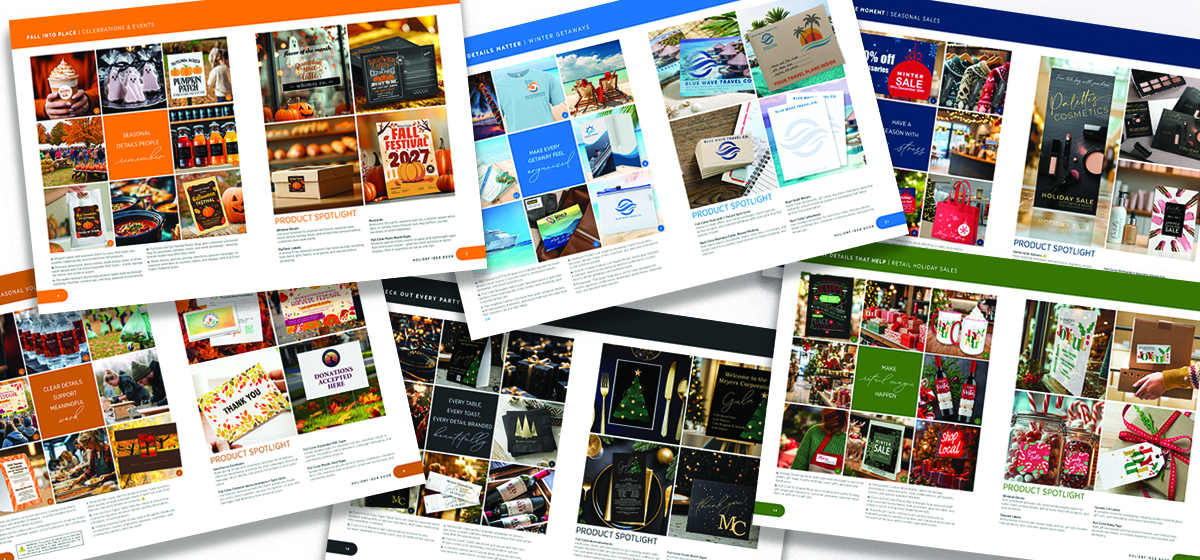
The new Holiday Idea Book is also now available on ZOOM. It brings together print ideas for celebrations, appreciation, events, gifting, packaging, promotions, and year-end communications.
Customize it with your company information and use it to begin conversations before seasonal plans and deadlines are firmly set.
You might introduce it with a message like this:
Holiday planning is starting, so I wanted to share a collection of print ideas for upcoming events, gifting, packaging, promotions, and year-end communications. If something catches your attention, I can help you explore the options.
The Holiday Idea Book can support several types of outreach:
- Email it to customers who ordered holiday print last year.
- Share it before seasonal planning meetings.
- Highlight one product spread at a time on social media.
- Add it to quotes and follow-up emails.
- Send it to organizations planning employee, donor, or customer appreciation programs.
- Use it to introduce holiday categories to customers who currently purchase only year-round essentials.
Seasonal relevance provides a natural reason to reach out now without relying on artificial urgency.
Customize once. Keep finding reasons to share
A personalized digital catalog shouldn’t just sit quietly on a website waiting to be discovered. Treat it as an active part of your sales process.
Use it to answer “What else do you offer?” Direct customers to categories related to what they already buy. Add it to follow-up messages and proposals. Share focused editions when the timing supports a new conversation.
Most importantly, share the live ZOOMcatalog link whenever possible so customers can access the latest available version, including Navitor’s quarterly updates.
Extend Your Outreach Beyond the Catalog
Your customized catalog can serve as the centerpiece of a larger marketing effort. Navitor’s searchable image library gives you access to product imagery you can use in your own emails, website content, and social media posts. Choose images that support the products or markets you want to promote, then link your content back to your customized catalog so customers can continue exploring.
Customize the 2026 Navitor Digital Catalog and Holiday Idea Book on ZOOM, add your company information, and give customers more print ideas to explore – with your company information connected to every idea.
 About Julie Carlson-Kulla