An event may last a few hours. The print opportunity usually starts much earlier – and can continue well after everyone goes home.
That’s worth remembering when a customer calls looking for a banner, some postcards, name badges, or another event-related piece. The requested item may be exactly what they need. But it may also be only one part of a much larger picture.
A better question is: What needs to happen before the event, while people are there, and after it’s over?
That simple framework can help you uncover a more complete set of customer needs without turning the conversation into an unnecessary upsell. Think of it as an Event Opportunity Map:
Before: Attract and inform
During: Welcome, direct, and engage
After: Follow up and extend the connection
Use that lens on fall and holiday events – or just about any event throughout the year – and one requested product can quickly reveal a more comprehensive print plan.
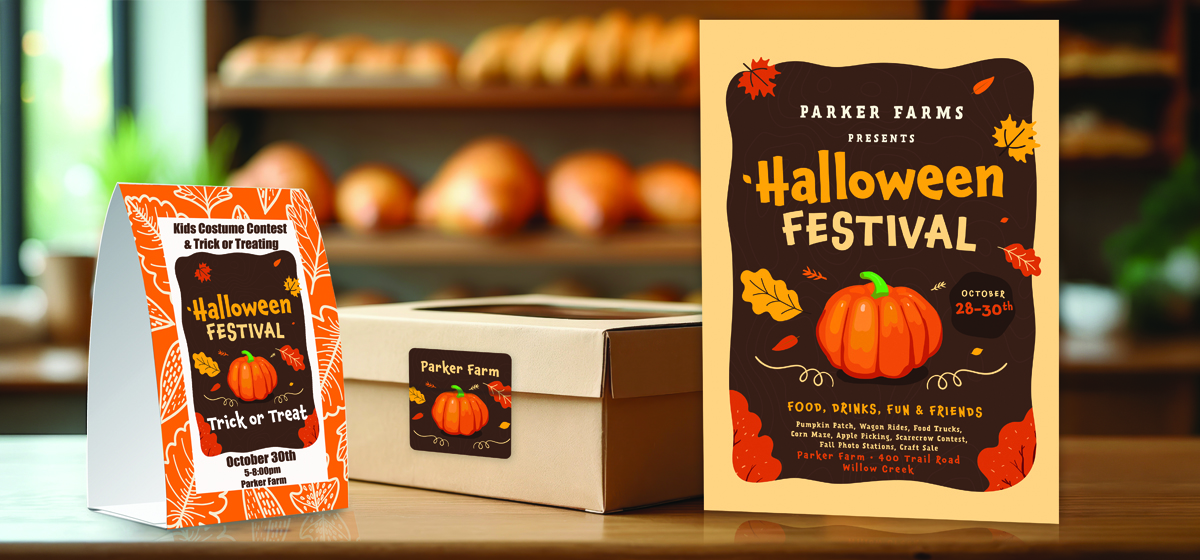
BEFORE: Help People Know, Care, and Show Up
Long before anyone walks through the door, customers need to create awareness and give people a reason to attend.
That can involve invitations, announcements, promotions, reminders, and event details spread across several touchpoints.
Potential print applications include:
- Postcards
- Flyers
- Announcements
- Posters
- Banners
- Door Hangers
- Event Tickets
- Labels and Stickers
- Promotional Products
The right mix depends on the event and the audience.
A retailer holding a holiday open house may need postcards to invite customers, posters to promote the date in advance, and flyers that employees can hand out in the weeks leading up to it.
A nonprofit planning a fall fundraiser may need event tickets, flyers, posters, and banners.
A company holding a customer appreciation event may need announcements or postcards along with printed materials that explain what attendees can expect.
You don’t need to guess. Ask:
- Who needs to know about the event?
- How are they hearing about it?
- Where will the event be promoted?
- Is registration or admission required?
- Is there a special offer or incentive tied to attendance?
- What action should someone take after seeing the printed piece?
That last question is especially useful.
Print can also point people toward digital content. A QR code on a postcard, poster, flyer, label, or ticket might lead to registration, directions, a schedule, an online offer, an event page, or additional information.
The goal isn’t to add technology simply because you can.
Give every printed piece a job.
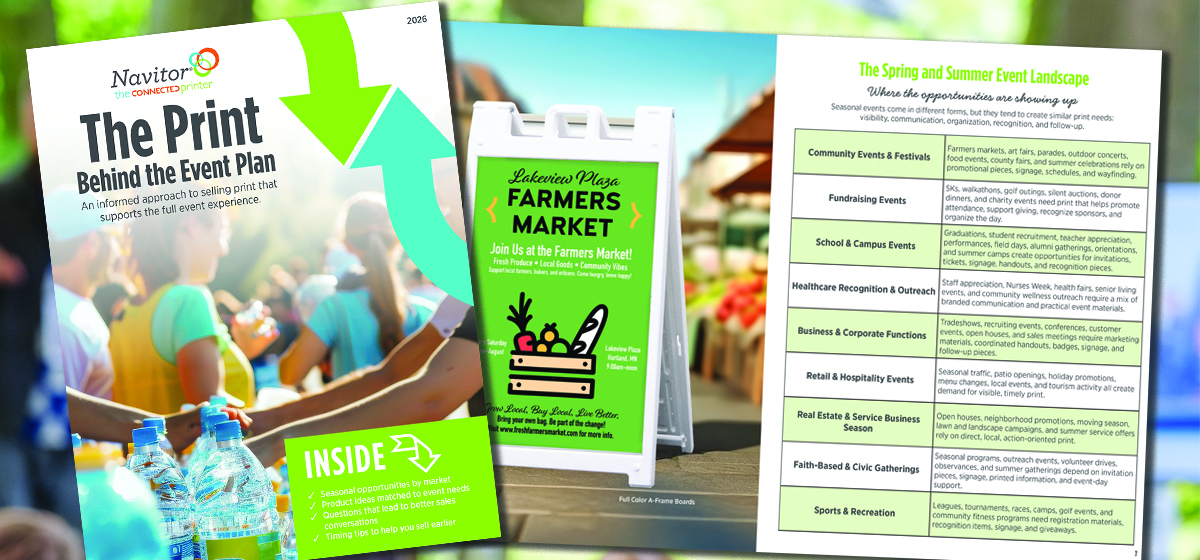
Start With the Occasion
Need ideas for the kinds of events your customers may be planning?
The Print Behind the Event Plan highlights seasonal events, meetings, celebrations, promotions, fundraisers, and other occasions that can create print opportunities throughout the year.
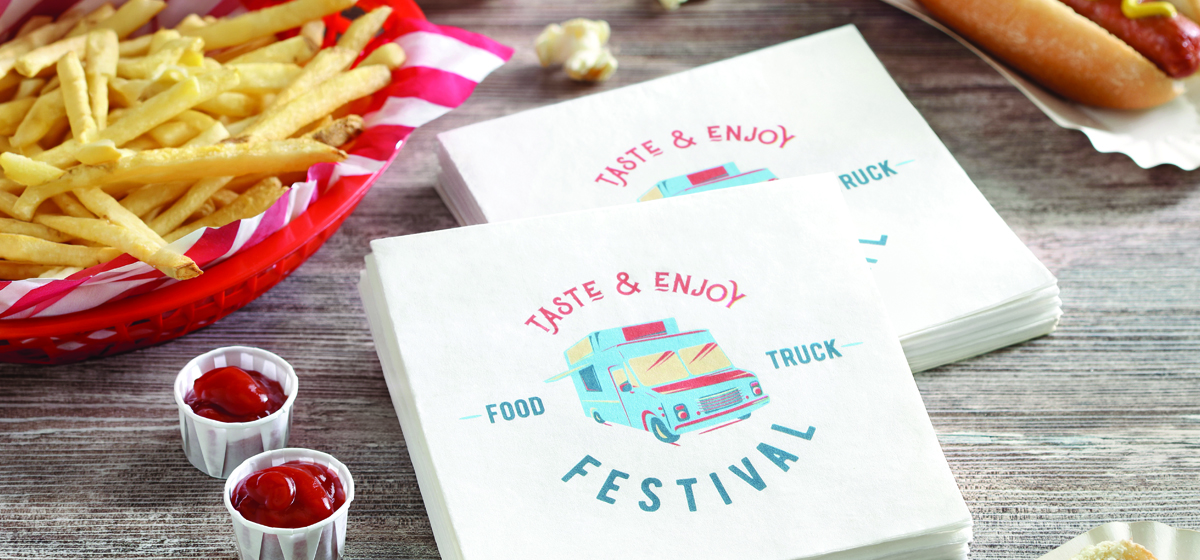
DURING: Help the Experience Work
Once attendees arrive, print takes on a different role.
Now it can help people know where to go, what to notice, who they are talking to, and what to do next.
That creates opportunities across several print categories:
- Banners
- A-frame signs
- Pedestal signs
- Posters
- Table tents
- Name badges
- Event tickets
- Labels and stickers
- Presentation folders
- Rack cards
- Hang tags
- Branded packaging
- Branded packaging tape
Instead of thinking only about how the event should look, think about how it needs to function.
The best event print isn’t just decoration. It gives people cues about where to go, what to notice, and what to do next.
Ask customers:
- How will attendees know where to enter?
- Do guests need directional signage?
- What information should be visible throughout the event?
- Do employees, volunteers, or attendees need identification?
- What will people pick up or take with them?
- Will products, gifts, samples, or giveaways be involved?
- Are sponsors or partners being recognized?
- Is there a message that needs to carry through several areas of the event?
Those questions can expose needs that never surfaced in the initial request.
Think Beyond the Banner
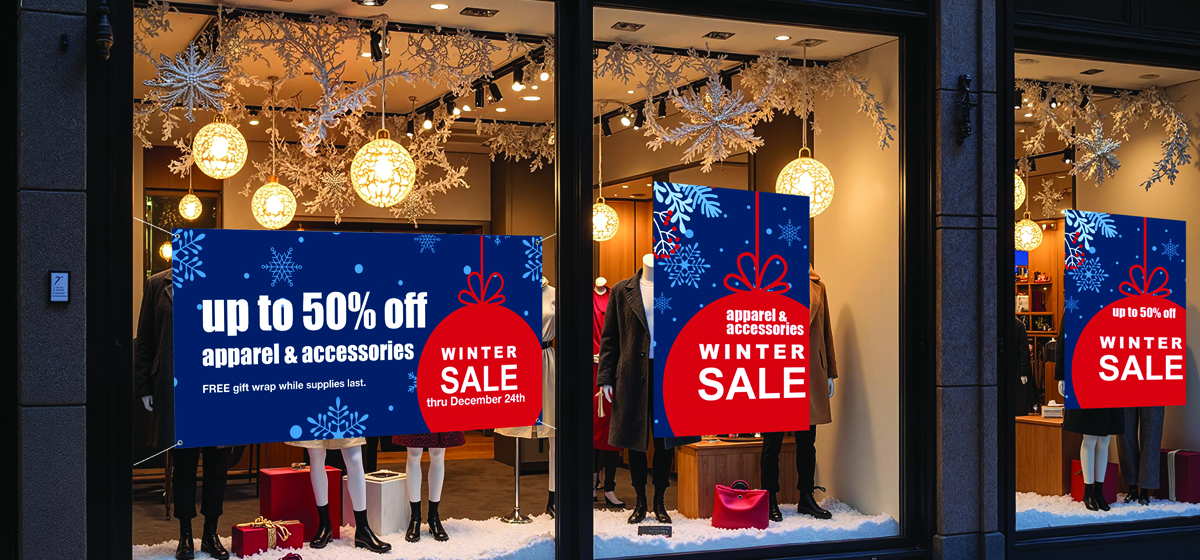
Imagine a retailer calls asking for a banner for a holiday open house.
That may be the entire job.
But a few questions might reveal the event also needs:
Before:
Postcards announcing the date
Posters promoting it in the store
During:
An A-frame sign outside
Table tents highlighting specials
Labels for packaged giveaways
After:
A thank-you postcard with a follow-up offer
Nothing about that conversation requires pushing products the customer doesn’t need.
You simply considered the full customer journey.
That same thinking works across many fall and holiday events.
Fall Fundraiser
Before: Flyers, posters, event tickets
During: Banners, directional signs, name badges
After: Donor thank-you materials, donation envelopes
Employee Holiday Celebration
Before: Announcements or invitations
During: Custom napkins, event programs, signage, branded promo items
After: Employee appreciation gifts
Holiday Market or Pop-Up
Before: Flyers, posters, postcards
During: A-frame signs, banners, labels, hang tags, packaging
After: A postcard or rack card promoting online shopping or a future offer
Customer Appreciation Event
Before: Invitations or postcards
During: Signage, table materials, branded packaging or giveaways
After: Thank-you cards and follow-up offers
One event. Several moments. Several different jobs for print.
Planning for Holiday Events?
Fall often moves quickly into year-end promotions, customer celebrations, employee events, seasonal retail activity, and holiday gatherings.
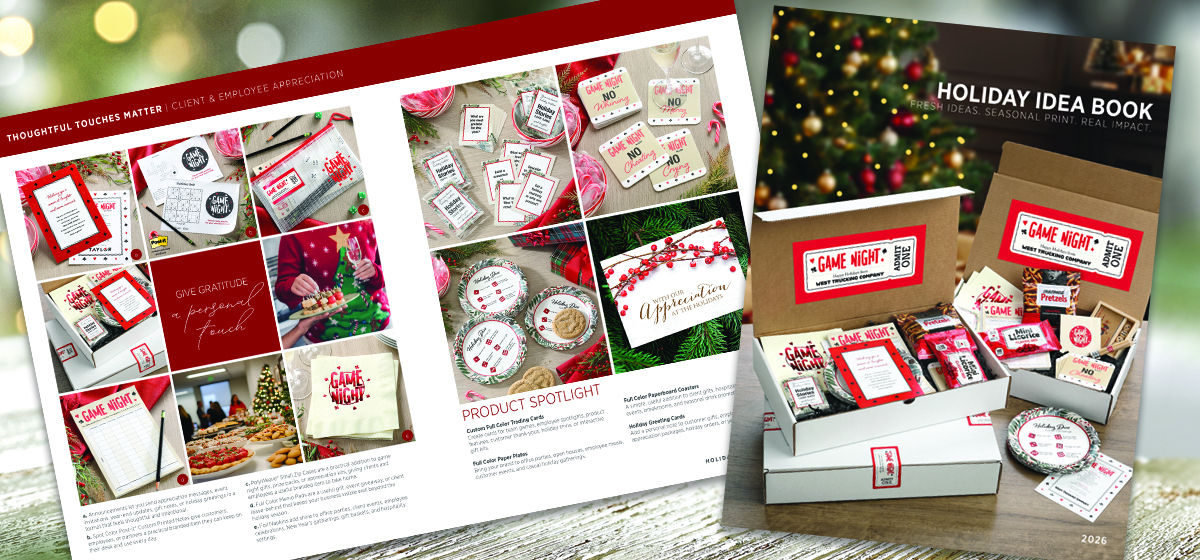
Once you identify the event opportunity, Navitor’s Holiday Idea Book can help spark ideas for product applications that fit the occasion – from promotional print and signage to labels, packaging, branded materials, and customer communications.
The two resources work especially well together:
The Event Guide helps you spot the opportunity.
The Holiday Idea Book helps you picture what can support it.
Your job is to connect the dots.
AFTER: Keep the Connection Going
This is one of the easiest stages to overlook.
The event ends. That doesn’t always mean the communication should.
Customers may want to thank attendees, follow up with prospects, extend an offer, provide additional information, or begin promoting the next event.
Potential print applications include:
- Thank-you cards
- Postcards
- Brochures
- Follow-up offers
- Product information
- Branded stationery
- Labels or stickers for follow-up packages
- Materials promoting the next event
Ask:
- What should happen after someone attends?
- Does the customer want to thank them?
- Are leads being followed up with?
- Is there an offer that can extend beyond the event itself?
- Will attendees receive additional materials?
- Is another event already on the calendar?
That final question is especially important.
The “after” stage of one event can become the “before” stage of the next.
A holiday open house may lead to a January promotion. A fundraiser may become an annual event. A conference may create follow-up meetings. A customer appreciation event may generate new sales conversations.
This is where event-related print can move from an isolated order to a recurring opportunity.

Five Questions That Can Reveal the Whole Event
The next time a customer mentions an event, try moving beyond:
“What do you need printed?”
Ask:
- How are people hearing about the event?
- What needs to happen when they arrive?
- What will they interact with while they are there?
- What will they take with them?
- How will you follow up afterward?
Those five questions can provide a much clearer picture of what the event actually requires.
And they position you differently.
You’re not simply quoting a banner, ticket, postcard, or sign.
You’re helping the customer think through the event.
One Event Can Open More Than One Door
Events create concentrated moments when businesses need to attract attention, communicate information, reinforce their brand, guide people through an experience, and keep the connection going afterward.
Print can support every stage.
For you, the opportunity isn’t to squeeze more products into every event order. It’s to recognize when the customer has described only one part of the need.
So the next time someone calls asking for a single event piece, consider one more question:
“What else is happening around the event?”
Then think:
Before. During. After.
You may find that the print opportunity is much bigger than the event itself.
 About Julie Carlson-Kulla