The holiday season has a way of arriving early.
Retail displays appear before the weather changes. Restaurants start planning seasonal menus while customers are still enjoying summer. Nonprofits begin mapping out year-end giving campaigns months before donations peak. Companies schedule appreciation events, customer gifts, employee celebrations, and holiday mailings long before the first invitation goes out.
That early planning window matters.
For many businesses, holiday print isn’t just about one greeting card, one sale sign, or one shipping label. It’s about creating a complete seasonal experience that helps them attract customers, promote offers, organize events, thank important people, package products, and stay visible during one of the busiest times of the year.
That’s where the Holiday Idea Book can help.
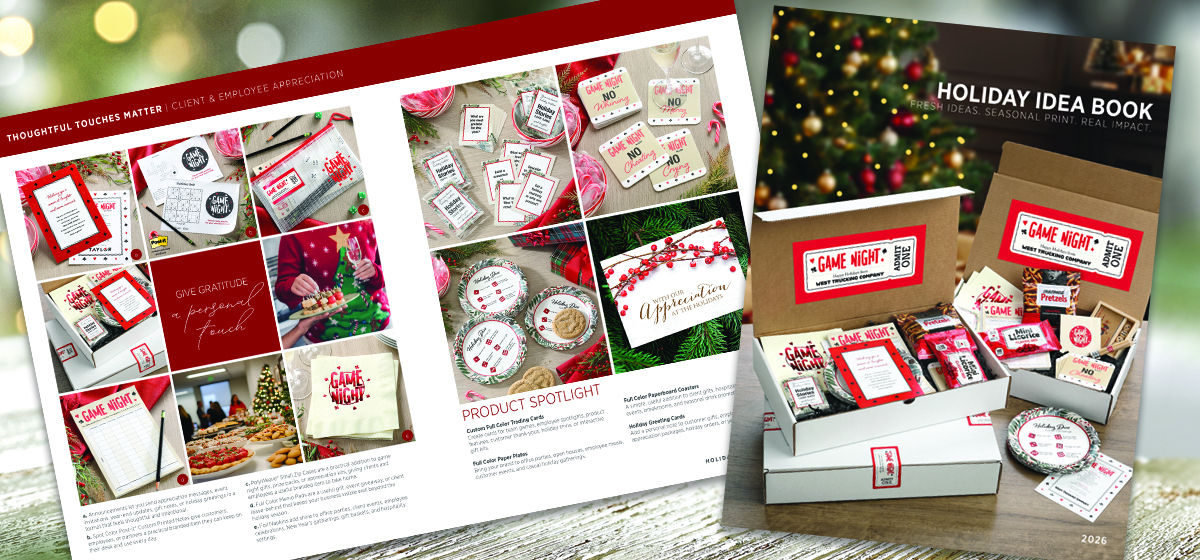
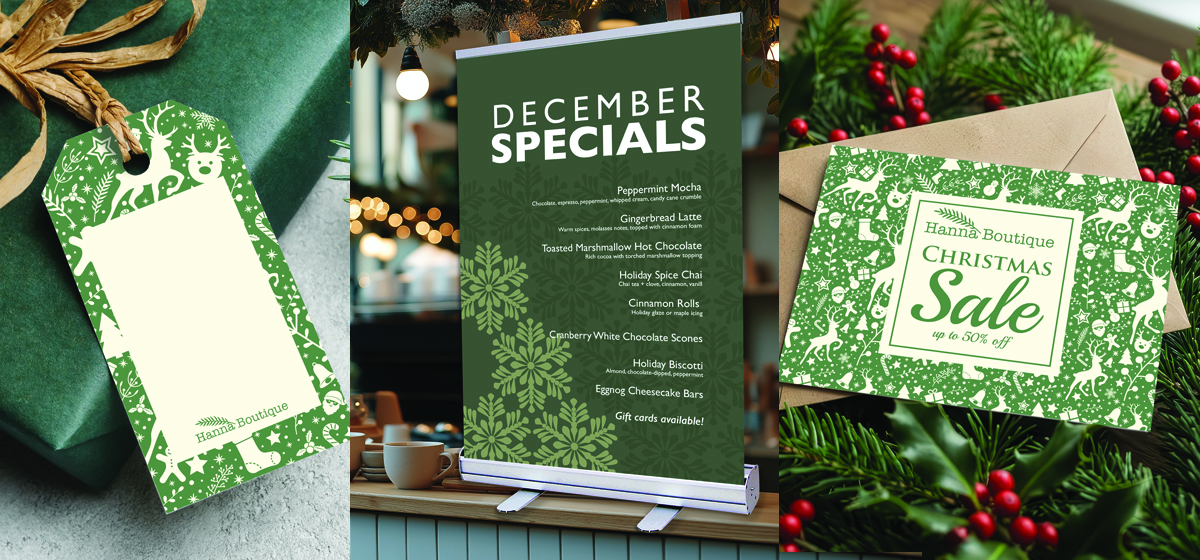
This white-labeled digital asset gives you an easy, visual way to start customer conversations before timelines get tight. It’s filled with seasonal print ideas, vivid product imagery, and customer-friendly product descriptions that help buyers picture what they may need for holiday sales, fall events, appreciation gifts, seasonal packaging, shipping, winter travel promotions, and more.
Use it as more than a product showcase. Use it as a planning tool.
Start the Conversation Before Customers Feel Rushed
Many customers wait until they have an immediate need.
- They ask for a banner because the sale starts next week.
- They need labels because products are already being packed.
- They remember announcements after the mailing list is due.
- They realize they need event signage once the event is almost here.
Last-minute needs will always happen, but holiday print works better when it’s planned with the whole season in mind. Earlier conversations give customers more room to think through quantities, designs, approvals, timing, and add-on pieces that support the same goal.
A simple message can open the door:
“I know many businesses are already planning for the holiday season. I thought this idea book might help you think through signage, packaging, cards, gifts, events, and customer touchpoints before things get busy.”
That note is helpful, timely, and easy to act on. It also positions you as a resource before your customer is in urgent mode.
Help Customers See the Bigger Need
Customers don’t always ask for print in product language. They usually start with a business goal.
They want more people in the store.
They want an event to feel organized.
They want a gift to feel more thoughtful.
They want packaging to look more seasonal.
They want customers to remember an offer.
They want employees, donors, or partners to feel appreciated.
The Holiday Idea Book helps translate those goals into practical print ideas.
Instead of asking, “Do you need holiday cards this year?” you can ask:
“What are you doing this season to thank customers, employees, donors, or partners?”
Instead of asking, “Do you need any signs?” try:
“Are you planning any seasonal sales, special hours, pickup options, or events that customers will need to know about?”
Those questions lead to better conversations because they focus on what the customer is trying to accomplish, not just what they ordered last year.
Use the Idea Book by Customer Type
Because the idea book is visual and white-labeled, it’s easy to share with different types of customers as your own seasonal planning resource. To make it more effective, point customers toward the ideas that match their business.
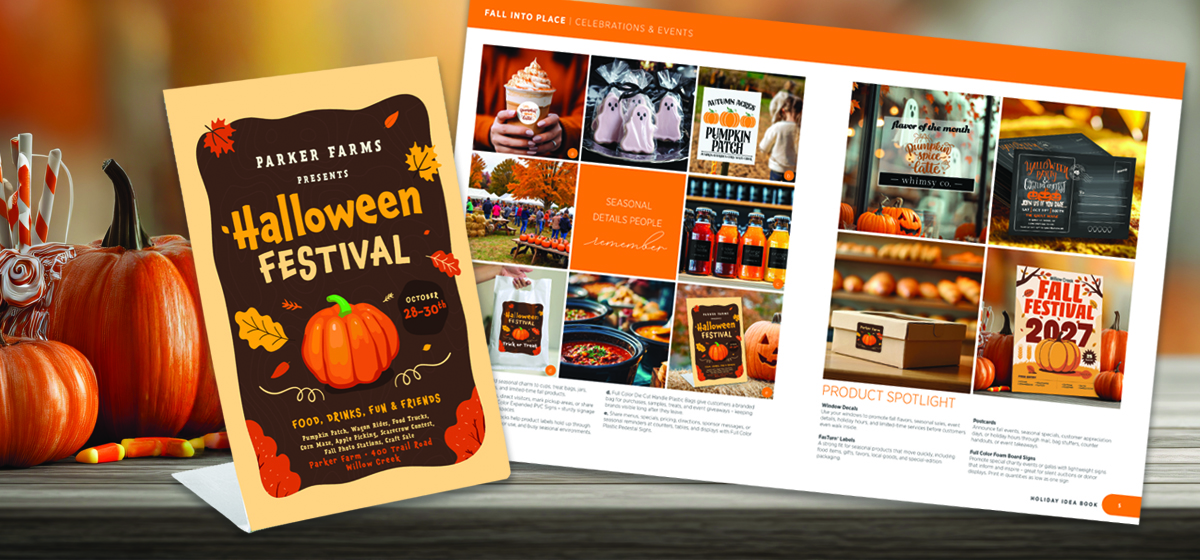
For retail customers, highlight holiday signage, window decals, counter signs, hang tags, labels, custom bags, gift packaging, postcards, and loyalty punch cards. These products help shoppers find offers, understand product details, notice gift options, and enjoy a more complete shopping experience.
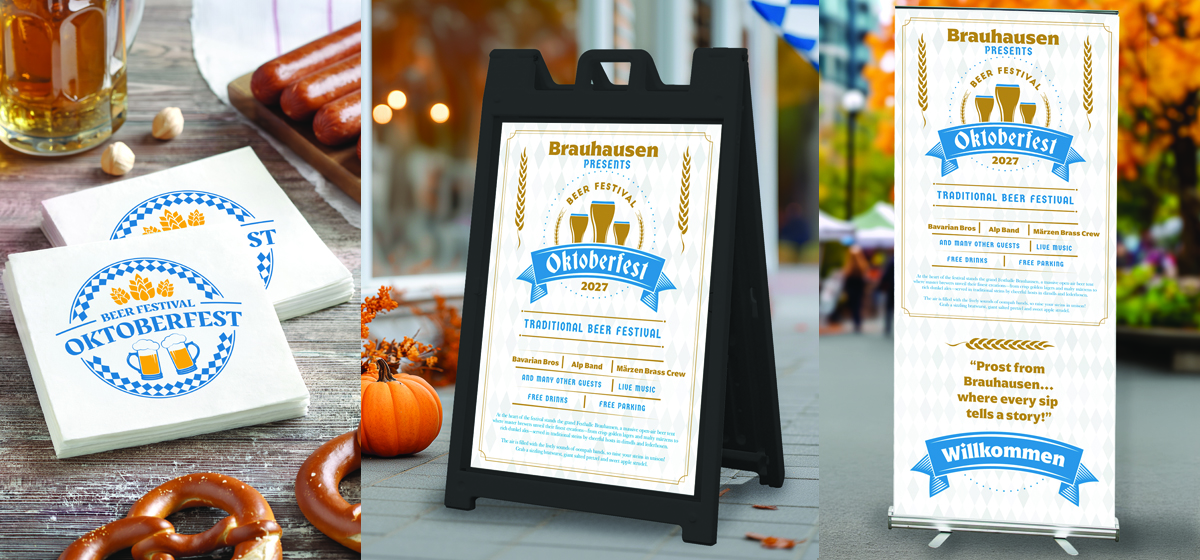
For restaurants, venues, and hospitality businesses, focus on table tents, napkins, coasters, rack cards, drinkware, event signage, posters, menus, and holiday cards. These pieces help support seasonal dining, private events, customer appreciation, and branded guest experiences.
For nonprofits, churches, and community organizations, point to banners, yard signs, remittance envelopes, donation materials, thank-you cards, event tickets, table tents, and sponsor signage. These items help promote causes, organize volunteers, support fundraising, and make giving easier.
For corporate customers, share ideas for appreciation gifts, announcements, greeting cards, memo pads, drinkware, napkins, paperboard coasters, event programs, and holiday party materials. These products help businesses recognize the people who supported their year.
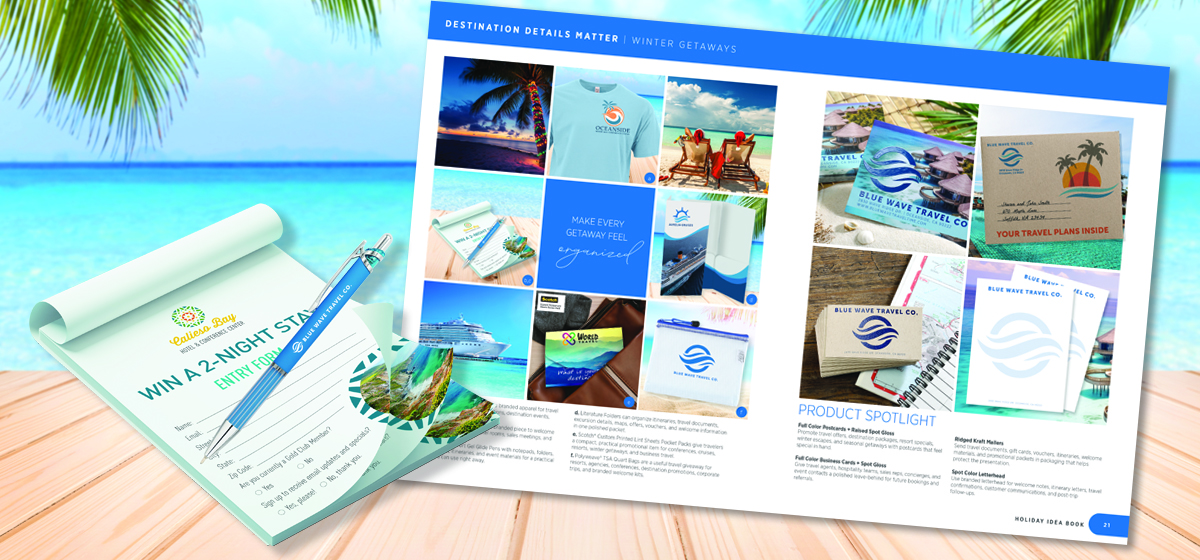
For travel, resort, and hospitality clients, use the winter getaway ideas to start conversations about folders, postcards, notepads, pens, apparel, TSA bags, badges, and welcome kits. These pieces help prepare travelers, improve customer experiences, and create branded takeaways.
The more specific your outreach feels, the more useful the idea book becomes.
Turn One Request into a More Complete Plan
One of the biggest opportunities in holiday print is helping customers see what naturally belongs together.
- A customer who asks for a holiday card may also need mailing labels, envelopes, gift tags, stickers, or appreciation gifts.
- A customer who asks for a banner may also need window decals, counter signs, postcards, table tents, or directional signage.
- A customer who asks for labels may also need hang tags, bags, packaging tape, mailing labels, or gift packaging.
- A customer planning an event may need announcements, rack card programs, napkins, paperboard coasters, table tents, signs, tickets, and thank-you cards.
- A customer preparing seasonal shipments may need packaging tape, mailing labels, greeting cards, door hangers, or inserts.
This approach isn’t about adding products just to add products. It’s about helping customers create a more complete experience around the thing they are already trying to do.
A Simple Step-by-Step Plan
Here’s a practical way to use the Holiday Idea Book throughout the season.
Step 1: Choose your first group of customers.
Start with customers who are most likely to have seasonal needs: retailers, restaurants, nonprofits, schools, hospitality businesses, churches, corporate accounts, salons, boutiques, real estate offices, travel agencies, and anyone who hosts events, sends mailings, sells gifts, or ships products.
Step 2: Send the idea book with a short note.
Don’t just attach a link to the lookbook and hope they browse it. Give them a reason to open it. Mention that it includes ideas for holiday sales, seasonal events, customer appreciation, gifting, packaging, shipping, and year-end communication.
Step 3: Ask one good planning question.
Keep it simple. Try: “Are you planning any holiday promotions, customer gifts, events, or special packaging this year?” One focused question is easier to answer than a long list of possibilities.
Step 4: Point to one or two relevant sections.
Make the asset easier to use. For a retailer, call out the retail holiday sales and seasonal sales sections. For a nonprofit, suggest the volunteer events and shipping sections. For a corporate customer, point to client and employee appreciation or holiday events.
Step 5: Recommend a connected set of pieces.
Once you know the goal, suggest the print that supports it. For example, a holiday open house could include invitations, window decals, counter signs, table tents, napkins, paperboard coasters, custom labels, and thank-you cards.
Step 6: Talk timing early.
Help customers work backward from their event date, sale launch, mailing deadline, or shipping window. Early planning helps reduce rushed decisions and gives them more time for approvals, revisions, and reorders.
Step 7: Follow up with a specific idea.
Avoid the generic “just checking in.” A stronger follow-up sounds like: “I noticed a few ideas in the idea book that could work well for your customer appreciation gifts this year. Would it help if I pulled together a few options?”
Best Practices for Better Holiday Conversations
The idea book works best when it’s used with intention.
Share it early, before customers are under pressure.
Personalize your message by customer type.
Focus on the goal behind the print piece.
Use the visuals to help customers imagine the finished experience.
Ask about events, gifting, packaging, signage, shipping, and promotions.
Recommend pieces that support the same need.
Bring up timelines before the season gets crowded.
Follow up with one useful idea, not a broad product list.
Holiday print touches almost every part of the season: sales, events, gifting, packaging, customer appreciation, employee recognition, fundraising, and year-end communication. The more customers can see those connections, the easier it is for them to plan with confidence.
Make the Season Easier to Plan
The Holiday Idea Book gives you a ready-to-share resource that helps customers think earlier and more completely about the season ahead. It gives them ideas they can see, products they can understand, and a better way to connect print with the moments that matter most to their business.
Start with one customer. One seasonal event. One promotion. One appreciation gift. One packaging need.
Then use the idea book to help them see what else could make the season smoother, more memorable, and more successful.
 About Julie Carlson-Kulla