Consultative selling gets talked about a lot, but the idea is simple: instead of reacting to the order in front of you, you ask better questions, look at the bigger picture, and recommend print based on what the customer is trying to accomplish.
That matters in custom print because customers don’t always ask for the full solution. They ask for the piece they thought of first.
A customer may request brochures, labels, business cards, or an A-frame sign. But behind that request, there’s usually a larger goal: launching a product, promoting an event, bringing in foot traffic, supporting a sales conversation, improving packaging, or keeping brand materials consistent across locations.
That’s where the differentiation happens. Where you distinguish yourself from your competition.
- The order-taker hears, “I need 500 flyers.”
- The problem-solver asks, “What are the flyers helping you do?”
That one question can change the conversation and open the door to better recommendations, stronger account value, and more repeat business.

Start with the goal, not the quote
It’s easy to move straight into specs, pricing, and turnaround. That’s often where the customer expects the conversation to go, too. But if you start there, you risk locking the sale into one item before you understand the full need.
A consultative approach doesn’t mean turning every call into a long discovery session. It means pausing long enough to understand the job behind the job.
Before you quote, find out:
- who the audience is
- where the printed piece will be used
- what action the customer wants it to drive
- whether it is part of something larger
- whether the need is likely to repeat
Those answers often reveal opportunities the customer didn’t mention.
A business card order may lead to a broader conversation about a coordinated stationery suite. A label order may point to hang tags, branded packaging tape, folded cartons, or shipping envelopes. A brochure request may uncover the need for presentation folders, postcards, or matching marketing materials for a sales team.
The point is not to tack on products for the sake of it. The point is to solve the actual problem more completely.

Five questions that change the sale
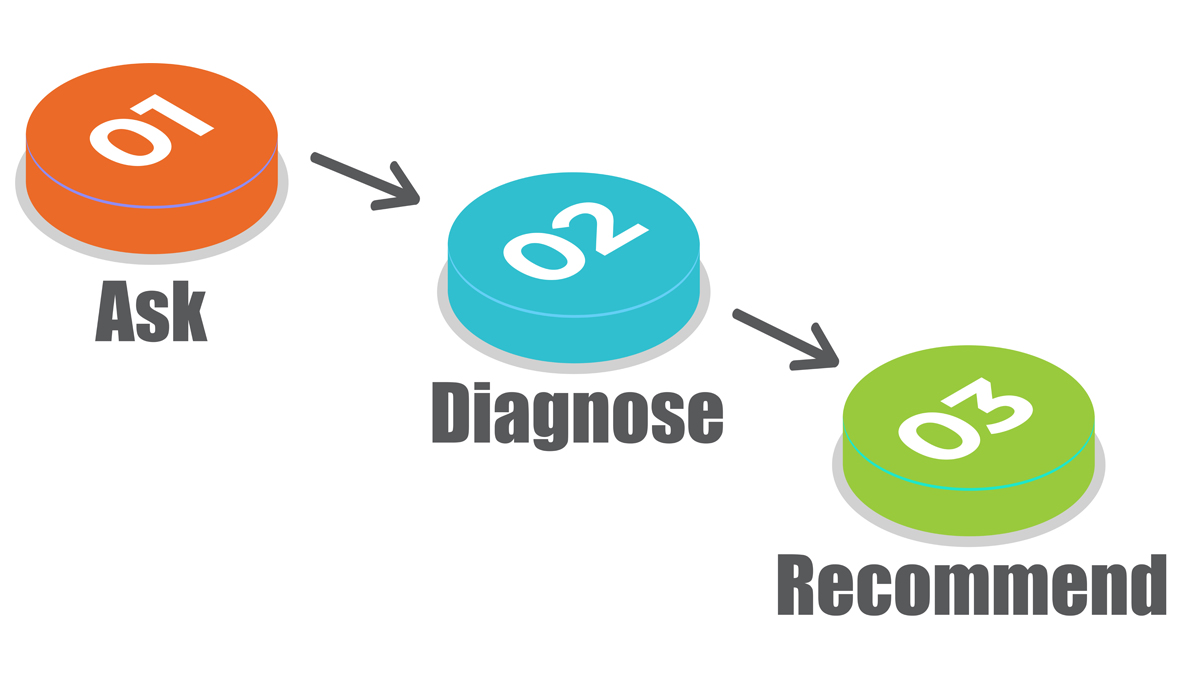
You don’t need a complicated script. You need a few reliable questions that help you move from transaction to recommendation.
Here are five that can open up the conversation in a useful way:
- Who is this piece for?
A customer may be ordering for prospects, current customers, internal teams, event attendees, or retail shoppers. The audience shapes the format, tone, and product choice. - Where will it be seen or used?
Will it live on a countertop, in a mailbox, on a package, at a trade show, in a waiting room, or on a storefront sidewalk? Usage changes everything from stock and finish to size and durability. - What do you want someone to do next?
A printed piece works harder when it points to an action. That could be making a purchase, visiting a landing page, scanning a QR code, stopping by an event, or making a phone call. - Is this a one-time order or part of something ongoing?
This helps uncover repeat opportunities, multi-location needs, seasonal updates, and program-based selling. - Does anything else need to coordinate with it?
This is often where the broader opportunity appears. If one piece exists, there is a good chance something else supports it.
These questions aren’t complex. They’re useful. And useful questions tend to lead to useful recommendations.

Look for the missing pieces
Many print conversations start with one product but point to a larger set of needs.
That’s especially true when customers are moving fast. They ask for the item on their list, not always the full collection of materials that would help the effort succeed.
Here is where a problem-solver mindset helps.
- A customer asks for business cards. You might also ask whether they need matching letterhead, envelopes, or presentation folders for meetings and proposals.
- A customer asks for table tents. You might ask whether the promotion also needs flyers, posters, labels, or counter cards to keep the message consistent.
- A customer asks for labels. You might ask whether the product also needs hang tags, folded cartons, shipping envelopes, or branded packaging tape.
- A customer asks for an A-frame sign. You might ask whether they also need window signage, posters, postcards, or handouts to support the promotion inside and outside the location.
This is where consultative selling becomes practical. It’s not about sounding like a sales trainer. It is about noticing what’s missing and helping the customer think through the full experience.
Sell the use case, not just the item
Customers rarely care about print the way print professionals do. They’re not starting with stock weights, coating options, or finishing details. They’re starting with a problem to solve.
That means your strongest recommendations usually come from the use case.
If the customer wants to bring in walk-in traffic, an A-frame sign may be part of the answer, but so are posters, flyers, and take-home pieces that keep the offer in front of the customer after they leave.
If the customer is preparing for a sales meeting, brochures may matter, but so do presentation folders, business cards, and the overall look and feel of the materials being handed across the table.
If the customer is launching a retail or packaged product, labels may be the first request, but hang tags, packaging tape, folded cartons, and flexible packaging can all shape how that product shows up.
If the customer wants print to connect to digital, a postcard, brochure, flyer, table tent, poster, or label with a QR code can lead to a menu, video, offer, product page, review request, or order form.
When you talk about print this way, the conversation shifts. You’re no longer just selling an item. You’re helping the customer use print more intentionally.
Think beyond the first order
One of the best reasons to sell this way is that it creates better long-term account value.
The first order should never be treated like the finish line. In many cases, it’s the opening conversation.
When you ask better questions up front, you’re more likely to uncover:
- repeat-order potential
- seasonal or versioned materials
- needs across departments or locations
- matching items that reinforce the brand
- future campaigns that require similar support
A customer that starts with one brochure project may later need flyers, presentation folders, event signage, and leave-behinds. A customer that starts with product labels may later need packaging upgrades, shipping materials, and shelf-ready support pieces. A customer that starts with one promotional sign may eventually need a more coordinated package across print and display.
That’s how accounts grow. Not by pushing more products into the conversation, but by paying attention to where the first project is likely to lead.
A few everyday products that open bigger conversations
Some of the best consultative selling opportunities come from products customers already order all the time.
- Business cards can lead to broader brand consistency conversations.
- Brochures and flyers can open the door to coordinated campaign materials, handouts, and leave-behinds.
- Labels can lead to conversations about packaging systems, product presentation, shipping, and shelf-readiness.
- Presentation folders can uncover a larger sales, onboarding, enrollment, or proposal package.
- A-frame signs and other signage can lead to a more complete traffic-driving or event promotion strategy.
These are familiar products. That’s exactly why they matter. They’re often the easiest entry point into a larger solution.

Make it easier on yourself
Consultative selling works best when you have the right support materials ready.
That doesn’t mean memorizing every category, every option, or every talking point. It means having practical tools you can pull into the conversation when the opportunity gets bigger than the original request.
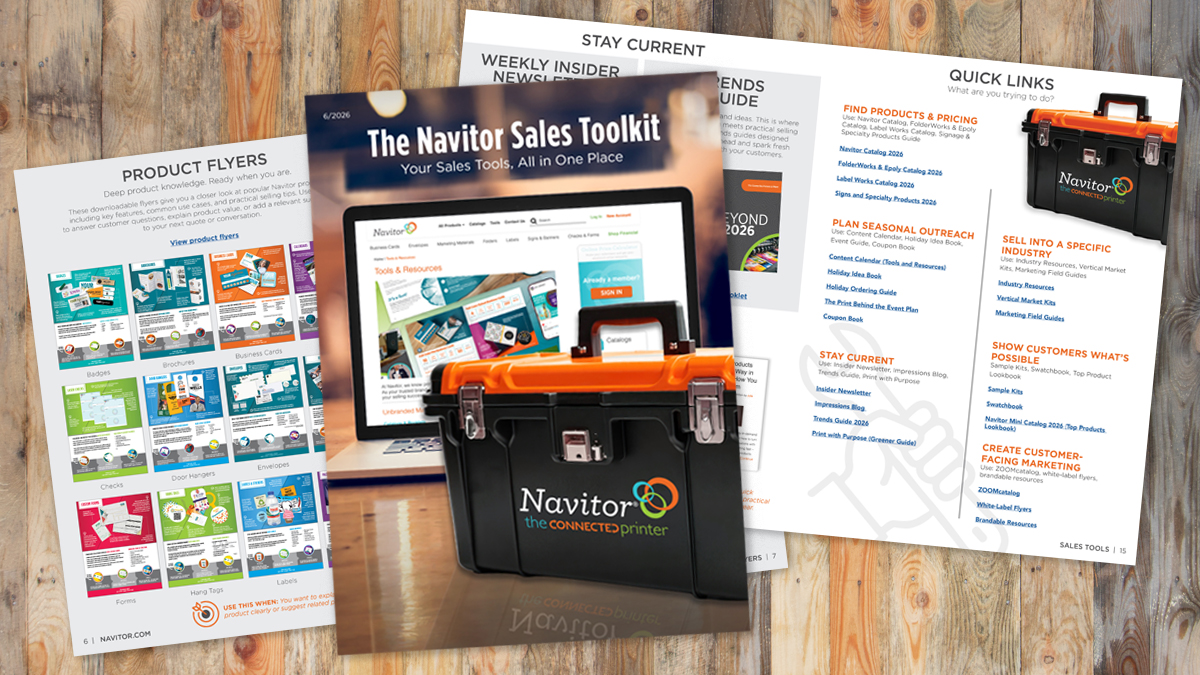
Navitor’s Sales Toolkit brings together sales flyers, sample kits, catalogs, and other resources that can help you support customer conversations with more confidence and more ideas.
If you are looking for ways to talk through product options, show examples, or uncover related opportunities, it’s a useful place to start.
Explore Navitor’s Sales Toolkit
The takeaway
Customers don’t always need more print. They do need the right print for the job, in the right mix, with the right purpose behind it.
That’s what problem-solvers understand.
They don’t stop at the first item on the order.
They ask what the customer is trying to do.
They look for the missing pieces.
They connect products to outcomes.
And they build stronger accounts because of it.
The next time a customer asks for a quote, try asking one more question before you talk quantity, stock, or price.
It might lead to a better recommendation, a better order, and a better relationship.

Explore Navitor’s Sales Toolkit
 About Julie Carlson-Kulla