Boost Summer Sales for Small Business

Are you looking for a way to boost your sales this summer? We’ve got news for you! The latest of our vertical market sales kits is here, giving you a chance to speak directly to the print needs of small businesses. Here’s what you need to know about this new kit.
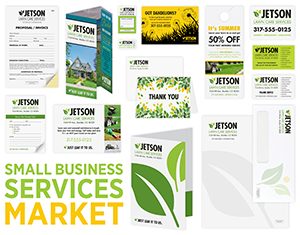
small business kit brochure, business cards, announcements, letterhead, forms, postcards, announcements

What’s In It?
We’ve created this kit around a lawn care business, and all of the products are hand-picked for that market. Practical pieces like business cards, forms, and letterhead are just the start. “Thank you” notes can help build rapport with customers at the end of the season, brochures are a great way to inform prospective customers of new services, and other pieces like Post-it® Notes and door hangers make great leave-behinds if your customer is going door-to-door to drum up business.

These products might be tailored for lawn care, but they’re a great fit for a wide variety of small businesses looking to give a boost to their marketing strategy. Use the kit as an example of how your customer could create a complete print suite no matter what market they’re working in.

How Can You Use It?
Ready to put this sales kit to work? Be sure to bring it with you when you meet with potential customers, especially if you work often with small businesses. It’s also important to keep the samples within reach for when customers walk into your storefront, because you never know when a small business owner will reach out to you.

These kits can be used for much more than samples, though. They are also a great way to highlight cross-selling opportunities. Did your customer come to you for letterhead and business cards to stock up for the summer season, for example? This kit will show them how they could create other print pieces to give their small business an additional boost.

Ready for the Summer Slump
With so many people heading out on vacation, summer can be a slow season. That’s why we are debuting this kit now. A new sales tool for reaching out to a new market could help you connect with new customers even during a slow season.

Best of all, this new sales kit is available free of charge. Simply contact your customer care team to request yours or visit our website to request a kit online.

What do you think of this new sales kit? We’d love to see you join the conversation in the comments below.

Have a More Effective Team Meeting in 4 Steps

Whether you’re hosting a staff meeting or are kicking off a new project with the team working on it, a team meeting can be a great use of your time. However, if your meetings aren’t achieving what you want, it’s time to rethink how you run your team meetings. Here are four simple steps that will help you get more out of your meetings.

1. Start with A Goal
Every meeting has to have a purpose, whether you’re starting up a project or just keeping everyone updated on the projects that your department is working on, and keeping that goal in mind is essential. Staying focused on your goal will help ensure that you get the most out of your meeting. If you don’t have a goal, though, the time you would otherwise have used for a meeting might be better spent on other tasks.

2. Make Sure Everyone Has Been Introduced
The best start to your meeting is ensuring that everyone in the team has been introduced. This is especially important if you’re bringing together a team of employees who don’t work together often or if a new employee is joining you. Introducing everyone isn’t just a get-to-know-you, though—it ensures that everyone knows who to call when they need to follow up on important information.

3. Assign Roles
While a meeting works best when everyone participates, consider assigning roles to keep everything moving smoothly. One person should be leading the conversation, for example, to ensure that you stick to the topics that need to be covered. This also ensures that there’s one person who can wrangle distracted meeting attendees if you start having multiple conversations.

Leading the meeting isn’t the only job, though. If someone isn’t able to make it to the meeting, make sure someone is taking notes for them. If you’ve got a lot to cover, have one person keep track of time and remind everyone when the end time has almost arrived.

4. End When You’ve Said You’ll End
Your day is busy, and so are the days of your meeting attendees! That’s why it’s so important to do your best to end meetings when you’ve said you’ll end them. It’s possible that your meetings might run long, but if you’re constantly running over end times you’re probably trying to cram too much into your meetings.

How do you make the most of your team meetings? Do you have any tips you’d like to share? We’d love to see you join the conversation in the comments below.

3 Tips For Next Year’s Tax Season

Take a deep breath. Tax season is over and you can take a moment to relax. Breathe a sigh of relief. Have a cup of coffee.

And now that you’ve had your moment, it’s time to start preparing for next year.

As much as you are probably glad that tax season is over for the year, it’s a great idea for you to start thinking about how to make next year’s tax season come together with ease. Here are our 3 tips for things that you can do now to make the next tax season go smoothly.

1. Start Preparing Now
Remember that bit of panic that started when you started your taxes for the year? Get ahead of that stress by starting early. Keep your paperwork organized in a way that will make it easy to use when tax season comes around. Update your spreadsheets periodically. And, when tax season comes up, get your paperwork done with plenty of time to spare. Not only will preparing early allow you to get your taxes done quicker, but it will also give you extra time to handle unexpected questions that might come up.

And speaking of that preparation…

2. What Stressed You Out This Year? Take Note of it For Next Year
This is probably the simplest way to make next spring go more smoothly for your tax preparation process: if anything caused you additional stress this year, that’s the first thing you should try to improve for next year. Did you have to track down a number of digital invoices last minute, for example? Consider printing those invoices to file with physical documents or keep them on file in a designated folder. If you can create better habits throughout the year, you can decrease your stress for all future tax seasons.

3. Stay Up-To-Date on Tax Law Changes
Tax law is always changing, and it’s much easier to read up on the legal changes once every month than it is to try to catch up come 2020. Do your best to stay up do date on any changes to tax law that might be relevant to your business and you won’t be blindsided come tax season.

Do you have tips for other things that business owners can do to get ahead of next year’s tax season? We’d love to see you join the conversation in the comments below.

The Importance of a Well-Coordinated Stationery Suite

Your customers come to you for a lot of different reasons. Maybe they need business cards for an upcoming event. Maybe they have to create a brochure for a new product. Maybe they want folders to keep organized at their business. However, if your customers are ordering their stationery pieces individually, they might not be taking advantage of the benefits that can come from coordinating their print pieces with each other.

Make Their Business Look More Put-Together
This is the biggest reason for your customers to coordinate their print pieces. When their print pieces look coordinated, it makes their entire business look a little more polished and organized by extension. This starts with their more traditional pieces, of course—a well-matched stationery set is the foundation of professional corporate communications.

Your customer can also extend this idea to other pieces. From keeping offices organized to presenting ideas to customers, branded folders can add a special touch to your customer’s print order. When the time comes for your customers to send out announcements for company news or invitations for their next big event, creating announcements that coordinate with their existing stationery can be a great way of ensuring the event feels connected to your customer’s brand. And when your customer matches their brochures, sales sheets, and rack cards to their other print pieces, it will make sure your customer’s brand is top of mind when their clients think of the new products and services that those print pieces promoted.

Create the Right Mood with Every Print Piece
When your customer coordinates all of their print pieces, it ensures that every piece creates the right feel. After all, once your customer has chosen a business card stock that conveys quality or a print process that creates just the right look for their brand, it’s easy to create that same feel by matching other pieces to that business card.

That doesn’t mean they all have to look exactly alike, though. By using an accent color, on the other hand, your customer’s stationery suite will continue to look cohesive but have a more varied, creative look. This is an ideal option for customers who want to convey a lively, friendly, or artistic personality with their print pieces.

Make Your Customer’s Brand Instantly Recognizable
The more your customer’s brand is seen, the bigger the benefits for their business. This means that every piece of print that they send out—from the branded business envelope that holds an invoice to the business card that accompanies a sales representative to an official meeting—is a chance for one more impression. Not only does this make your customer’s brand more recognizable, it keeps their brand top of mind for their clients.

What are your customer’s favorite print pieces? We’d love to see you join the conversation in the comments below.

4 Communication Mistakes That Can Ruin Your Meetings

communication mistakes that could ruin your personalized print staff meetings, sales meetings and moreWhen you carve out time in your busy schedule to hold a meeting, you want to make sure you use your time effectively and make the most of your time together. However, if you aren’t communicating well, you might be ruining your meetings. Are you making these mistakes—and do you know how to keep them from ruining your meetings?

1. Forgetting the Important Information
If you have important information that should be reviewed before the meeting starts, don’t forget to share it! Not only will this ensure that everyone is on the same page, but it will also save you time in summarizing that information.

2. Having Too Few People at Your Meeting
Have you ever been at a meeting and, midway through, wished that you’d included someone? Sometimes, your meeting can grind to a halt when you don’t have that person there, even if you’re able to track them down or reschedule.

However, there are definitely ways to keep this from making too big of an impact. Did you forget someone important? Was someone not able to be there? Make sure that you take the time to catch up with them after the meeting. This can mean taking notes of all the decisions made at that meeting, keeping note of the questions that you want to ask them, and the pros and cons of undecided issues.

Of course, having too few people at your meeting isn’t the only numbers issue you might face…

3. Having Too Many People At Your Meeting
If you’ve been to enough meetings, you’ll probably have come across an overstuffed meeting before and be very familiar with the issues that these meetings face. It can be hard, with so many people, to have important points heard. And if your meeting has too many people in it, you might find yourself facing another issue…

4. Having Multiple Relevant Conversations Going on At Once
Have you ever been to a meeting where the attendees walked out of the meeting feeling like the group came to very different conclusions? One of the reasons for this might be that the meeting splintered into a few different conversations. This can easily lead to different attendees hearing different information and coming to different conclusions about what the next step is, and that can be a big problem for your projects.

So how can you fix this when two groups of people within the meeting need to address focused points? Don’t just let the meeting wander off into multiple conversations. Instead be intentional when these conversations break off, and make sure to share the decisions with the group when you come back together.

Have you made these communication mistakes? Are we missing a mistake that has impacted your meeting? We’d love to see you join the conversation in the comments below.

4 Networking Tips You Must Know

networking tips for small business personalized print sales and marketingWhether you are looking for a way to connect with new customers or you’re hoping to have a good conversation with other professionals, a networking event could be a great way to create those new connections. However, these events are what you make them, and creating a quality connection is as much about your skills at networking as it is about the event. Here are four networking tips you must know.

1. Listen When You Join A Conversation—And Show That You’ve Been Listening
When you’re approaching a group of people already engaged in conversation, take some time to listen. Not only will this allow you to have a good understanding of what the group is talking about, but it will also give you a chance to figure out if the conversation is relevant to your interests.

And, when you do join in yourself, acknowledge a point that has been made rather than refocusing the conversation on yourself. Not only will this ensure that you enter the conversation smoothly, but it will ensure that you maintain a friendly tone.

2. Don’t Focus on What You Want—Focus on What You Can Offer
You’re going to the networking event for a reason—usually to make new business connections and possibly make a sale—but don’t let that reason keep you from having a good conversation! Focus on what your customer is saying and how you can speak to the challenges they are facing in their business.

And speaking of that focus…

3. Polish Up Your Elevator Pitch
We’ve talked about elevator pitches before, and a networking event is tailor-made for these one-to-two-sentence summaries of your business. And you can tailor your pitch according to the event. If you’re going to a networking event for social reasons, keep your pitch focused on who you are as a print professional. If you are going to the event to connect with prospective customers, keep the pitch focused on what your business can do for them.

4. Find a Reason to Follow Up
If you’ve established a rapport with someone, keep that relationship going! Once you’ve got their contact information, be sure to reconnect within a week of meeting them. Whether it’s sending an article relevant to the topic you discussed or giving them a call to discuss their product needs, finding a practical reason to follow up can help keep the conversation going.

How do you make the most out of your networking efforts? We’d love to see your suggestions in the comments below.

Labels Play A Critical Role The Healthcare Industry—No Second Opinion Needed!

Thoughts of hospital and medical supplies might conjure up images of a healthy amount of bandages, swabs, and tongue depressors, as well as linen storage with an unending supply of unflattering hospital gowns. But it takes much, much more than cotton balls and ill-fitting gowns to make a medical care facility run well. Along with all the medications, monitors, medical devices and paperwork, labels play an integral role in the smooth and safe operation of a hospital, clinic, or other healthcare facility. Before you request a second opinion on that, let’s take a look at some of the ways labels are put to work in the healthcare setting.

Patient identification and charting labels immediately pop to mind when discussing medical labels. These play a vital role in safety and organization. Whether affixed to conventional paper charts, applied to lab orders, or adhered to patient wristbands, patient ID labels provide clear, concise information that is easy to read and won’t fall victim to spills or daily wear and tear.

Prescription alerts and allergy notification labels are just as important in the healthcare setting, and can be found on charts, wristbands, and prescription bottles. Thermal or direct transfer stocks facilitate easy printing of patient information on site. These labels work wonders at keeping things moving in an efficient and quick manner. Emergency rooms are no place for ink cartridge crises!

Equipment identification labels assure that medical equipment can be returned to the proper department, and can also document proof that each device is serviced regularly. Operating instructions or caution labels affixed to hospital beds, IV pumps, and other machinery and medical equipment ensure proper usage and minimize the risk of accidents or injury.

For younger patients, what would a trip to the doctor or hospital be without some fun stickers? Sticker sheets are a phenomenal way to keep little ones’ imaginations engaged while in an unfamiliar environment that might be a bit scary. Medical-themed sticker sheets can even serve as a helpful tool to introduce children to some basic concepts of the healthcare world. Dressing up teddy in a lab coat and stethoscope can help allay some fears or anxiety children may be experiencing. These sticker sets also transition beautifully to promotional or community event giveaways, as they can be customized with the name and address of healthcare facilities. Parades, blood drives and health fairs are the perfect spots to hand out some fun healthcare-themed stickers sporting logos and branding – high interest, yet low sugar!

Other popular uses include:

  • Hospital visitor passes
  • Tamper-evident stickers for lab specimens
  • Lab communication labels (Refrigerate, STAT, Serum, etc.)
  • IV labels
  • Maintenance inspection record labels
  • “Sterile” labels
  • Allergy notifications
  • Prescription bottle instructions or warnings
  • “I Got My Flu Shot!” stickers

Additional options that are vital in hospitals and clinics include:

  • Thermal or Direct Transfer Stocks: Print patient information on site
  • Tamper Evident Stocks: Crucial for prescriptions and medications
  • Barcoding & Consecutive Numbering: A must-have for equipment and patient identification
  • Durable Stocks and Finishes: Perfect for abrasive and harsh environments, bleach and industrial medical cleaners won’t damage these hard-working stocks and finishes!

Medical and healthcare industry labels improve the internal processes of healthcare facilities and enhance the care and experience of patients. Whether it’s a fire engine red warning sticker on equipment or medicines, or a smiling teddy bear sticker, hospitals, clinics, and nursing homes are home to many, many labels and stickers. Trust Label Works to meet the needs of your clients and customers. Contact our customer service department today at 800.522.3558 or customercare@labelworks.com to learn more about our medical and healthcare label options.

Looking for a sample back of medical and healthcare labels? Look no further. We’ve compiled a sample pack your customers can touch and feel and features popular label applications. View the sample pack here!

Or personalize your own sales flyer geared towards the healthcare and medical market.

Getting Organized For Spring? 3 Things to Learn From the Planner Trend

One of the biggest trends I’ve seen since the beginning of the year is planners and bullet journals. While the planner trend is largely geared toward keeping people organized in their personal lives, this trend could also teach you a lot about staying organized in your work. Whether you keep your notes on a calendar, keep a printed checklist, have a favorite app on your phone or are hoping to take the first step in getting organized, here are three things the planner trend can teach you about keeping your work day on track.

1) Monthly, Weekly, or Daily Formats: Choose What Works For You
Whether you’re jumping into a bullet journal or just trying to keep your to-do lists on track, one of the biggest things to take from the planner trend is that you should choose the format that works best to keep you organized. Whether you want to plan on a monthly calendar so you can see longer-range plans at a glance or you prefer to plan your schedule day-by-day or even project-by-project, personalizing your plans according to your needs helps ensure that you stay on track.

When you’re working on getting organized, this might take some trial and error. You might want to make yourself a daily checklist and pin it up next to your calendar, for example. You might want to divide a notebook page in half with one side for meetings and another for important tasks. You might even keep your list on an app on your phone or on your computer. Whatever you choose, give it a week or so before deciding if it’s the right method for you.

2) Keep Your To-Do Lists and Meetings in One Place
Keeping your plans on one page is a helpful way to ensure that you don’t miss anything, and that can be a big help in your work day. Whether you keep everything in one binder like planner aficionados or simply have a designated space on your desk for your to-do list, by keeping all your daily tasks together you will be able to avoid double-booking yourself or scheduling too much in a day when you have a long sales meeting with an important customer.

And speaking of things to keep in one place…

3) Keep Notes On Hand—And Date Them!
Don’t be afraid to keep your notes in the same place as your schedule. This can make it easier for you to find your notes and it can make it easier to look back on how a project has progressed. It’s also important to date your notes so that you can reference when a note was taken—after all, it’s important to know which notes are the most up-to-date.

How do you stay organized? Do you keep a planner for your work day, or do you use another method? Join the conversation in the comments below.

The Secret to Great Customer Service: Empathy

What is the one skill that everybody in customer support must have? Whether you’ve been on the phone with a customer service representative or work in customer service yourself, empathy should be high on your list!

Empathy is putting yourself in others’ shoes and seeing a problem from their point of view, and in customer service it’s a helpful way to keep customer service interactions positive.  Empathy doesn’t mean that you have to totally agree with your customer, but being understanding of their stress and listening can make the difference between a customer service failure and a customer service success.

First and Foremost, Listen Carefully and Repeat What You’re Hearing in Your Own Words
One of the biggest reasons that customers want to have an empathetic customer service interaction is that they want to be understood. Listening and paraphrasing what you’ve heard can help them feel heard and can help ensure that you create a solution that actually addresses their need.

While you’re listening, pay close attention to the things that they aren’t saying, too. Details like tone and body language can help tell you what emotions are at play in the interaction. Mentioning those emotions—saying “I understand this is stressful for you,” for example—can also do a lot to show that you have heard and understood the way that the customer’s need has impacted them.

Stay Respectful
It’s easy for things to get heated when your customers are upset or under stress, but it’s essential to keep in mind how you would like to be treated if you had a similar customer concern. Stay as calm as you are able and express respect for your customers to keep them feeling important. You might even find that this respect helps diffuse the situation.

Make Customers a Part of the Solution
Does it sound like your customer is stressed because they aren’t in control? Make sure that they are able to play a part in the solution. For example, giving your customer two to three options to choose from can help them feel like they have an active role in the solution.

Finish By Showing That You Care
Studies have shown that people judge an experience based on the intense moments at its end. While you might not always be able to get them exactly the solution they were hoping for, you can always show that you care and help them walk away with a positive feeling about the experience. If their concern is still an issue, make sure to reiterate that you understand how they are impacted by that concern. If there’s a clear next step, remind them of it before you finish the conversation.

Is empathy a central part of how you approach a customer service interaction? How do you put empathy to work in your business? We’d love to see you join the conversation in the comments below.

3 Reasons to Check Out NSP’s Architectural Signage Catalog

What’s new from Navitor Specialty Products (NSP)? We just released our architectural signage catalog featuring a variety of different signage options including new sign audit and installation services to support specialty signage projects and help make growing your signage business a breeze. Here are just three reasons to check out this new catalog.

Get Inspired
The first section of the catalog is dedicated to inspiration, showing off what your customers can do with the signage included in the catalog. This is a great way to highlight the effect that different signage options can create in a finished space. We show a photograph to highlight the look of the space and then break down the different sign options used so that your customer can take that inspiration directly into the ordering process.

Make the Process Simple
We know that, for your customers, transforming the space can be intimidating even on a good day. For 2019, we have added options for new services including sign audits and sign installation. This takes the fear out of the process of signage ordering for those customers that need it.

We’ve also included information to help guide you and your customers through the process of ensuring that signage is ADA-compliant. Not only does this signage make their facilities more accessible for individuals with disabilities, but it can also reflect their brand as beautifully as other signage.

And speaking of their signage options…

Choose From a Wide Selection of Products
NSP offers a wide variety of different products in this catalog, allowing your customers to choose from indoor and outdoor signage as well as signage tailor-made for special events. With a wide variety of stocks to choose from and many stylish shapes available, your customer can create signage that brings their brand style to every part of their facilities.