Vertical Bundle Playbooks

Starter → Growth bundles that build stickier accounts

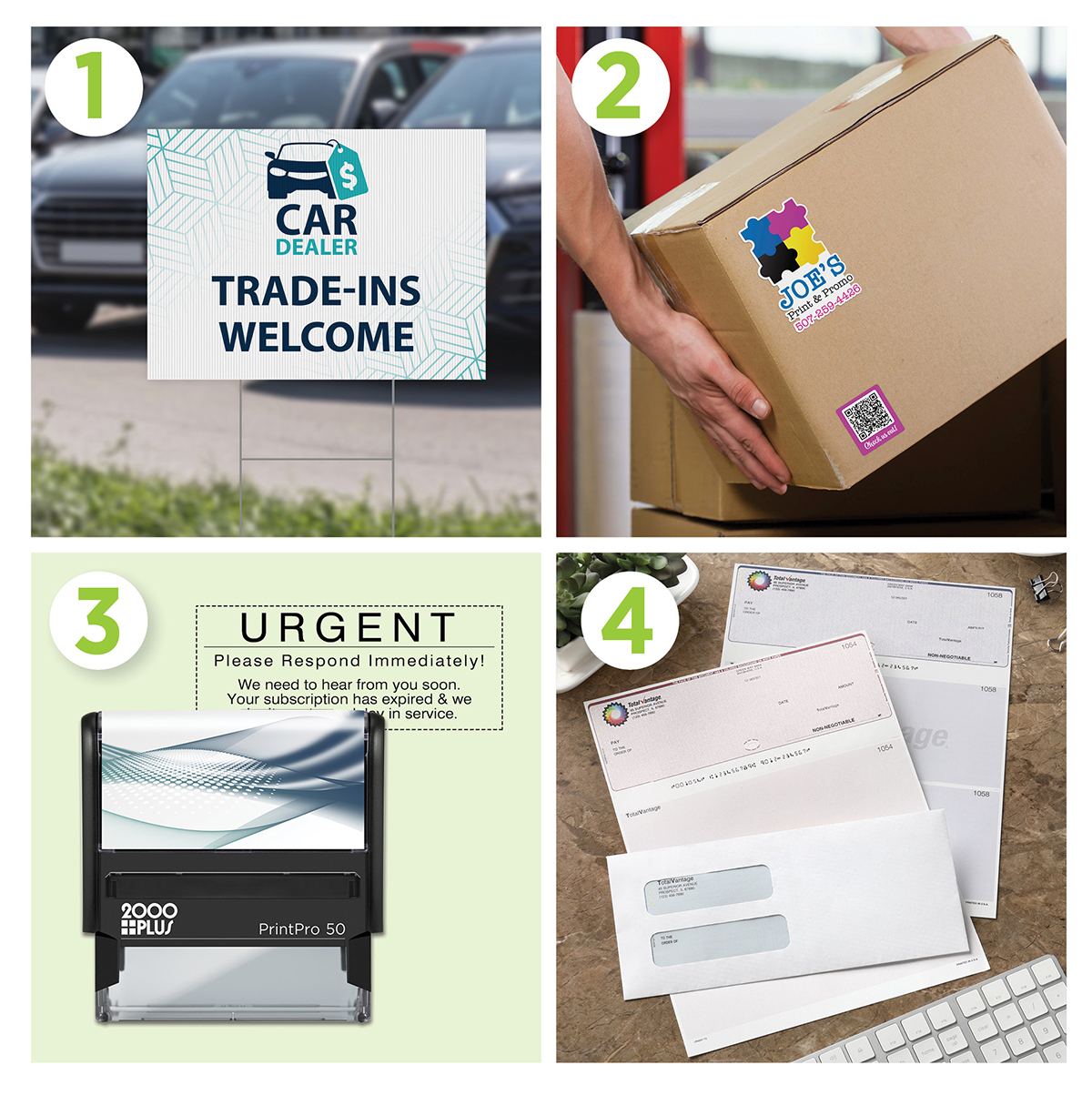
Vertical bundling works because it matches how customers actually buy: operational print drives reorders, and visual print protects margin. The best bundles combine both.

Use this structure:

  • Starter bundle – easiest first win with the least friction
  • Growth bundle – higher value, more repeatable, more standardized

Below are playbooks you can use in real sales conversations.

Healthcare (clinics, dental, labs, vets, care facilities)

Best margin plays: labels; signs and banners; checks and forms (where applicable)

Strongest reorder engines: labels, envelopes, forms, appointment cards

Starter bundle
Labels by use case + envelopes + core patient-facing marketing materials

Growth bundle
Label program by use case + compliance forms set + wayfinding/signage refresh cycle + stamps and daters for approvals

Why it works
Healthcare buys for compliance and workflow – once you’re in the workflow, reorders follow.

Financial Services (banks, credit unions, insurance, wealth)

Best margin plays: checks and forms; folders; security envelopes

Strongest reorder engines: envelopes; forms; marketing materials

Starter bundle
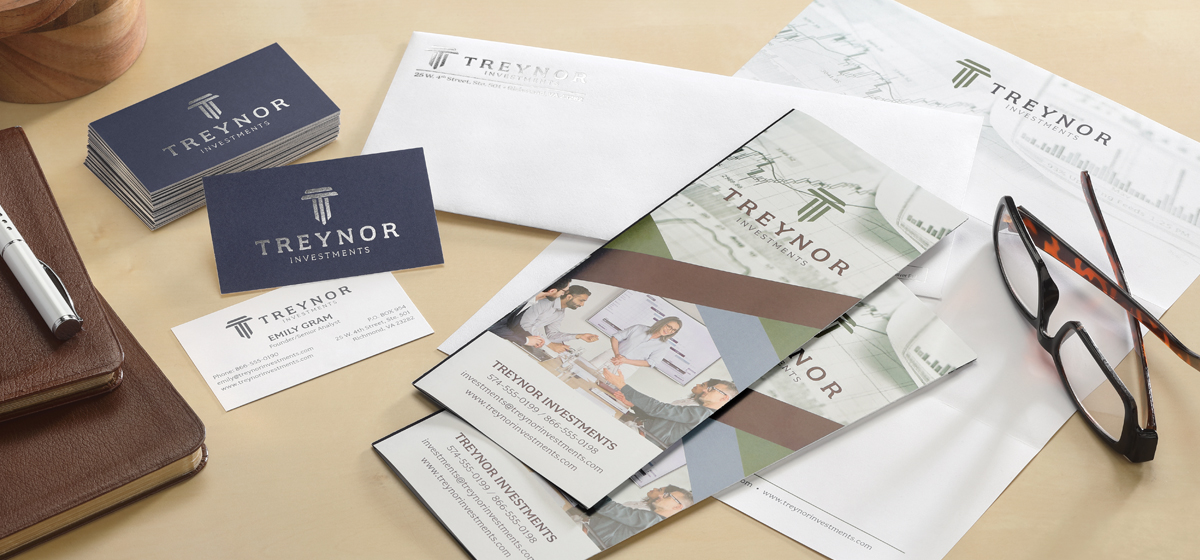
Security envelopes + core marketing materials (direct mail, brochures)

Growth bundle
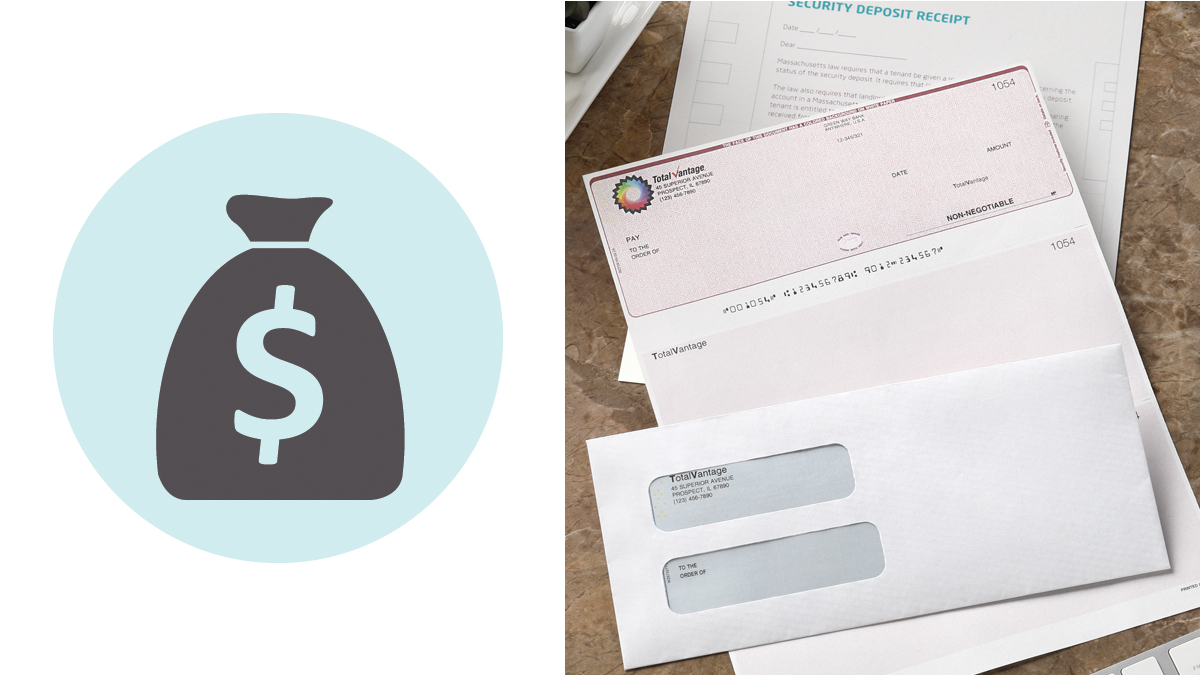
Secure forms and checks program + onboarding/presentation folders + campaign versioning (branch-specific or segment-specific)

Why it works
Recurring communications + control needs = less price shopping, better standardization, better margin protection.

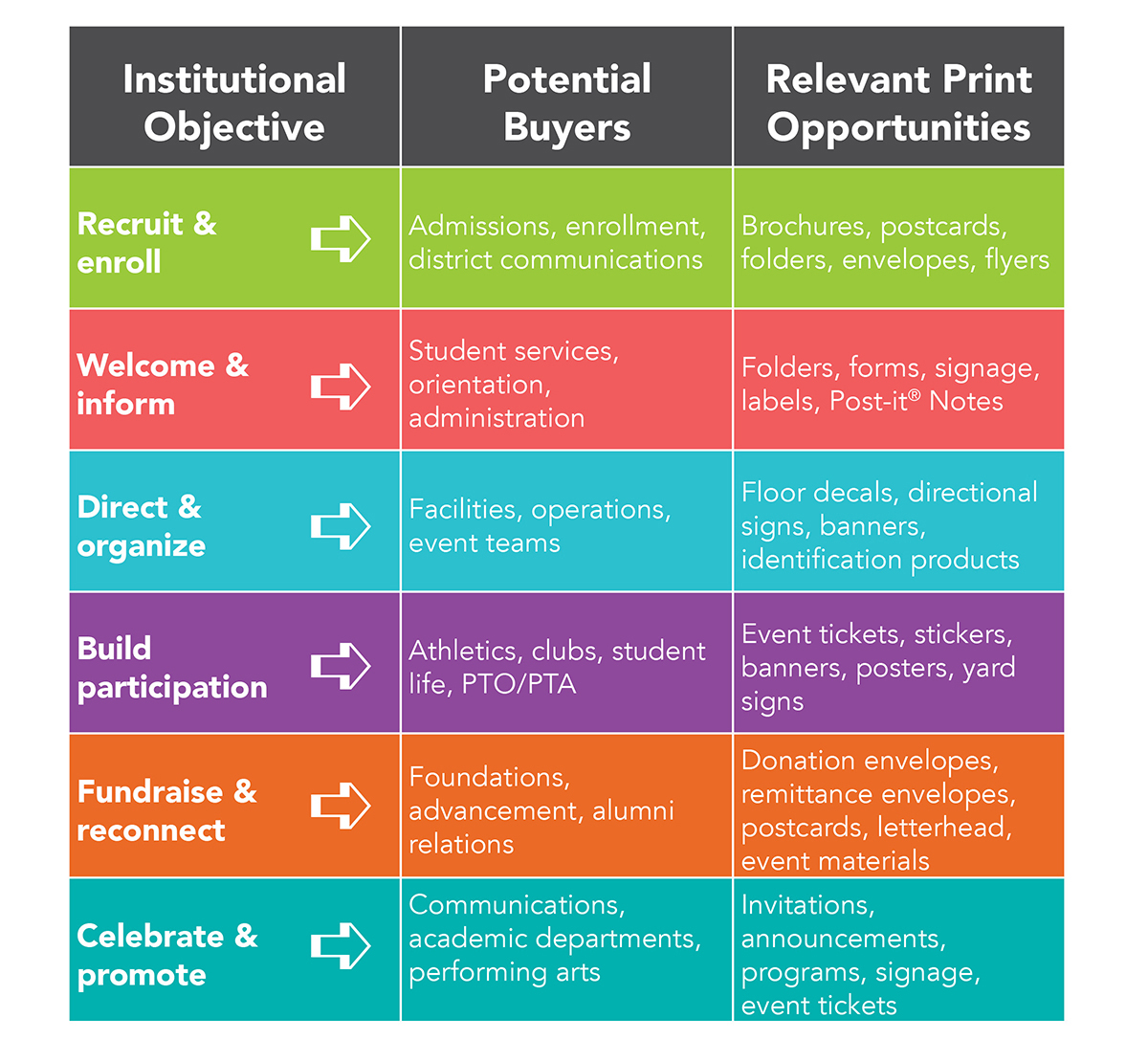
Education (K–12, higher ed, continuing ed)

Best margin plays: signs and banners; folders; labels (asset and ID)

Strongest reorder engines: envelopes; marketing materials; seasonal signage

Starter bundle
Enrollment and open house kit – folders + brochures and postcards

Growth bundle
Campus signage and wayfinding program + department-branded campaign sets + asset labels

Why it works
Education has predictable cycles – enrollment, events, athletics, fundraising – and cycles create repeat.

Government & Municipalities

Best margin plays: signs and banners; checks and forms; envelopes

Strongest reorder engines: envelopes; forms; signage updates

Starter bundle
Standard forms + envelopes for notices and mailings

Growth bundle
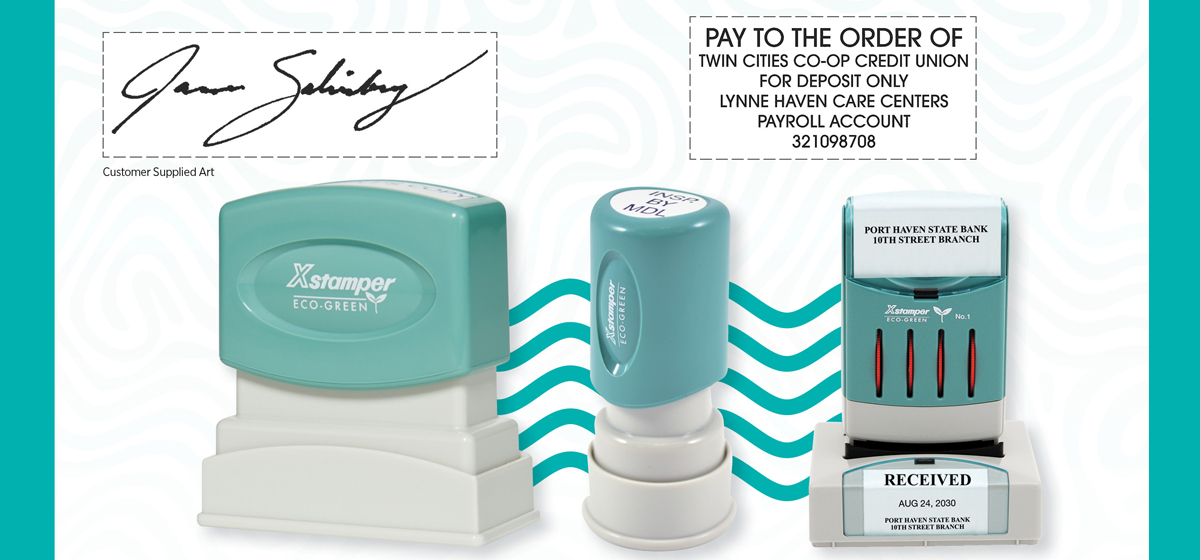
Signage program (public notices, facilities, events) + versioned communication templates + stamps and daters for approvals

Why it works
Buying is process-driven. Standard templates and recurring notices create repeatable work.

Retail (multi-location, local retail, franchises)

Best margin plays: signs and banners; labels

Strongest reorder engines: labels; seasonal signage; marketing materials

Starter bundle
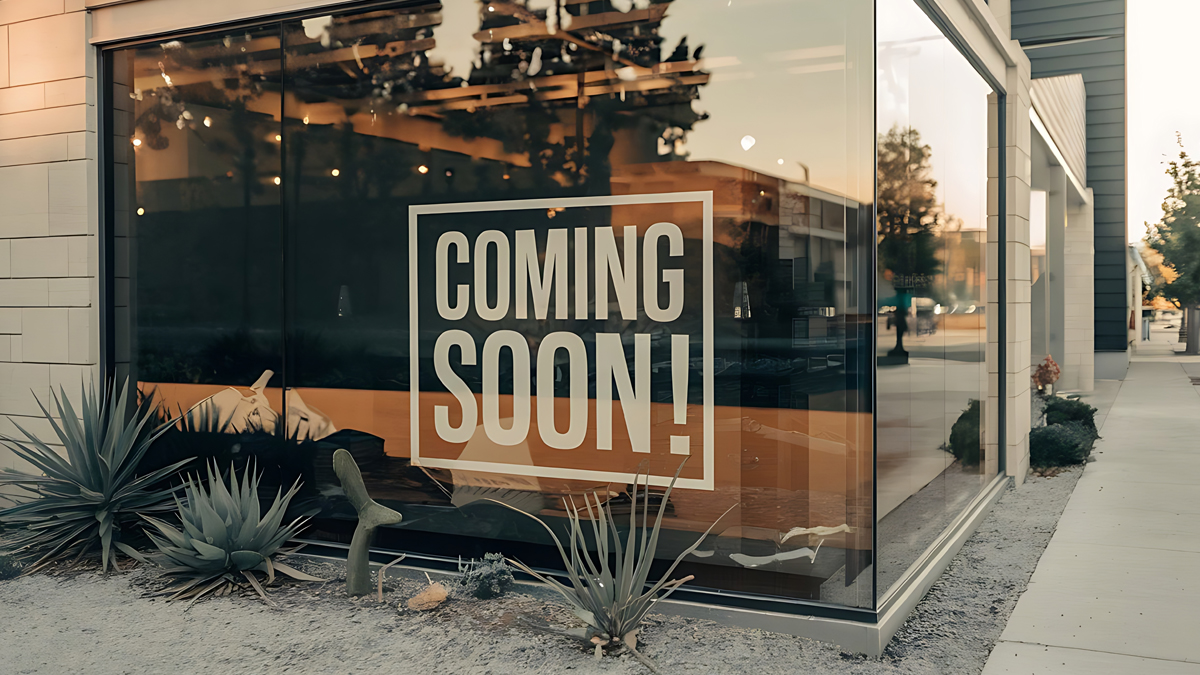
Seasonal campaign kit – window decals and signage + offer cards

Growth bundle
Label system for product lines + quarterly signage refresh + store-by-store campaign versioning

Why it works
Retail refreshes constantly. Labels replenish; signage repeats on cadence.

E-commerce & Fulfillment Brands

Best margin plays: labels; envelopes

Strongest reorder engines: labels; envelopes; forms (packing slips and returns)

Starter bundle
Shipping labels + branded packing inserts

Growth bundle
Full packaging system – labels + packaging tape/marking + return labels + versioned inserts + warehouse process stamps and daters

Why it works
Consumption-based print. Orders repeat because shipping repeats. Bundles tie brand and operations together.

Real Estate (brokerages, agents, property managers)

Best margin plays: signs and banners; folders

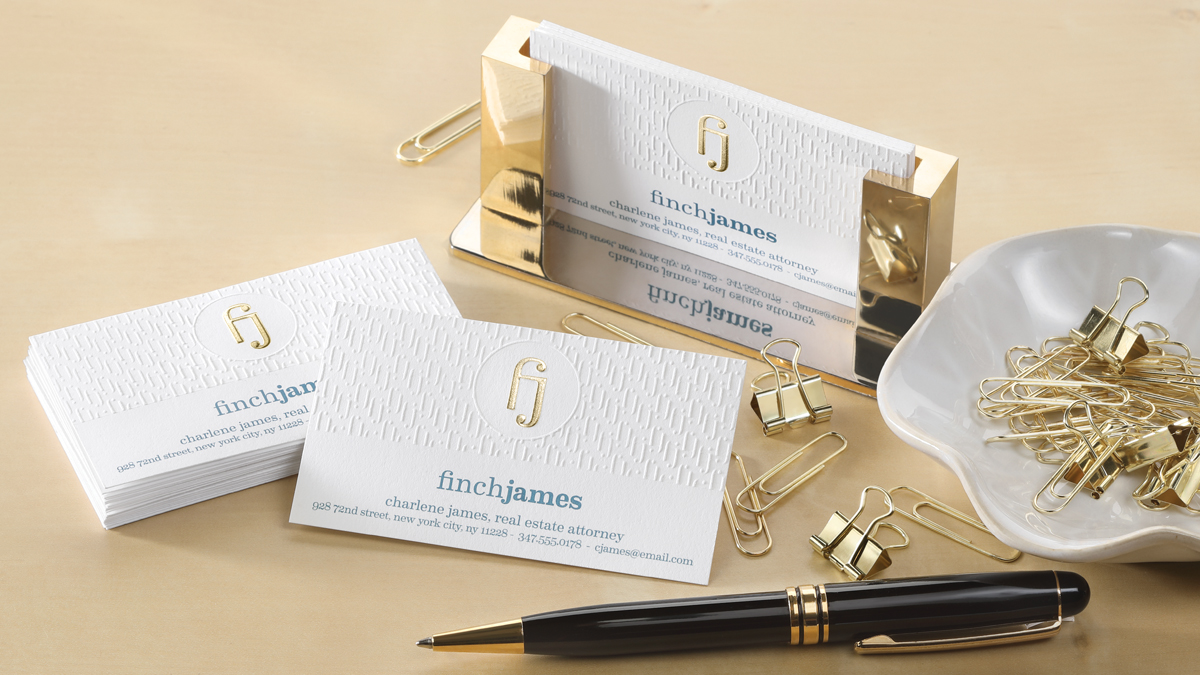
Strongest reorder engines: signs; marketing materials; business cards

Starter bundle
Agent launch kit – business cards + listing flyers and postcards

Growth bundle
Yard sign and open house system + presentation folders + campaign mailing cadence

Why it works
Buying is listing-driven and time-sensitive. A cadence turns one-off into a monthly rhythm.

Manufacturing and Logistics (process, industrial, CPG, carriers, brokers)

Manufacturing
Starter: compliance and QC kit – stamps and daters + core forms

Growth: production labeling system + inspection signage + controlled-document forms + reorder schedule


Logistics & Warehousing
Starter: receiving kit – “received” stamps and daters + core labels

Growth: warehouse labeling and signage system + standardized forms + replenishment plan by location

Make bundles stickier with ordering controls

The best bundles get even stickier when you add company eStores, integrations, and Print on Demand-style replenishment to make repeat ordering effortless.

Pick one vertical you already sell into. Launch one starter bundle this week. Book the growth bundle conversation at the same time – while the buyer is already thinking in systems, not single items.

Want the full breakdown?

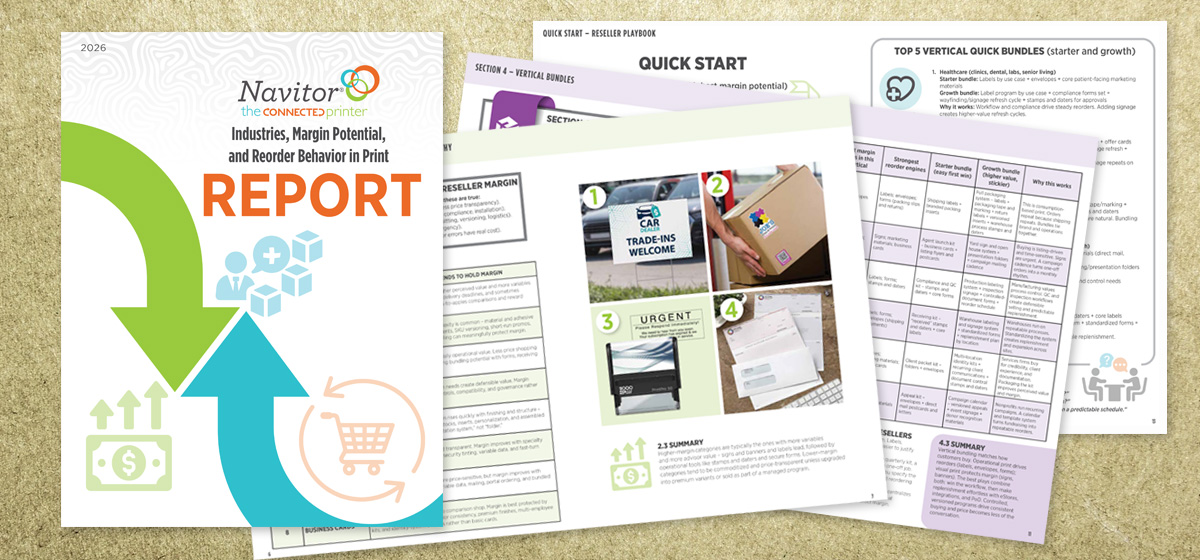
Get the complete Industries, Margin Potential, and Reorder Behavior in Print report for the full industry-by-product map, margin rankings, reorder insights, and vertical bundle playbooks – designed to help you prioritize what to sell first, what to do next, and what has the most potential to turn into repeatable programs.


How to Create Reorder Engines

Frequency vs volume – and why you want both

Repeat revenue doesn’t come from luck. It comes from choosing print categories that naturally come back around – then giving customers a reason (and a simple path) to reorder without starting from scratch every time.

Here’s the useful distinction:

Reorder frequency is how often customers return.
Unit volume is how big the typical order is when they do.

Both matter, because you sell them differently. Frequency keeps your pipeline steady. Volume makes your month.

The four scenarios that drive repeat purchasing

Most repeat orders show up because of one of these patterns:

  • Consumption-based products (they get used up and need replenishing)
  • Fast-changing content (SKUs change, seasons change, compliance changes)
  • Operational dependency (the workflow relies on it)
  • Programmatic marketing (recurring campaigns, multi-location needs)

If you can connect a product to one of those, you can build a reorder engine around it – meaning the next order feels less like “starting over” and more like “running the play.”

Reorder frequency ranking (most repeat to least repeat)

Here’s the cheat sheet: which categories come back most often (and why).

  1. Labels – ongoing consumption + frequent changes (new SKUs, seasonal versions, compliance updates, launches, packaging refreshes)

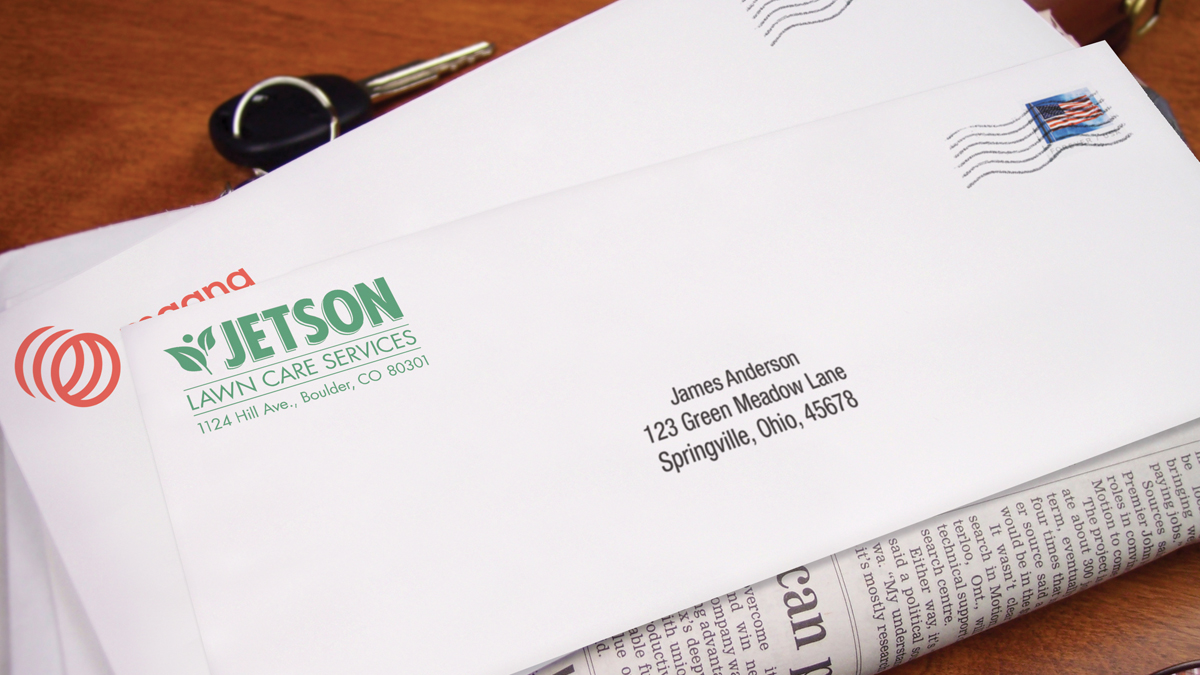
  2. Envelopes – steady replenishment for shipping, billing, notices, fundraising, recurring communications
  3. Checks & Forms – replenishment where still used + periodic security refresh needs and governance controls
  4. Marketing Materials – high repeat when positioned as a program (campaigns, events, monthly direct mail, multi-location refreshes)
  5. Signs & Banners – tends to repeat in cycles and projects (events, seasonal resets, compliance and wayfinding updates)
  6. Business Cards – repeat tied to staffing changes and rebrands

  7. Stamps & Daters – often one-time per role/process, then occasional adds/updates
  8. Folders – event-driven unless standardized into onboarding/sales kit programs

A quick way to use this list: if the product gets consumed, changes often, or props up a daily workflow, you’re not “hoping” for a reorder. You’re building for one.
 Typical unit volume ranking (highest units per order to lowest)

This is where a lot of resellers get tripped up: some categories don’t reorder constantly, but when they do, the ticket is strong.

  • Labels – often ordered in large quantities because they’re consumed continuously and applied per unit, per shipment, or per SKU
  • Envelopes – often ordered in the thousands for mailing programs, shipping operations, recurring communications
  • Checks & Forms – frequently ordered by the box, case, or continuous runs
  • Marketing Materials – wide range; often 500 to tens of thousands depending on campaign and distribution model
  • Business Cards – batches per employee/location; sometimes consolidated across teams
  • Signs & Banners – lower unit counts but higher ticket per piece
  • Folders – hundreds to low thousands unless part of a standardized program
  • Stamps & Daters – low unit counts per order

If you only chase high-frequency categories, you can end up busy but underpaid. If you only chase big-ticket categories, you can end up with gaps. The goal is a mix that keeps orders coming in and margins healthy.

How to build the engine (a simple reseller playbook)

  1. Lead with an operational item (repeat orders)
    Labels, envelopes, forms, stamps and daters are easier to justify because they support daily operations. The “yes” tends to come faster because the customer already needs them to function.
  2. Turn one order into a program
    Instead of selling a one-off job, sell the cadence: a refresh cycle, a quarterly kit, a multi-location standard, or a versioned set. You’re not adding complexity – you’re adding predictability. When possible, align follow-up outreach to the customer’s likely reorder cycle so they can replenish before the order turns urgent.
  3. Sell the system, not the piece
    Margin improves when you specify materials, finishes, security needs, governance, and the reordering process. Customers don’t just buy print – they buy fewer mistakes, fewer back-and-forth emails, and less scrambling the next time.
  4. Stay ahead of the reorder
    If a customer tends to reorder every 30, 60, or 90 days, build that timing into your outreach plan. A quick check-in before they run low helps prevent last-minute “ASAP” orders, keeps the process smoother for both sides, and reinforces your value as a proactive partner.
  5. Make reordering super easy for larger accounts
    Company eStores centralize approved items and simplify reordering, which drives repeat orders and helps protect margin. When reordering is simple, customers reorder more – and they’re less tempted to price-shop every single time.

If you want one category to start with: labels and envelopes are the most consistent engines because they’re consumed and replenished.

Want the full breakdown?

Get the complete Industries, Margin Potential, and Reorder Behavior in Print report for the full industry-by-product map, margin rankings, reorder insights, and vertical bundle playbooks – designed to help you prioritize what to sell first, what to do next, and what has the most potential to turn into repeatable programs.


Why Some Print Categories Hold Margin (and How to Sell Them That Way)

Margin doesn’t come from a product. It comes from the conditions around it.

Most low-margin deals share a common trait: the customer can compare your quote to a dozen others in about 30 seconds.

Higher-margin categories tend to hold margin because there are more variables, more advisor value, and more ways to build a managed system around the purchase.

The five conditions that typically create higher reseller margin

Higher margin usually shows up when one or more of these are true:

  • The item is harder to compare across suppliers (less price transparency)
  • The job includes complexity (materials, finishing, compliance, installation)
  • The reseller adds management value (proofing, kitting, versioning, logistics)
  • Turnaround speed matters (customers pay for urgency)
  • The product is operationally critical (downtime or errors have real cost)

That list is the real product. Your job is to sell those conditions on purpose.

Margin ranking (highest to lowest) – and what to sell instead of “the item”

1. Signs & Banners
Why they hold margin: perceived value + variables like substrates, finishing, compliance needs, deadlines, sometimes installation – which reduces apples-to-apples comparisons and rewards expertise.

Sell the system: “signage standards + refresh cycles + rollout by location.”

2. Labels
Why they hold margin: packaging-like complexity – material and adhesive selection, durability, regulatory requirements, SKU versioning, short-run campaigns, frequent refresh cycles. Advisory selling protects margin.

Sell the system: “label architecture by SKU + change management + reorder rules.”

3. Stamps & Daters
Why they hold margin: low cost of goods relative to daily operational value, less price shopping, strong bundling potential with forms and workflows.

Sell the system: “workflow control kit – receiving, approvals, QA.”

4. Checks & Forms
Why they hold margin: security features and fraud-prevention needs create defensible value; margin improves when positioned around controls, compatibility, and governance.

Sell the system: “secure issuance program – standards, controls, replenishment.”

5. Folders
Why they hold margin: basic folders get shopped, but margin rises with finishing and structure (custom pockets, die-cuts, specialty stocks, inserts, personalization, enhancements). Best play is a presentation system, not a folder.

Sell the system: “value add – version, print, embellish, ship, repeat.”

6. Envelopes
Why they hold margin: plain envelopes are competitive; margin improves with specialty features like custom sizing, windows, security tinting, variable data, and fast-turn mailing requirements.

Sell the system: “mail and notice programs – templates, data, timing.”

7. Marketing Materials
Why they hold margin: commodity pieces are price-sensitive; margin improves with services like versioning, variable data, versatile formats, portal ordering, bundled campaign management.

Sell the system: “campaign program – version sets + ordering controls.”

8. Business Cards
Why they hold margin: highly commoditized; margin is protected by premium construction, color consistency, premium finishes, multi-employee kits, identity-system bundles.

Sell the system: “brand identity rollout – onboarding kits + consistency.”

Print That Runs Itself

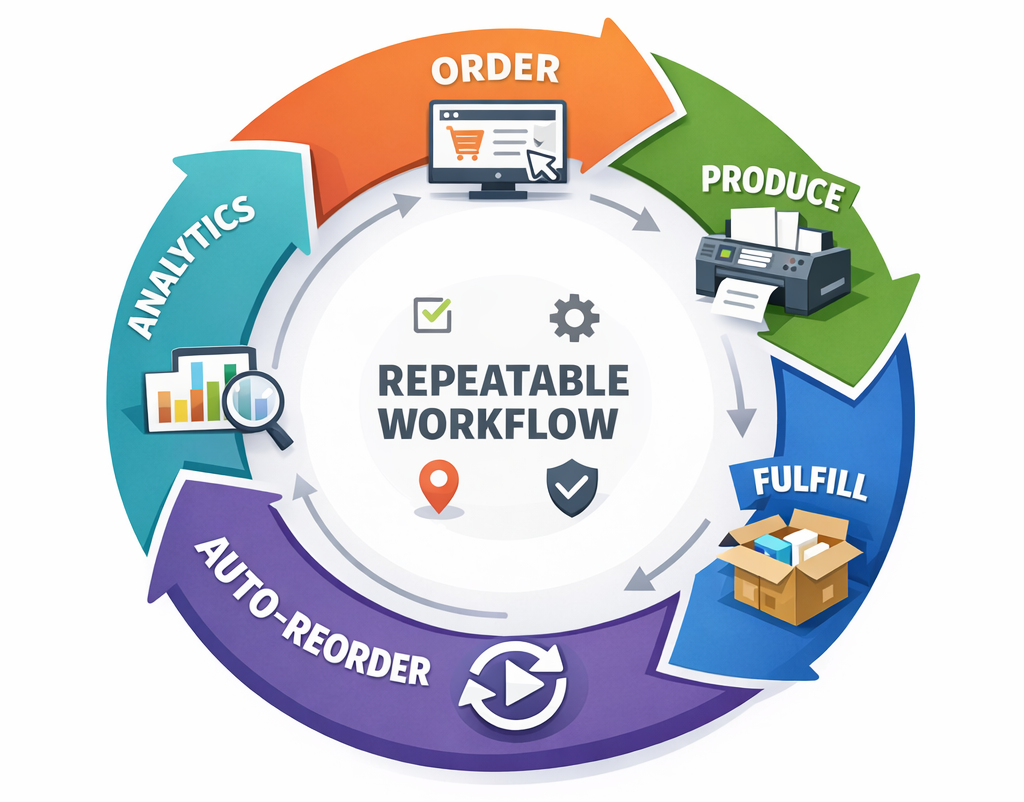
Tech and integration is the “system layer” that makes print harder to replace and easier to keep buying. When a customer orders through an integrated eStore or Print on Demand workflow, you’re no longer just fulfilling a job – you’re helping them control a process: approved templates, correct specs, role-based access, location-level versioning, and a repeatable reorder path. That reduces errors, cuts back-and-forth, and keeps brand and compliance standards consistent across teams and locations.

It also makes the account stickier because switching vendors means rebuilding the entire ordering ecosystem, not just re-quoting a product. From a margin standpoint, integrated ordering supports higher-value services that customers will pay for: setup and onboarding, template governance, version management, kitting/fulfillment rules, and ongoing program maintenance – while the steady reorder flow improves operational efficiency and reduces time spent on low-value quote churn.

Say “YES” to More Print Work

The practical takeaway

If you sell “a sign,” you’ll get shopped. If you sell “the signage program” (standards, refresh cycles, rollouts, controls), price becomes less of the conversation. That same pattern applies across every category.

Looking for an easy margin move? Pick one category you already sell and add one “system layer” this month: versioning, kitting, ordering controls, or a refresh cadence.

Want the full breakdown?

Get the complete Industries, Margin Potential, and Reorder Behavior in Print report for the full industry-by-product map, margin rankings, reorder insights, and vertical bundle playbooks – designed to help you prioritize what to sell first, what to do next, and what has the most potential to turn into repeatable programs.


Who Buys What in Print – A Practical Industry Map for Resellers

The fastest way to sell print is to stop guessing who buys what

Are you selling print as a single solution set across multiple industries? You might be making your life harder than it needs to be. Different industries buy different categories for different reasons – and when you match the product to the industry’s buying trigger, the conversation gets simpler and the close rate goes up.

Below is a reference map of who buys the core categories most often, what typically prompts the purchase, and the best way to position it in the sale.

Business Cards – bought by relationship-driven industries

Primary buying industries
Real estate; financial services; creative services

Other common buyers
Professional services (legal, consulting, insurance); healthcare practices; home services; hospitality; construction trades

Typical triggers
New hires and role changes; team growth; brand refresh; events and networking; multi-location standardization

How to sell them
Lead with staffing churn and team growth. Then attach an “identity kit” mindset (new hire packs, multi-location consistency, role-based versions).

Envelopes – bought by operations-heavy industries

Primary buying industries
E-commerce and retail; logistics and shipping; healthcare

Other common buyers
Banking and financial services; insurance; education; government and public sector; legal services; utilities and telecom; nonprofits

Typical triggers
Shipping and returns; statements and notices; donor mail; compliance mailings; the need for custom windows, security tinting, and variable data addressing.

How to sell them
Ask one operational question: “What do you send every week?” If they answer anything recurring (bills, notices, returns), you’re in reorder territory.

Marketing Materials (brochures, postcards, flyers, door hangers, etc.) – bought by industries that market programs

Primary buying industries
Banking and financial services; education; government; healthcare; retail and e-commerce

Other common buyers
Hospitality; real estate; nonprofits; events; B2B manufacturing and distributors

Typical triggers
Campaigns and promotions; recruitment and enrollment; awareness and fundraising; service line marketing; store and location marketing; trade shows

How to sell them
Don’t sell “a brochure.” Sell a campaign cadence (monthly, quarterly, seasonal) with versioning by location, audience, or offer.

Folders – bought when they need to look organized fast

Primary buying industries
Real estate; education; finance; healthcare; corporate organizations

Other common buyers
Legal firms; insurance agencies; local government offices; nonprofits/associations; manufacturers; hospitality/event venues; construction; auto dealerships

Typical triggers
Proposals and sales presentations; enrollment/admissions packets; patient intake and financial packets; conference handouts; leave-behind kits; training/events; onboarding and new employee kits

How to sell them
Position as a “packet system” (folder + inserts + versioning), not a standalone product.

Labels – bought by industries with inventory, compliance, and packaging realities

Primary buying industries
Food and beverage; retail; pharmaceuticals

Other common buyers
Logistics and warehousing; consumer packaged goods; industrial and chemical; health and beauty

Typical triggers
Packaging and branding; compliance labeling; ingredients and warnings; SKU expansion and versioning; short-run campaigns; inventory and warehouse identification; anti-counterfeit and track-and-trace

How to sell them
Win one label use case (shipping, product, compliance, warehouse), then expand into a labeled “system” across SKUs and locations.

Signs & Banners – bought by industries that change environments

Primary buying industries
Retail; real estate; transportation

Other common buyers
Hospitality; entertainment; healthcare; banking and financial services; education; government and public sector; construction and trades; manufacturing

Typical triggers
Promotions and seasonal campaigns; events and pop-ups; grand openings; regulatory and wayfinding signage; brand refreshes; site and job signage

How to sell them
Ask what changes by season, event, location, or regulation. That’s where signage refresh cycles come from.


Stamps & Daters – bought by process-driven industries
Primary buying industries
Healthcare and medical device; manufacturing and industrial; legal services and notary

Other common buyers
Warehousing and logistics; government and public sector; financial services; food and beverage; construction and building services; education; retail

Typical triggers
Receiving and processing workflows; approvals and document control; QA and compliance; date tracking; standardization across departments

How to sell them
Tie to workflow control: fewer errors, faster processing, cleaner compliance.

Checks & Forms – bought where controls and documentation matter

Primary buying industries
Banking and financial services; government operations; healthcare; logistics

Other common buyers
Employers running payroll; title and mortgage/closing; any organization issuing payments and requiring controls

Typical triggers
Payment issuance; payroll; secure forms and internal controls; multi-location ordering; compliance documentation; process consistency

How to sell them
Lead with governance and compatibility, not “printing.” (More on that in our next blog in the series “Why Some Print Categories Hold Margin and How to Sell Them That Way”.)

The shortcut: focus on the biggest demand clusters

Most print demand comes from a handful of industries: healthcare, financial services, government, education, retail, real estate, logistics, and e-commerce. A straight-forward rule: these industries buy print primarily for two reasons – marketing impact and operations. When you hear “operations,” think labels, envelopes, forms, stamps. When you hear “impact,” think signage and campaign materials.

If you want the simplest way to apply this industry map, use a two-step plan: land a “first win” that’s easy to justify, then attach the most natural add-on while the buyer is already in motion. The goal is not to sell more stuff. It’s to sell a cleaner system that makes their day easier. Here are examples:

Healthcare

Best first win category: Labels
Why: Labels plug directly into daily workflow – patient and specimen identification, medication labeling, and safety/compliance needs. They’re operational, not optional, and they reorder because they’re consumed and updated.

Easiest add-on: Signs and banners
Why: Once labels are in place, healthcare facilities still need clear wayfinding, safety, and service line signage that changes with departments, events, and compliance requirements. It’s a natural “same building, different need” add-on with strong margin potential.

Financial Services

Best first win category: Envelopes
Why: Financial organizations mail constantly – statements, notices, and member/customer communications. Envelopes are straightforward to spec, easy to reorder, and often tied to recurring cycles.

Easiest add-on: Checks and forms
Why: The minute you’re talking about mail and documents, the conversation naturally extends to secure documents, governance, and control. Checks and forms add defensible value through security features and standardization.

Retail

Best first win category: Signs and banners
Why: Retail lives on change – promotions, seasons, events, and location updates. Signage is visible, time-sensitive, and often needs quick turns, which makes it easier to win early and typically stronger for margin.

Easiest add-on: Labels
Why: Once you’re supporting campaigns with signage, labels are the natural operational companion – product labeling, pricing/markdown, packaging, and SKU changes. They’re also one of the most reliable reorder engines.

Want the full breakdown?

Get the complete Industries, Margin Potential, and Reorder Behavior in Print report for the full industry-by-product map, margin rankings, reorder insights, and vertical bundle playbooks – designed to help you prioritize what to sell first, what to do next, and what has the most potential to turn into repeatable programs.


Seasonal Print Success: Your Quarterly Content Hub

Timely strategies. Turnkey tools. Trusted support.

If you’ve ever asked yourself “What print products do my customers need this time of year?” or “How can I promote seasonal print without starting from scratch?” then Navitor’s Seasonal Print Success Hub was built for you.

This quarterly content destination is designed to help custom print resellers stay ahead, plan smarter, and sell more throughout the year. Whether you’re kicking off Q1 strong or closing out Q4 with a holiday push, you’ll find everything you need to meet customers where they are – with the right print at the right time.

What is the Seasonal Print Success Hub?

It’s your one-stop marketing command center, packed with:

  • Industry-specific flyers and guides that highlight the top-selling print products for key verticals like real estate, automotive, construction, agribusiness, cannabis, and more
  • Quarter-by-quarter content, so you always know what’s trending and what to focus on
  • Ready-to-use marketing materials, including product flyers, videos, social media posts, GIFs, and seasonal idea books
  • Sales tools you can brand and share to promote your print capabilities and support customer outreach

Each section is curated with selling in mind – helping you respond to seasonal demand, uncover opportunities in specific industries, and guide your customers toward smart, timely purchases.

Why seasonal selling strategies matter

Successful print resellers know that timing is everything. From spring real estate booms to year-end holiday packaging and promo needs, seasonal buying patterns drive demand across industries. The resources in this hub are built to help you tap into that demand with clear value propositions and practical tools.

Looking for Q2 print sales strategies? The Spring into Summer: Q2 Opportunities section points you to what’s hot – like signage for construction crews, labels and co-op materials for ag, and promotional must-haves for cannabis brands heading into event season.

Want to get a jump on Q4 planning? You’ll find downloadable content that makes it easy to promote greeting cards, coasters, napkins, and other festive favorites that businesses stock up on each year.

Your complete library of reseller-ready content

Here’s what you’ll find inside:

Industry Resources

Organized A–Z, this library includes flyers and field guides for specific verticals. They’re packed with product ideas and positioning tips that help you speak your customers’ language – and bring them the print they actually need.

Product Flyers

Top-selling products, clearly explained. Each flyer gives you a deeper look at print products that sell all year long, complete with standout features, popular use cases, and practical sales tips.

Video & Social Media Content

Add energy to your outreach with short videos, scroll-stopping graphics, and downloadable GIFs. It’s all designed to help you stay visible online, even when you don’t have time to create from scratch.

Guides & Trends

From the Going Greener – Printing Cleaner guide to our quarterly Trends series and Holiday Idea Book, this section helps you spot what’s next – and stay ready with fresh ideas and insights.

Why visit the Hub regularly?

Because your customers’ needs change with the seasons. And this resource changes with them. With each new quarter, we refresh the content to highlight what’s timely, what’s trending, and what’s most likely to drive print sales right now.

Whether you’re looking to plan next month’s outreach, refresh your social media, or have more strategic conversations with key customers, the Seasonal Print Success Hub gives you the tools to do it all – fast.

Navitor: Your partner for print strategy, support, and success

At Navitor, we’re more than your print supplier – we’re your support system. The Seasonal Print Success Hub is just one of the many ways we help you go to market with confidence, backed by expert content and white-label resources you can use to grow your business.

Ready to explore?

Visit the Seasonal Print Success Hub now and bookmark it for every quarter – because seasonal selling doesn’t just happen. You make it happen. We’re here to help.


Print on Demand: Meeting the Needs of Modern Businesses

For businesses today, maintaining brand consistency across multiple locations and marketing channels is a constant challenge. The traditional print process – designing, sourcing files, reviewing artwork, requesting quotes, placing orders, and approving proofs – can be time-consuming and inefficient. That’s why more companies are turning to Print on Demand (POD) solutions. And for resellers, that shift presents a massive opportunity.

Print on Demand: More Than a Trend

POD isn’t just a passing fad – it’s a staple now and in the future of print. As brands look for ways to work faster, smarter, and with less waste, the demand for streamlined, customizable, and flexible print solutions is skyrocketing. The ability to order what’s needed, when it’s needed – without stocking inventory – is no longer a luxury; it’s an expectation.

What Businesses Need (And What You Can Offer)

Your customers aren’t just looking for print products; they’re looking for a seamless, efficient experience that supports their brand across all touchpoints. They need:

  • Brand consistency – materials follow brand guidelines no matter who places the order.
  • Speed – Fast, automated ordering without delays.
  • Personalization – Tailored print materials that resonate with individual recipients.
  • Customization – Options for different sizes, finishes, and messaging that reflect their unique brand.
  • Flexibility – The ability to scale up or down based on demand.

Businesses are prioritizing reducing obsolescence – no more warehouses full of outdated marketing materials. Instead, they’re opting for digital-first solutions that allow them to print only what they need, when they need it.

Seamless Print Solutions with Navitor

For resellers, the opportunity has never been greater. With Navitor, The Connected Printer, you can provide your customers with:

  • Online storefronts where customers can order their branded materials in seconds.
  • Custom small and large format printing, from business cards to signage and direct mail.
  • Unique finishing options for high-quality, standout pieces.
  • Technology-driven automation to simplify complex print projects.
  • Low minimum quantities – some products like badges, signs, and stamps can be ordered in quantities as few as one.

By offering turnkey solutions that eliminate the manual hassles of print marketing you give your customers the efficiency and speed they expect.

The Power of Repeat Business for Resellers

One of the biggest advantages of offering POD solutions is repeat business. When customers have access to a dedicated online storefront, they can quickly reorder essential print materials without needing to start from scratch each time. This convenience keeps them coming back to you for all their print needs, strengthening long-term relationships and increasing customer loyalty. By setting up an online storefront for your customers, you:

  • Lock in repeat orders with a seamless, always-available ordering experience.
  • Reduce friction in the buying process, making it easier for businesses to reorder with confidence.
  • Keep your customers loyal by providing an indispensable tool that simplifies their workflow.
  • Increase revenue by ensuring your customers consistently purchase their branded materials from you rather than seeking alternatives.

Your One-Stop Print on Demand Partner

Navitor streamlines POD with seamless integration, nationwide production, and a vast product catalog – all backed by a flexible fulfillment network and real partnership. Our vast production network ensures efficient routing and scalability, while our easy-to-integrate API connects you to thousands of customizable SKUs. Whether you’re launching or growing, we adapt to your needs, making fulfillment effortless and reliable.

With Navitor’s connected solutions, you can position yourself as the go-to print on demand provider, offering an easy, automated way for your customers to have quick access to essential branded materials.

Ready to Get Started?

It’s never been easier to sell custom, on-demand print solutions. See how Navitor’s connected solutions can grow your business. Want a quick assessment? Request a Flash Appraisal today.

The Power of Print in Higher Education Marketing

The higher education market has become increasingly competitive as schools vie for a shrinking pool of prospective students. Print plays a big role in today’s higher education marketing campaigns because it works. It remains the foundation upon which multi-generational marketing is built.

The audience is larger than you think

Prospective and enrolled students aren’t the only audience that higher ed institutions must reach. Community members, businesses, parents, alumni, donors, faculty and staff comprise a school’s broader support network. Colleges and universities have a unique challenge when it comes to developing a brand that appeals to a wide-ranging network of audiences and generations: to reach many and to resonate deeply. Whether it is promoting online education programs, increasing application and enrollment rates, engaging non-traditional learners, informing accepted students, promoting campus events, motivating current students, or engaging with alumni, strategic and integrated solutions are the right answer.

Cross-channel marketing

Not only is print a tactile and personal experience, but its message to a specific audience also can be amplified through digital media. And in higher education marketing, it’s more powerful than ever. Colleges and universities have been harnessing this power of print in reaching new students, their parents and other audiences for as long as they’ve been around. Utilizing tactics like personalized direct mail, marketing materials, fundraising campaigns and signage, higher ed institutions are well-versed at connecting and engaging with their extensive network. And with “digital fatigue” becoming a major concern, audiences appreciate the lasting tactile experience that a quality print piece delivers.

Anyone doing it on their own?

While some colleges and universities have on-site print shops, they’re often not the best fit for large-scale print campaigns. The vast array of print products used in higher education marketing makes it difficult for in-house shops to handle both the volume and the varied/complex processes required. Some of the more complex or long-run products that need an experienced partner often include:

  • Variable Data Postcards
  • Envelopes
  • Folders
  • Booklets
  • Calendars
  • Badges
  • Architectural Signage
  • Window, Wall and Floor Decals
  • Large Format Signage
  • Awards and Gifts
  • Promotional Products
  • Labels and Packaging

Having a trusted resource that helps plan, execute and deliver multiple elements within the marketing program saves the day. From prepress through digital and offset printing, finishing, kitting and shipping, a trusted partner helps take the complexity out of the print experience and delivers quality results.

The bottom line

Higher education marketing influences audiences at every level, from attracting prospective students to enhancing the enrolled student’s experience while on campus and encouraging alumni engagement. It can also be instrumental in drawing top-tier staff and donors. Print marketing is vital in order to make the greatest impact. Education institutions need marketing support from vendor partners that not only offer expansive print marketing capabilities but also provide personalized service, integrated solutions, and quick turns, all competitively priced.

To learn more about how Navitor can help you, we’ve compiled support materials like our Education Sale SheetProduct Images, and Education Social Toolkit content that you can use to go to market today. Check out all the material on Education and more on our Content Calendar page here.

Trading Cards – this summer’s surprise hit!

In the world of marketing, staying ahead of the curve is essential to capture the attention of customers and promote brands effectively. Unexpectedly, trading cards have emerged as the biggest summer growth product, with orders increasing exponentially. These versatile collectibles are not just for hobbyists and sports enthusiasts; they have become a powerful tool for businesses and communities to boost their marketing efforts.

Creative uses of trading cards:

  • Promoting local sports teams – trading cards featuring local athletes and team stats can be distributed at games or sold in stores.
  • Announcing big events – create limited-edition trading cards to announce significant events, festivals, or concerts, adding an element of exclusivity.
  • Community activities or groups – celebrate community members’ achievements or highlight local initiatives on trading cards using “did you know” facts about the area.
  • Breweries and wineries – design unique trading cards showcasing various brews or wine varieties, encouraging customers to collect them and explore available offerings. These are also fun ways to add to the packaging at the counter, or to your displays in the store.
  • Pets – appeal to pet lovers for the shelter animals to promote adoption by putting their faces and names with adoption instructions or donation needs.
  • Clubs – whether it’s a book club, hobby group, or fitness class, custom trading cards can unite members and promote a sense of belonging. Cards can be instructional (the cards you get are the exercises you have to do) or inspirational (each class has a theme promoting wellness or balance).
  • Local fire, EMS, ambulance, and police – honor local heroes by creating trading cards that showcase their bravery and service to the community with facts and stats about their organization.

BONUS! A clever promotional idea

Capitalize on the trading card trend by offering a discount to your customers if they include your logo on the cards. This mutually beneficial strategy maximizes marketing exposure for both you and your customers.

How to order online

Ordering trading cards through Navitor’s platform is quick and easy.

  1. Just visit https://www.navitor.com/products/trading-cards and select the “Multiple Designs” option. Specify the number of unique designs you want for your order. For example, if you have five designs and want 100 cards for each design, note “5” in the “Number of Designs” field and select “100” in the “Select Quantity” field.

Personalization and approval process

  1. Each trading card can be personalized with interesting stats, Q&As, and variable images. Upload your artwork into the tool for Product 1, Product 2, Product 3, etc. PDF proofs can be emailed to customers for approval.
  2. After thorough review and approval, check “I accept and approve my artwork”, and click NEXT in the order to save your project in your cart. Once all fully approved, then you can check out!

Fast shipping and completion

Navitor’s efficient production process ensures that trading cards ship within two days of placing the order, so you’ll get your order fast!

The takeaway

If your customers are looking to enhance their marketing game, have them consider trading cards. Embrace the trend. Order custom trading cards from Navitor today and unlock the potential of this exciting marketing medium.

Top 12 Questions about Outdoor Banners

There’s no denying the impact that signs and banners have when it comes to advertising and marketing – they capture attention, communicate messages, and drive results. Some of the advantages of these marketing powerhouses to amplify a brand’s visibility include:

  • Grabbing attention and increasing visibility
  • Reinforcing brand identity and awareness
  • Providing versatility and adaptability of messaging
  • Enhancing offline and online integration

By understanding the different aspects of outdoor banners, such as size, materials, and installation methods, you can make informed decisions to create impactful displays that meet your customer’s specific needs. Whether for a business promotion, event, or personal use, outdoor banners offer versatility and customization options to enhance visibility and reach. We answered the most commonly asked questions about outdoor banners:


Q. What are the most popular material choices for outdoor banners?

A. The most popular banner material for both indoor and outdoor use is 15-ounce scrim. It offers durability and versatility. When selecting an outdoor banner, consider the location and placement. If you anticipate high winds or need to hang the banner between two structures, a mesh banner is recommended to allow airflow. The expected duration of banner use also affects the choice of material and finishing options. A 15-ounce scrim vinyl banner with no weld may suffice for a summer period against a flat rigid surface. For longer-term solutions, heat-welded edges can strengthen the banner to withstand various elements.

Q. What size should an outdoor banner be?

A. The size of an outdoor banner depends on the intended location and purpose. Outdoor banners can be customized to meet specific requirements, ensuring optimal visibility and impact.

Q. What are the most popular banner sizes?

A. The most popular banner sizes are typically 2×4 feet and 3×6 feet. However, customization options allow you to select the size that best suits your needs.

Q. How do I print a large banner?

A. Large banners are typically printed on latex or UV gel ink presses, offering vibrant and durable prints. Our printing capabilities allow us to produce banners between 4-8 feet in length, but we can also accommodate longer lengths for special projects, such as 10-20 feet.

Q. What is the maximum size of a banner?

A. The width of banners we produce typically starts at around 24″ and can go up to 60″ depending on the material. Not all materials are available in all sizes. Regarding length, banners are typically between 4-8 feet, but longer banners up to 10-20 feet can be produced for special projects.

Q. Where should I put a banner?

A. Banners can be placed virtually anywhere. With a wide range of material options and hanging methods available, banners offer versatility in their placement.

Q. Where is the BEST location for a banner?

A. Banners can be used or hung in various locations. The ideal location depends on your specific needs. Whether it’s a wall, window, fence, or pole, we can help you find the best banner option based on your intended use and location.

Q. What is the best way to put up a banner?

A. The method of hanging a banner depends on its location. For windows, attaching suction cups to grommets or hanging tabs can be effective. If you’re hanging on a pole or rod, a banner with a pole pocket can be used. Bungee cords are suitable for hanging on a fence, while ropes or adhesive strips are practical for wall-mounted banners.

Q. How much does it cost to put up banners?

A. The cost of banner installation varies based on several factors, including size, location, and complexity. While we don’t handle installations directly, we work with independent installation companies to assist our customers. For the average person, our banners are designed to be easy to put up using grommets and hanging tabs. Simple methods like using ropes, suction cups, or bungees to secure the banners to grommets or hanging tabs are effective for attaching them to surfaces, poles, or fences.

Q. Is there a budget banner type vs. a higher-end one?

A. Yes, there are various material and finishing options for banners. We offer a value banner, which is more suitable for indoor use but can also be used outdoors for short-term applications. While this is the most cost-effective option, it may not be suitable for all applications. Durable banners and mesh banners are higher in price but offer stronger materials and finishing options, making them more versatile and durable for both indoor and outdoor use. The choice depends on the location and expectations for the banner’s application.

Q. Can I upload my own design?

A. Absolutely! We welcome customers to upload their own designs for banners. This allows for greater personalization and ensures that the banner aligns perfectly with your branding and message.

Q. What resolution should I use for an outdoor banner?

A. For all full-color products, a minimum of 300 dpi is recommended.


In conclusion

In a digital era dominated by screens and pixels, the value of physical advertising should not be underestimated. Indoor and outdoor signs and banners possess numerous benefits that can significantly enhance any size business’ marketing strategies. By leveraging their versatility and adaptability, you can effectively expand a brand’s reach, engage target audiences, and drive meaningful results in today’s competitive market. We’re happy to help you make well-informed decisions when planning your next banner project. Contact us today and let’s reach max visibility.

The 6 biggest benefits of signs and banners

In today’s fast-paced digital world, where online marketing dominates the landscape, it’s easy to overlook the enduring power of physical advertising. However, signs and banners remain highly effective marketing tools that can capture attention, communicate messages, and drive results. Whether placed indoors or outdoors, these visual aids possess numerous benefits that can enhance marketing strategies. Let’s explore the advantages of utilizing these marketing powerhouses and how they can amplify a brand’s visibility and impact.

Grab attention and increase visibility

One of the primary advantages of signs and banners is their ability to grab attention in a crowded environment. Both indoors and outdoors, eye-catching visuals and compelling messages displayed on signs can immediately attract the gaze of passersby. By strategically placing signs in high-traffic areas, you can significantly increase a brand’s visibility and ensure that the message reaches a broader audience.

Reinforce brand identity and awareness

Signs and banners provide an excellent opportunity to reinforce a brand’s identity and create a lasting impression on potential customers. With consistent branding elements such as logos, color schemes, and typography, you can strengthen brand recognition and recall. By incorporating a brand’s personality and key messages into these physical marketing materials, a memorable presence is established that fosters brand loyalty and trust.

Versatility and adaptability

One of the greatest strengths of signs and banners is their versatility and adaptability to various marketing approaches. Indoor signs can be utilized within retail spaces, trade shows, conferences, and events, serving as powerful tools to guide customers, showcase promotions, or highlight new products. Outdoor banners, on the other hand, can be employed in high-traffic areas, on the sides of buildings, or at outdoor events, effectively capturing the attention of a broader audience. The flexibility to adjust their placement and messaging according to campaign goals makes signs and banners a valuable asset for any marketing strategy.

Cost-effective marketing solution

Compared to many other marketing channels, signs and banners are a cost-effective solution that can provide a significant return on investment. Once designed and produced, they require minimal ongoing expenses and can be reused for multiple campaigns or events. Additionally, the durability of quality signage ensures longevity, allowing messages to reach audiences over an extended period. With proper maintenance, signs and banners can serve as a long-term marketing investment, delivering value well beyond their initial creation.

Local targeting and community engagement

For businesses targeting local communities, signs and banners are invaluable tools for reaching the intended audience. By placing signage in specific geographic locations, offerings can be effectively communicated to the local population. Whether it’s promoting a new store opening or announcing a community event, signs and banners have the ability to connect with people at a grassroots level, fostering a sense of community engagement and loyalty.

Enhance offline and online integration

Contrary to popular belief, signs and banners can seamlessly integrate with digital marketing efforts as well. By incorporating QR codes, hashtags, or social media handles on signage, the gap between offline and online marketing channels is bridged. This integration allows customers to easily access more information, engage with a brand on social platforms, or participate in online promotions. By leveraging the power of both physical and digital marketing, a cohesive and holistic brand experience is created.

The takeaway

Indoor and outdoor signage brings high-value benefits that can considerably enhance a brand’s marketing strategy. Signs and banners have the ability to grab attention, reinforce brand identity, adapt to different environments, provide cost-effective solutions, target local communities, and seamlessly integrate with an online presence. To dive deeper into the different aspects of outdoor banners, such as size, materials, and installation methods, check out our answers to the most commonly asked questions in part two of this blog series.