Before, During, After: Finding the Print Around Every Event

An event may last a few hours. The print opportunity usually starts much earlier – and can continue well after everyone goes home.

That’s worth remembering when a customer calls looking for a banner, some postcards, name badges, or another event-related piece. The requested item may be exactly what they need. But it may also be only one part of a much larger picture.

A better question is: What needs to happen before the event, while people are there, and after it’s over?

That simple framework can help you uncover a more complete set of customer needs without turning the conversation into an unnecessary upsell. Think of it as an Event Opportunity Map:

Before: Attract and inform
During: Welcome, direct, and engage
After: Follow up and extend the connection

Use that lens on fall and holiday events – or just about any event throughout the year – and one requested product can quickly reveal a more comprehensive print plan.

BEFORE: Help People Know, Care, and Show Up

Long before anyone walks through the door, customers need to create awareness and give people a reason to attend.

That can involve invitations, announcements, promotions, reminders, and event details spread across several touchpoints.

Potential print applications include:

The right mix depends on the event and the audience.

A retailer holding a holiday open house may need postcards to invite customers, posters to promote the date in advance, and flyers that employees can hand out in the weeks leading up to it.

A nonprofit planning a fall fundraiser may need event tickets, flyers, posters, and banners.

A company holding a customer appreciation event may need announcements or postcards along with printed materials that explain what attendees can expect.

You don’t need to guess. Ask:

  • Who needs to know about the event?
  • How are they hearing about it?
  • Where will the event be promoted?
  • Is registration or admission required?
  • Is there a special offer or incentive tied to attendance?
  • What action should someone take after seeing the printed piece?

That last question is especially useful.

Print can also point people toward digital content. A QR code on a postcard, poster, flyer, label, or ticket might lead to registration, directions, a schedule, an online offer, an event page, or additional information.

The goal isn’t to add technology simply because you can.

Give every printed piece a job.
Start With the Occasion

Need ideas for the kinds of events your customers may be planning?

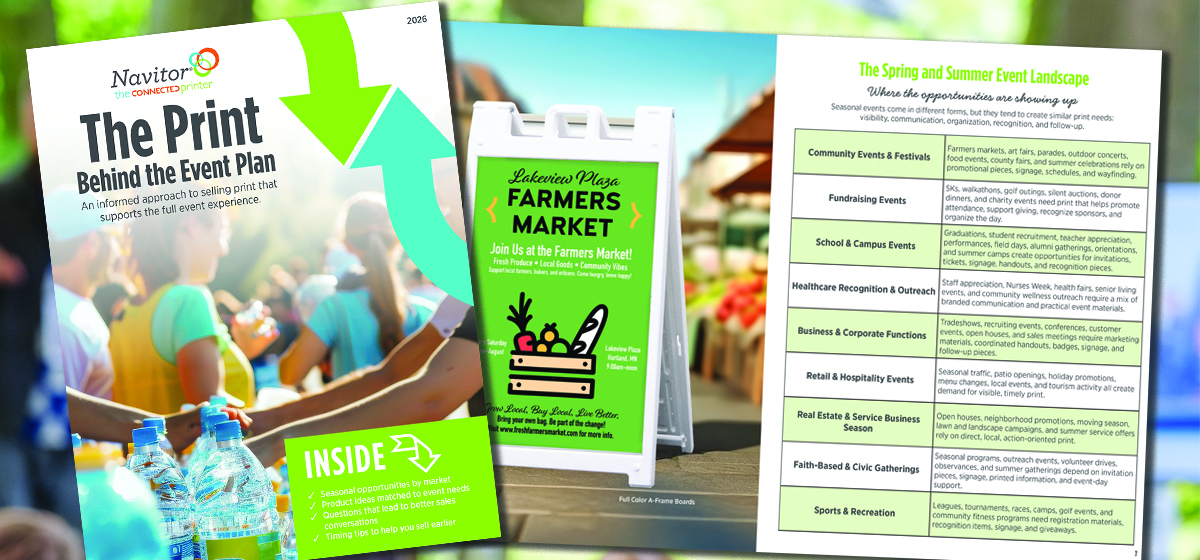
The Print Behind the Event Plan highlights seasonal events, meetings, celebrations, promotions, fundraisers, and other occasions that can create print opportunities throughout the year.

Explore the Event Guide

DURING: Help the Experience Work

Once attendees arrive, print takes on a different role.

Now it can help people know where to go, what to notice, who they are talking to, and what to do next.

That creates opportunities across several print categories:

Instead of thinking only about how the event should look, think about how it needs to function.

The best event print isn’t just decoration. It gives people cues about where to go, what to notice, and what to do next.

Ask customers:

  • How will attendees know where to enter?
  • Do guests need directional signage?
  • What information should be visible throughout the event?
  • Do employees, volunteers, or attendees need identification?
  • What will people pick up or take with them?
  • Will products, gifts, samples, or giveaways be involved?
  • Are sponsors or partners being recognized?
  • Is there a message that needs to carry through several areas of the event?

Those questions can expose needs that never surfaced in the initial request.
Think Beyond the Banner

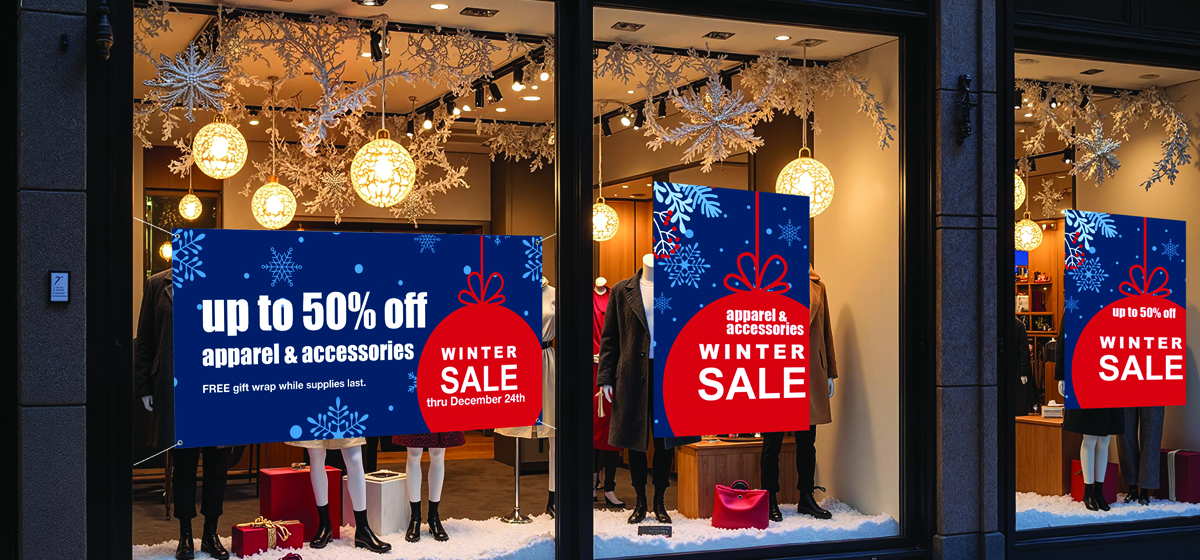
Imagine a retailer calls asking for a banner for a holiday open house.

That may be the entire job.

But a few questions might reveal the event also needs:

Before:
Postcards announcing the date
Posters promoting it in the store

During:
An A-frame sign outside
Table tents highlighting specials
Labels for packaged giveaways

After:
A thank-you postcard with a follow-up offer

Nothing about that conversation requires pushing products the customer doesn’t need.

You simply considered the full customer journey.

That same thinking works across many fall and holiday events.

Fall Fundraiser

Before: Flyers, posters, event tickets
During: Banners, directional signs, name badges
After: Donor thank-you materials, donation envelopes

Employee Holiday Celebration

Before: Announcements or invitations
During: Custom napkins, event programs, signage, branded promo items
After: Employee appreciation gifts

Holiday Market or Pop-Up

Before: Flyers, posters, postcards
During: A-frame signs, banners, labels, hang tags, packaging
After: A postcard or rack card promoting online shopping or a future offer

Customer Appreciation Event

Before: Invitations or postcards
During: Signage, table materials, branded packaging or giveaways
After: Thank-you cards and follow-up offers

One event. Several moments. Several different jobs for print.

Planning for Holiday Events?

Fall often moves quickly into year-end promotions, customer celebrations, employee events, seasonal retail activity, and holiday gatherings.

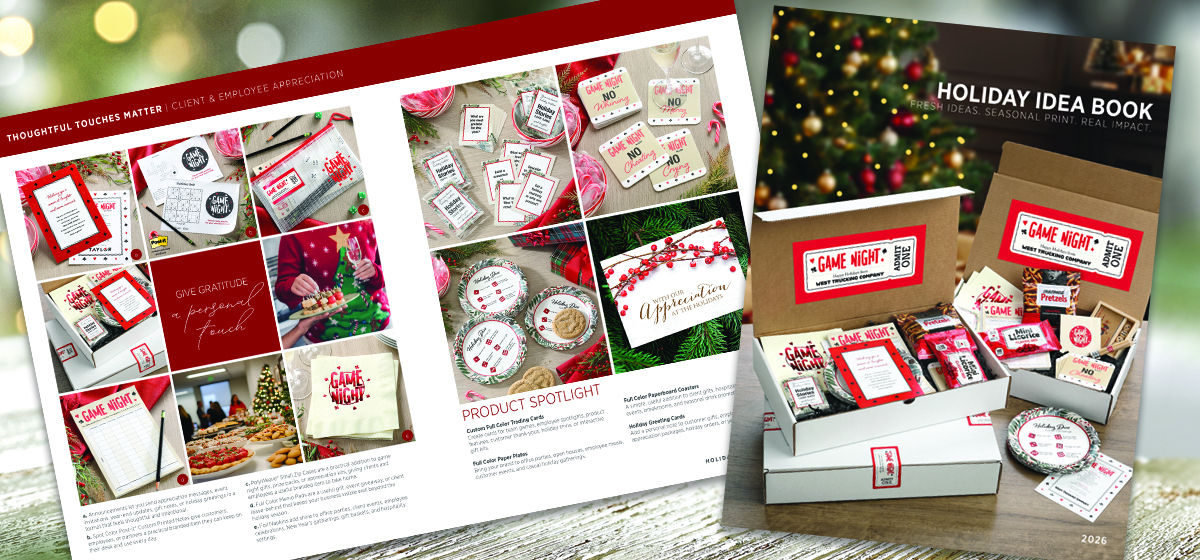
Once you identify the event opportunity, Navitor’s Holiday Idea Book can help spark ideas for product applications that fit the occasion – from promotional print and signage to labels, packaging, branded materials, and customer communications.

Explore the Holiday Idea Book

The two resources work especially well together:

The Event Guide helps you spot the opportunity.
The Holiday Idea Book helps you picture what can support it.

Your job is to connect the dots.
AFTER: Keep the Connection Going

This is one of the easiest stages to overlook.

The event ends. That doesn’t always mean the communication should.

Customers may want to thank attendees, follow up with prospects, extend an offer, provide additional information, or begin promoting the next event.

Potential print applications include:

Ask:

  • What should happen after someone attends?
  • Does the customer want to thank them?
  • Are leads being followed up with?
  • Is there an offer that can extend beyond the event itself?
  • Will attendees receive additional materials?
  • Is another event already on the calendar?

That final question is especially important.

The “after” stage of one event can become the “before” stage of the next.

A holiday open house may lead to a January promotion. A fundraiser may become an annual event. A conference may create follow-up meetings. A customer appreciation event may generate new sales conversations.

This is where event-related print can move from an isolated order to a recurring opportunity.

Five Questions That Can Reveal the Whole Event

The next time a customer mentions an event, try moving beyond:

“What do you need printed?”

Ask:

  1. How are people hearing about the event?
  2. What needs to happen when they arrive?
  3. What will they interact with while they are there?
  4. What will they take with them?
  5. How will you follow up afterward?

Those five questions can provide a much clearer picture of what the event actually requires.

And they position you differently.

You’re not simply quoting a banner, ticket, postcard, or sign.

You’re helping the customer think through the event.
One Event Can Open More Than One Door

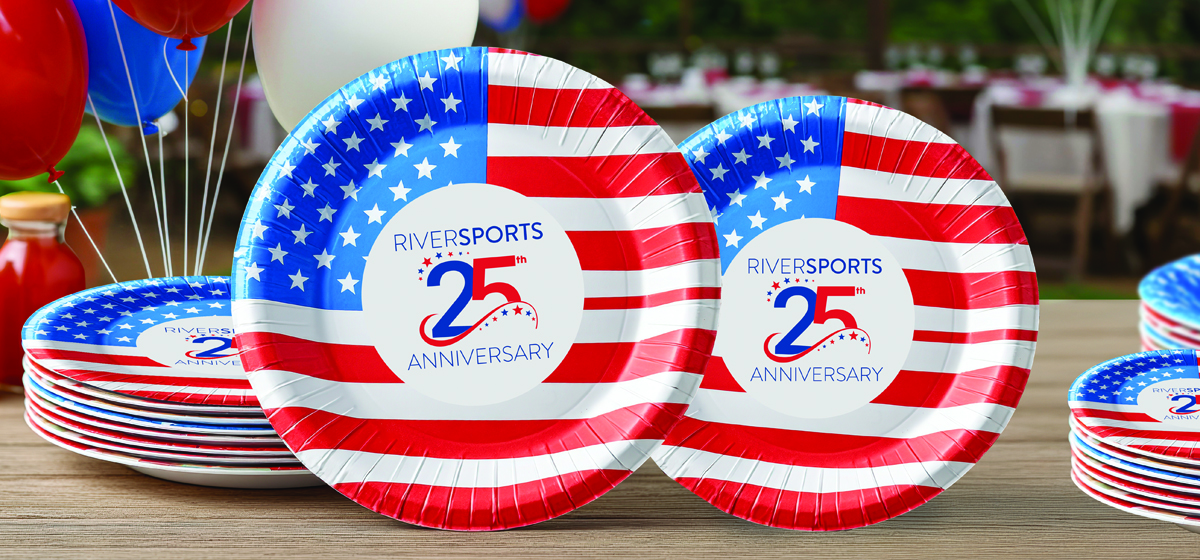
Events create concentrated moments when businesses need to attract attention, communicate information, reinforce their brand, guide people through an experience, and keep the connection going afterward.

Print can support every stage.

For you, the opportunity isn’t to squeeze more products into every event order. It’s to recognize when the customer has described only one part of the need.

So the next time someone calls asking for a single event piece, consider one more question:

“What else is happening around the event?”

Then think:

Before. During. After.

You may find that the print opportunity is much bigger than the event itself.


One School. Many Buyers. Year-Round Print Opportunity.

Back-to-school may receive top billing, but it represents only one part of the education print calendar. For distributors interested in selling print to schools, that makes education a year-round market – not a one-season opportunity.

Throughout the year, schools communicate with prospective students, current students, families, faculty, staff, alumni, donors, and community members. They recruit, welcome, inform, direct, promote, fundraise, recognize, and celebrate – and nearly every one of those activities creates a need for print.

For you, the opportunity is significant. The United States has approximately 99,300 public schools and 29,700 private schools, along with thousands of colleges, universities, technical schools, and other postsecondary institutions.

Yet the number of institutions tells only part of the story. The greater opportunity is found inside them.

How to Find More Print Business Inside Every Education Account

It’s easy to think of a school, district, college, or university as a single account. In practice, each may contain numerous departments, organizations, and decision-makers with their own audiences, objectives, budgets, and deadlines.

Within a K–12 account, potential buyers may include:

  • District administration and communications
  • Individual school offices
  • Athletics and extracurricular programs
  • Parent organizations and school foundations
  • Performing arts departments
  • Food service and transportation
  • Fundraising committees
  • Summer and community education programs

A college or university can open even more doors:

  • Admissions and enrollment
  • Orientation and student services
  • Academic departments
  • Athletics and student organizations
  • Campus events and conferences
  • Housing and dining
  • Alumni relations
  • Advancement and development
  • Continuing education
  • Facilities and campus operations

An existing relationship with one contact can become an introduction to several others. The reseller who supplies folders for admissions, for example, may also be able to help orientation prepare welcome materials, athletics promote upcoming events, and advancement coordinate a donor mailing.

The key is to stop asking, “What can I sell this school?” and start asking, “Who does this institution need to reach next – and what are they trying to accomplish?

Connect Print to the Institution’s Objective

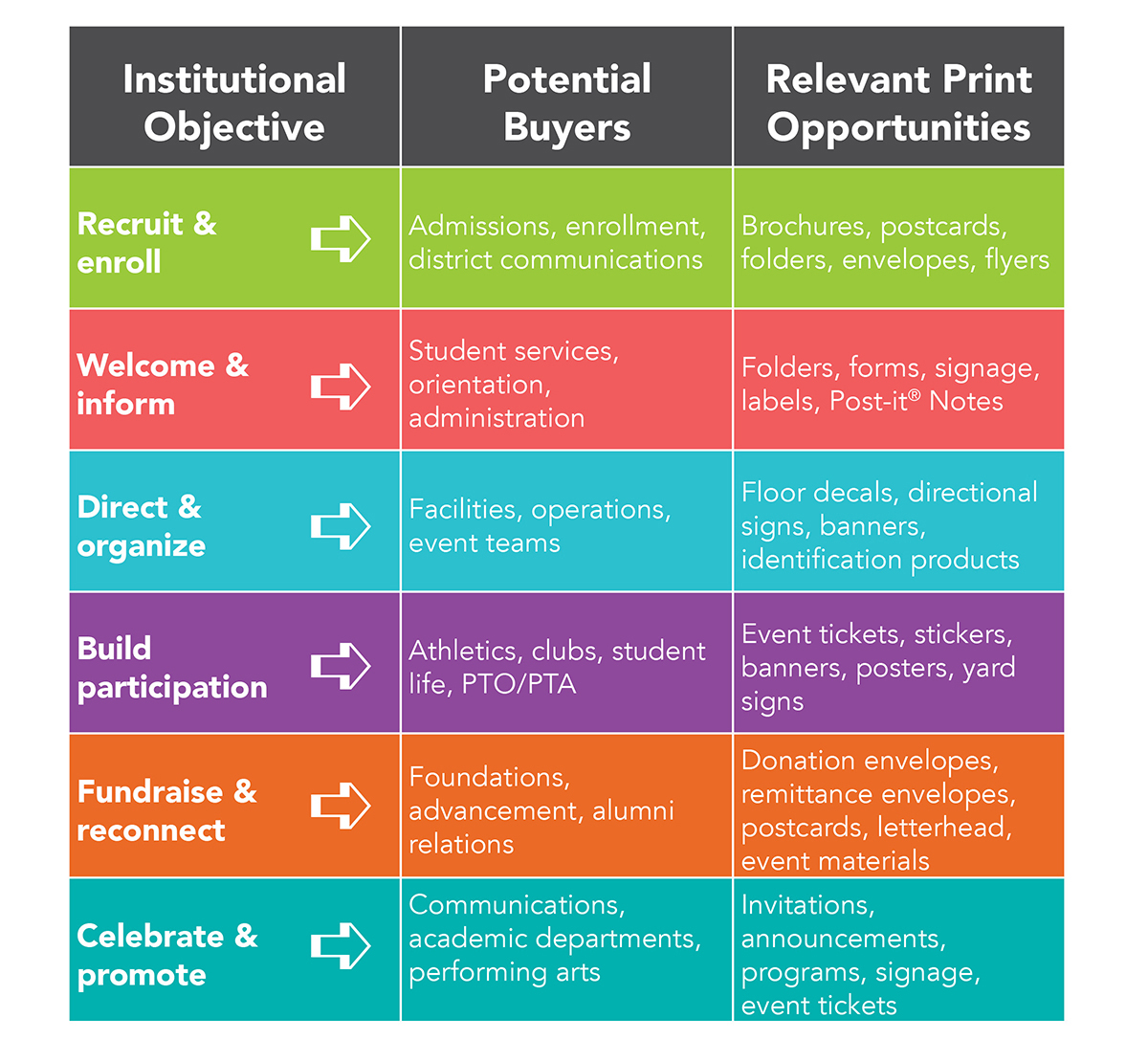
Education buyers are rarely looking for print simply for the sake of print. They’re trying to recruit students, communicate information, increase attendance, guide visitors, raise funds, or strengthen a connection with their community.

Leading with that objective makes the sales conversation more relevant – and often reveals a larger, coordinated opportunity.

Recruit and enroll

Admissions and enrollment teams may need brochures, postcards, flyers, presentation folders, envelopes, and event signage to reach prospective students and guide them through the decision process.

Instead of quoting one brochure, ask how the school communicates before and after a campus visit. A recruitment campaign might include an introductory postcard, program brochure, information folder, promotional products, and signage for an admissions event.

Welcome and inform

Student services, orientation teams, school offices, and academic departments continually share instructions, schedules, policies, and resources.

Folders can organize orientation materials. Forms and envelopes support administrative communication. Labels help identify materials and manage supplies. Post-it® Notes offer a useful branded item for students, teachers, faculty, and staff.

Direct and organize

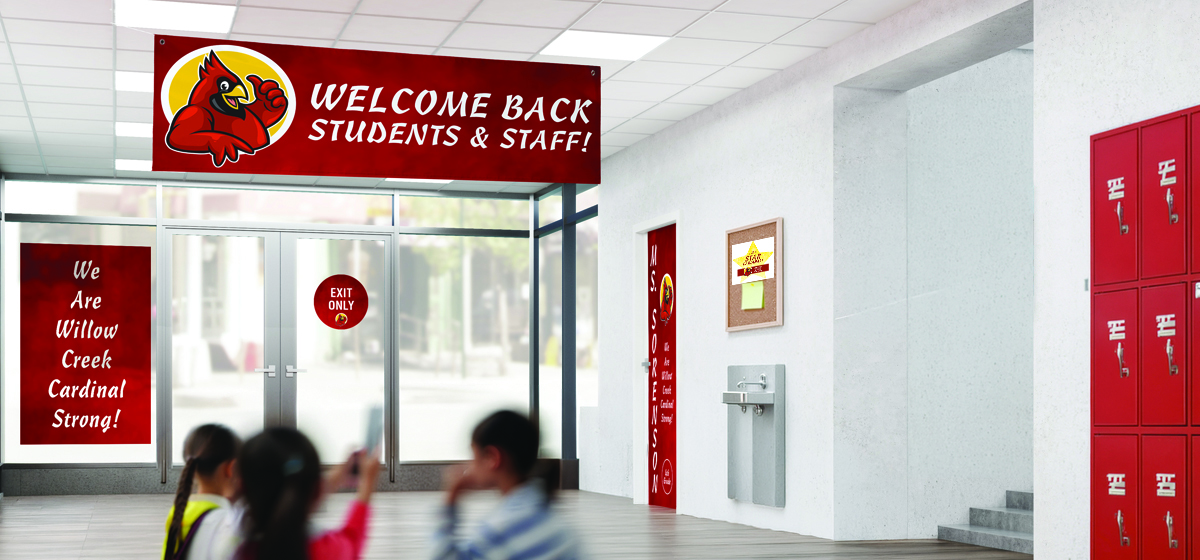
Schools and campuses are busy physical environments. Students, families, visitors, and employees need to know where to go and what to do when they arrive.

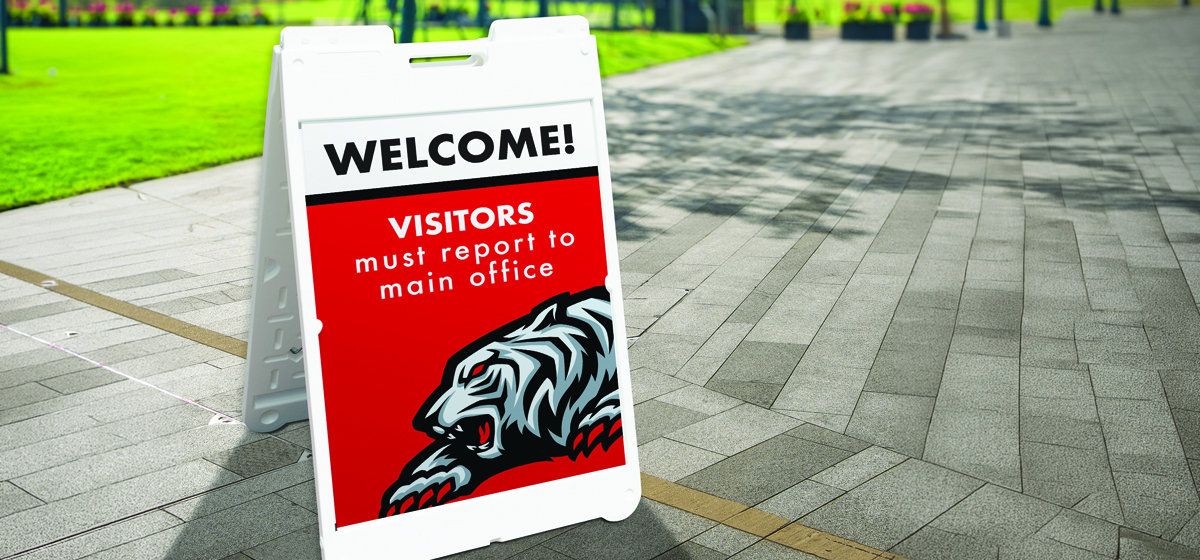
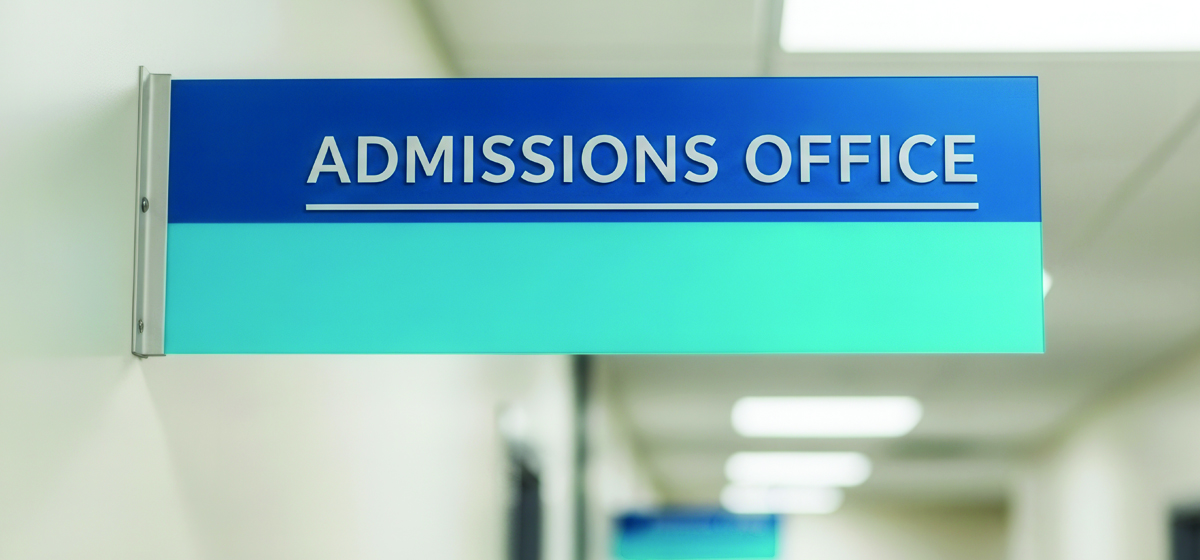
Floor decals, banners, posters, and directional signs can support registration, campus tours, conferences, athletic events, performances, graduations, and everyday navigation.

Encourage participation

Athletics, student organizations, performing arts programs, clubs, and parent groups depend on participation from students, families, and the surrounding community.

Postcards, flyers, posters, banners, decals, bumper stickers, yard signs, calendar cards, and event tickets can help promote activities, manage attendance, recognize sponsors, and encourage school pride.

Fundraise and reconnect

K–12 foundations, parent groups, advancement teams, and alumni departments rely on communication to maintain relationships and generate support.

Donation and remittance envelopes, custom letterhead, postcards, event invitations, and supporting campaign materials can work together to make an appeal more visible, personal, and easy to respond to.

A product request may be the starting point, but the institution’s objective reveals the full campaign.

education print products

Beyond Back-to-School: Education Print Sales Follow a Year-Round Calendar

Distributors who contact education customers only before the first day of school miss much of the market.

Schools have recurring communication needs across every season:

  • Summer: Registration, orientation, enrollment communication, classroom preparation, campus updates, back-to-school events, and new signage
  • Fall: Athletics, homecoming, parent events, student activities, performances, fundraisers, and annual giving
  • Winter: Admissions recruitment, course registration, conferences, recognition programs, indoor events, and spring planning
  • Spring: Graduation, alumni events, donor outreach, summer-program promotion, year-end fundraising, and enrollment for the coming year

The most effective outreach starts well before the event. Review school and campus calendars, identify what’s approaching, and work backward from the date the materials will be needed.

A spring graduation project may require a conversation during winter. Fall recruitment materials may be planned during summer. Annual campaigns often return at roughly the same time each year.

Once a recurring need is identified, record the likely reorder date and follow up before planning begins again.

Learn How the Institution Buys

The opportunity may be broad, but education purchasing can be structured. Before recommending products, learn how decisions are made.

Ask:

  • Is purchasing centralized through a district or institutional office?
  • Can individual schools or departments manage their own budgets?
  • Do we need to complete a vendor-registration process?
  • Who requests the materials?
  • Who approves the artwork and expense?
  • Who ultimately places the order?
  • Are there brand standards that every department must follow?
  • When does the budget year begin or end?
  • Which projects repeat each semester or school year?

One especially useful question is: “Who else is involved in approving, ordering, or using these materials?” The answer may uncover an additional decision-maker, a different department, or an opportunity to coordinate several related pieces.

Understanding the process also helps you provide greater value. Education customers often appreciate help maintaining consistency, selecting practical specifications, meeting firm event dates, and preparing repeat orders without starting over each time.

Try the 10-3-90 Education Plan

The education market can feel enormous. A simple prospecting framework makes it manageable.

Choose 10 institutions

Identify 10 schools, districts, colleges, universities, prep schools, charter schools, technical schools, or community education organizations in your market.

These could include current customers as well as prospects. An existing customer may provide the fastest opportunity because you already have a relationship and order history.

Find three potential buying groups in each

Research the institution’s website, staff directory, event calendar, news, and social channels. Select at least three departments or organizations that regularly communicate with students, families, alumni, donors, or the public.

For example:

  • Admissions
  • Athletics
  • Student services
  • Advancement
  • Performing arts
  • Parent organizations
  • Continuing education

Ten institutions multiplied by three buying groups creates 30 focused opportunities – without requiring a massive prospecting list.

Look ahead 90 days

Review what each institution has scheduled during the next three months. Look for enrollment events, performances, fundraisers, athletics, orientation, conferences, parent programs, alumni gatherings, or graduation activities.

Then choose one timely objective and suggest a coordinated group of products that can support it.

For each opportunity:

  1. Identify the audience and desired response.
  2. Recommend two or three complementary print products.
  3. Contact the appropriate department before its planning deadline.
  4. Ask about related events or communication needs.
  5. Record the likely reorder date.

The goal isn’t to pitch every available product at once. It’s to begin one relevant conversation, complete the project successfully, and use what you learn to find the next opportunity.

Start Mapping Your Education Accounts

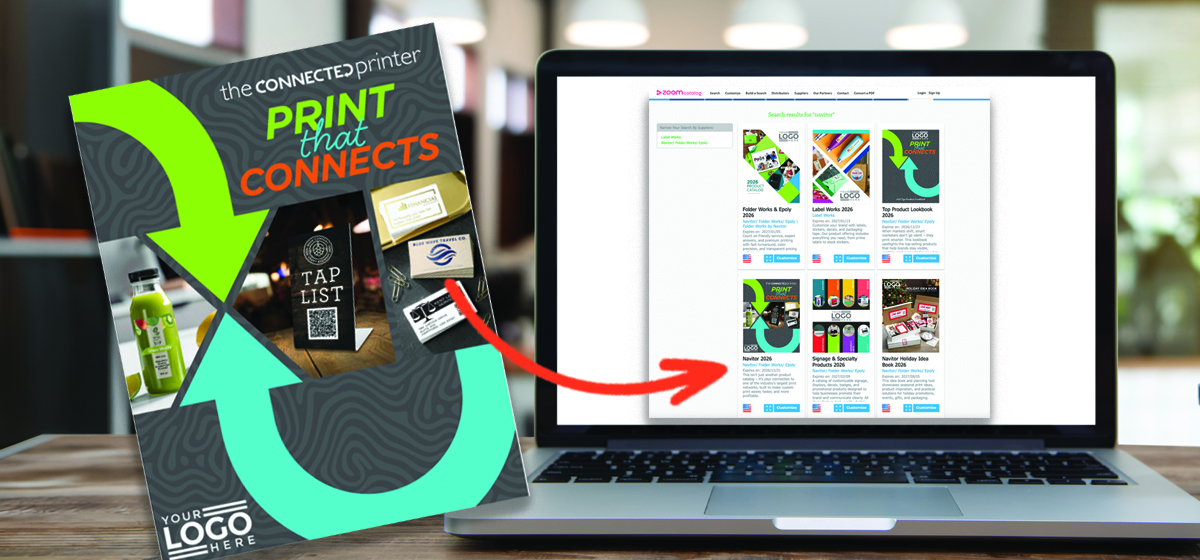
More departments = more needs = more opportunity for you. Navitor’s Education Products page brings together print ideas for both K–12 and higher education. You can also download separate K–12 and Higher Education flyers to guide prospecting conversations and introduce customers to additional possibilities.

Choose one nearby education account. Identify three departments. Look at what’s coming up on the calendar. Then start with the department that has the clearest need and the nearest deadline.

Education never stops communicating. Neither does its need for print. The next education order may already be on the calendar. You simply need to find the person planning it.

Explore Top-Selling Products for Education


How to Turn a Customized Digital Catalog into a Year-Round Sales Tool

A customer may know you for Business Cards but not realize you can also help with Labels, Packaging, Folders, Signs, Event Tickets, or holiday print. That gap represents an opportunity – and a customized digital catalog can help you close … [Continue reading]

5 Print Staples Retailers and Small Businesses Keep Coming Back For

Retailers and small businesses don’t usually wake up thinking, “We should order more print today.” They realize they have a new employee who needs business cards. A seasonal promotion that needs to be announced. A product that needs a label. An … [Continue reading]

The Idea Book That Helps Customers See the Whole Season

The holiday season has a way of arriving early. Retail displays appear before the weather changes. Restaurants start planning seasonal menus while customers are still enjoying summer. Nonprofits begin mapping out year-end giving campaigns months … [Continue reading]

Selling Print Like a Problem-Solver

Consultative selling gets talked about a lot, but the idea is simple: instead of reacting to the order in front of you, you ask better questions, look at the bigger picture, and recommend print based on what the customer is trying to … [Continue reading]

How to Identify Your Target Market in 6 Easy Steps

Most resellers can sell print to almost any business.  That’s both the opportunity and the trap.  When your product mix includes business cards, envelopes, labels, folders, forms, signs, banners, badges, stamps, decals, marketing materials, … [Continue reading]

Not All Labels Are Created for the Same Job

When a customer says, “I need labels,” the best next question isn’t “What size?” It’s: “What does the label need to do?” Because “labels” can mean a lot of things. A barcode label in a warehouse has a very different job than a foil stamped … [Continue reading]

Our History: How Navitor Came to Be

Every company has its unique story and history that shapes who they are, how they operate, and what they value. Navitor is no exception. As a recognized leader in wholesale printing, we are often asked: Who is Navitor? Where does the name … [Continue reading]

Spring and Summer Events: How to Solve More Customer Needs

Spring and summer event season creates a familiar kind of pressure. Deadlines get tighter. Calendars get fuller. Customers start juggling attendance goals, signage, schedules, sponsorships, registration materials, promotions, and follow-up – often … [Continue reading]