
Margin doesn’t come from a product. It comes from the conditions around it.
Most low-margin deals share a common trait: the customer can compare your quote to a dozen others in about 30 seconds.
Higher-margin categories tend to hold margin because there are more variables, more advisor value, and more ways to build a managed system around the purchase.
The five conditions that typically create higher reseller margin
Higher margin usually shows up when one or more of these are true:
- The item is harder to compare across suppliers (less price transparency)
- The job includes complexity (materials, finishing, compliance, installation)
- The reseller adds management value (proofing, kitting, versioning, logistics)
- Turnaround speed matters (customers pay for urgency)
- The product is operationally critical (downtime or errors have real cost)
That list is the real product. Your job is to sell those conditions on purpose.
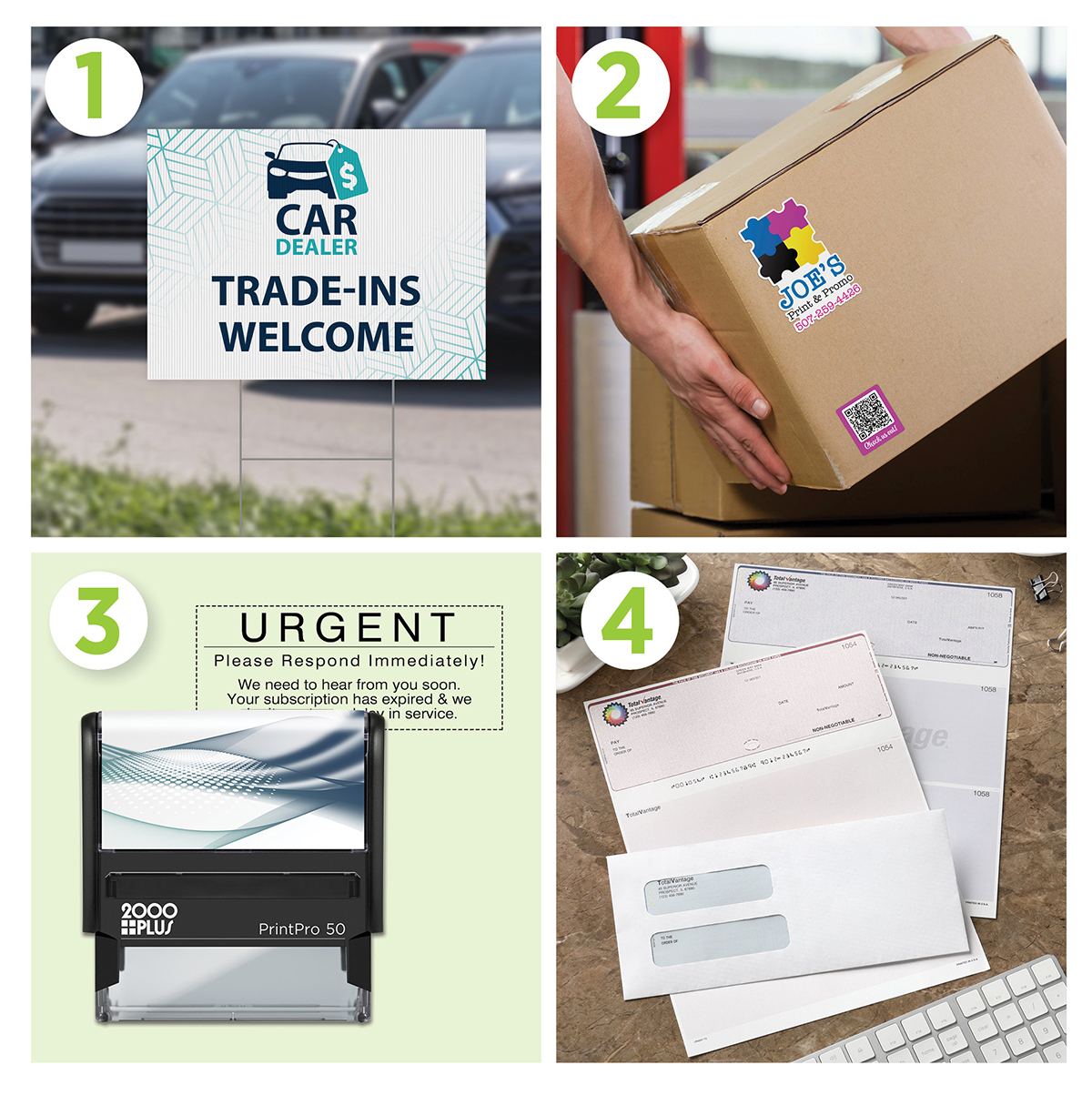 Margin ranking (highest to lowest) – and what to sell instead of “the item”
1. Signs & Banners
Why they hold margin: perceived value + variables like substrates, finishing, compliance needs, deadlines, sometimes installation – which reduces apples-to-apples comparisons and rewards expertise.
Sell the system: “signage standards + refresh cycles + rollout by location.”
2. Labels
Why they hold margin: packaging-like complexity – material and adhesive selection, durability, regulatory requirements, SKU versioning, short-run campaigns, frequent refresh cycles. Advisory selling protects margin.
Sell the system: “label architecture by SKU + change management + reorder rules.”
3. Stamps & Daters
Why they hold margin: low cost of goods relative to daily operational value, less price shopping, strong bundling potential with forms and workflows.
Sell the system: “workflow control kit – receiving, approvals, QA.”
4. Checks & Forms
Why they hold margin: security features and fraud-prevention needs create defensible value; margin improves when positioned around controls, compatibility, and governance.
Sell the system: “secure issuance program – standards, controls, replenishment.”
5. Folders
Why they hold margin: basic folders get shopped, but margin rises with finishing and structure (custom pockets, die-cuts, specialty stocks, inserts, personalization, enhancements). Best play is a presentation system, not a folder.
Sell the system: “value add – version, print, embellish, ship, repeat.”
6. Envelopes
Why they hold margin: plain envelopes are competitive; margin improves with specialty features like custom sizing, windows, security tinting, variable data, and fast-turn mailing requirements.
Sell the system: “mail and notice programs – templates, data, timing.”
7. Marketing Materials
Why they hold margin: commodity pieces are price-sensitive; margin improves with services like versioning, variable data, versatile formats, portal ordering, bundled campaign management.
Sell the system: “campaign program – version sets + ordering controls.”
8. Business Cards
Why they hold margin: highly commoditized; margin is protected by premium construction, color consistency, premium finishes, multi-employee kits, identity-system bundles.
Sell the system: “brand identity rollout – onboarding kits + consistency.”
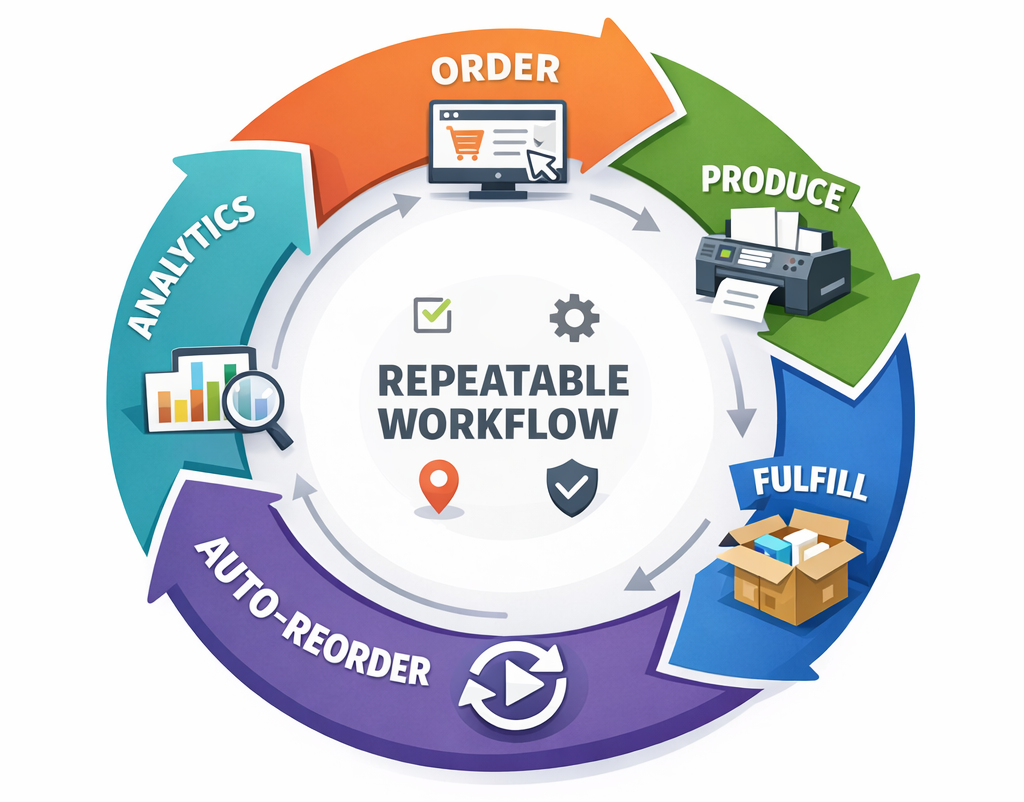
Print That Runs Itself
Tech and integration is the “system layer” that makes print harder to replace and easier to keep buying. When a customer orders through an integrated eStore or Print on Demand workflow, you’re no longer just fulfilling a job – you’re helping them control a process: approved templates, correct specs, role-based access, location-level versioning, and a repeatable reorder path. That reduces errors, cuts back-and-forth, and keeps brand and compliance standards consistent across teams and locations.
It also makes the account stickier because switching vendors means rebuilding the entire ordering ecosystem, not just re-quoting a product. From a margin standpoint, integrated ordering supports higher-value services that customers will pay for: setup and onboarding, template governance, version management, kitting/fulfillment rules, and ongoing program maintenance – while the steady reorder flow improves operational efficiency and reduces time spent on low-value quote churn.
The practical takeaway
If you sell “a sign,” you’ll get shopped. If you sell “the signage program” (standards, refresh cycles, rollouts, controls), price becomes less of the conversation. That same pattern applies across every category.
Looking for an easy margin move? Pick one category you already sell and add one “system layer” this month: versioning, kitting, ordering controls, or a refresh cadence.
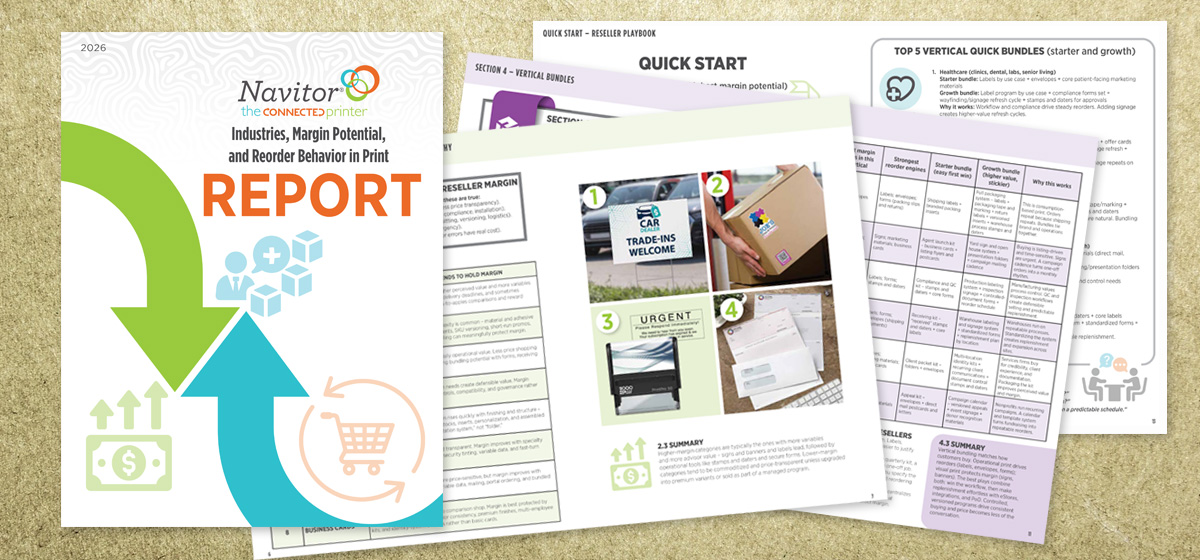
Want the full breakdown?
Get the complete Industries, Margin Potential, and Reorder Behavior in Print report for the full industry-by-product map, margin rankings, reorder insights, and vertical bundle playbooks – designed to help you prioritize what to sell first, what to do next, and what has the most potential to turn into repeatable programs.
 About Julie Carlson-Kulla