
The fastest way to sell print is to stop guessing who buys what
Are you selling print as a single solution set across multiple industries? You might be making your life harder than it needs to be. Different industries buy different categories for different reasons – and when you match the product to the industry’s buying trigger, the conversation gets simpler and the close rate goes up.
Below is a reference map of who buys the core categories most often, what typically prompts the purchase, and the best way to position it in the sale.

Business Cards – bought by relationship-driven industries
Primary buying industries
Real estate; financial services; creative services
Other common buyers
Professional services (legal, consulting, insurance); healthcare practices; home services; hospitality; construction trades
Typical triggers
New hires and role changes; team growth; brand refresh; events and networking; multi-location standardization
How to sell them
Lead with staffing churn and team growth. Then attach an “identity kit” mindset (new hire packs, multi-location consistency, role-based versions).

Envelopes – bought by operations-heavy industries
Primary buying industries
E-commerce and retail; logistics and shipping; healthcare
Other common buyers
Banking and financial services; insurance; education; government and public sector; legal services; utilities and telecom; nonprofits
Typical triggers
Shipping and returns; statements and notices; donor mail; compliance mailings; the need for custom windows, security tinting, and variable data addressing.
How to sell them
Ask one operational question: “What do you send every week?” If they answer anything recurring (bills, notices, returns), you’re in reorder territory.

Marketing Materials (brochures, postcards, flyers, door hangers, etc.) – bought by industries that market programs
Primary buying industries
Banking and financial services; education; government; healthcare; retail and e-commerce
Other common buyers
Hospitality; real estate; nonprofits; events; B2B manufacturing and distributors
Typical triggers
Campaigns and promotions; recruitment and enrollment; awareness and fundraising; service line marketing; store and location marketing; trade shows
How to sell them
Don’t sell “a brochure.” Sell a campaign cadence (monthly, quarterly, seasonal) with versioning by location, audience, or offer.

Folders – bought when they need to look organized fast
Primary buying industries
Real estate; education; finance; healthcare; corporate organizations
Other common buyers
Legal firms; insurance agencies; local government offices; nonprofits/associations; manufacturers; hospitality/event venues; construction; auto dealerships
Typical triggers
Proposals and sales presentations; enrollment/admissions packets; patient intake and financial packets; conference handouts; leave-behind kits; training/events; onboarding and new employee kits
How to sell them
Position as a “packet system” (folder + inserts + versioning), not a standalone product.

Labels – bought by industries with inventory, compliance, and packaging realities
Primary buying industries
Food and beverage; retail; pharmaceuticals
Other common buyers
Logistics and warehousing; consumer packaged goods; industrial and chemical; health and beauty
Typical triggers
Packaging and branding; compliance labeling; ingredients and warnings; SKU expansion and versioning; short-run campaigns; inventory and warehouse identification; anti-counterfeit and track-and-trace
How to sell them
Win one label use case (shipping, product, compliance, warehouse), then expand into a labeled “system” across SKUs and locations.

Signs & Banners – bought by industries that change environments
Primary buying industries
Retail; real estate; transportation
Other common buyers
Hospitality; entertainment; healthcare; banking and financial services; education; government and public sector; construction and trades; manufacturing
Typical triggers
Promotions and seasonal campaigns; events and pop-ups; grand openings; regulatory and wayfinding signage; brand refreshes; site and job signage
How to sell them
Ask what changes by season, event, location, or regulation. That’s where signage refresh cycles come from.
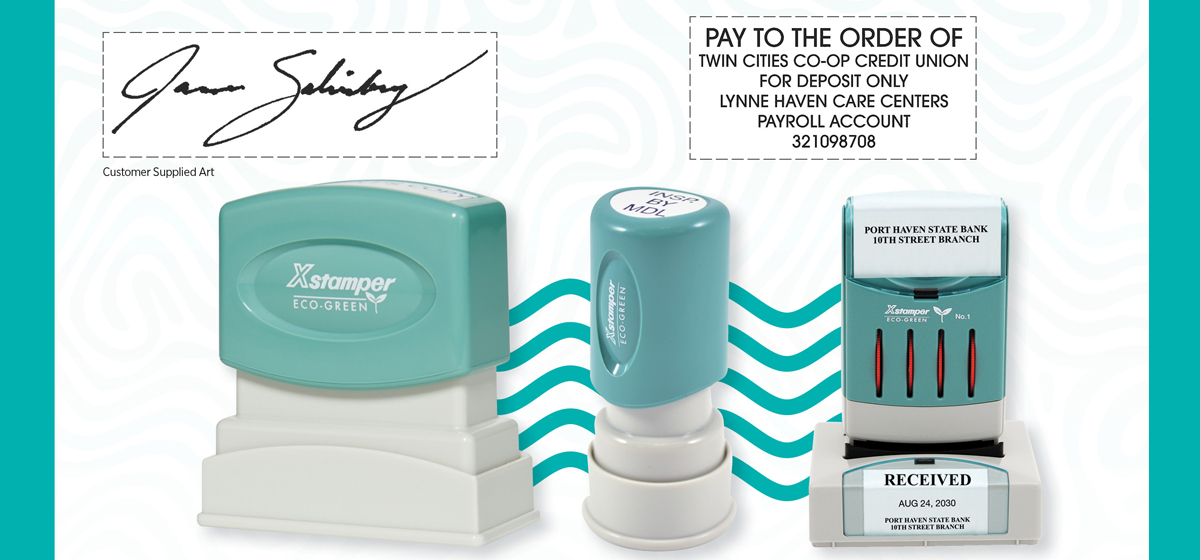
Stamps & Daters – bought by process-driven industries
Primary buying industries
Healthcare and medical device; manufacturing and industrial; legal services and notary
Other common buyers
Warehousing and logistics; government and public sector; financial services; food and beverage; construction and building services; education; retail
Typical triggers
Receiving and processing workflows; approvals and document control; QA and compliance; date tracking; standardization across departments
How to sell them
Tie to workflow control: fewer errors, faster processing, cleaner compliance.

Checks & Forms – bought where controls and documentation matter
Primary buying industries
Banking and financial services; government operations; healthcare; logistics
Other common buyers
Employers running payroll; title and mortgage/closing; any organization issuing payments and requiring controls
Typical triggers
Payment issuance; payroll; secure forms and internal controls; multi-location ordering; compliance documentation; process consistency
How to sell them
Lead with governance and compatibility, not “printing.” (More on that in our next blog in the series “Why Some Print Categories Hold Margin and How to Sell Them That Way”.)
 The shortcut: focus on the biggest demand clusters
Most print demand comes from a handful of industries: healthcare, financial services, government, education, retail, real estate, logistics, and e-commerce. A straight-forward rule: these industries buy print primarily for two reasons – marketing impact and operations. When you hear “operations,” think labels, envelopes, forms, stamps. When you hear “impact,” think signage and campaign materials.
If you want the simplest way to apply this industry map, use a two-step plan: land a “first win” that’s easy to justify, then attach the most natural add-on while the buyer is already in motion. The goal is not to sell more stuff. It’s to sell a cleaner system that makes their day easier. Here are examples:
Healthcare
Best first win category: Labels
Why: Labels plug directly into daily workflow – patient and specimen identification, medication labeling, and safety/compliance needs. They’re operational, not optional, and they reorder because they’re consumed and updated.
Easiest add-on: Signs and banners
Why: Once labels are in place, healthcare facilities still need clear wayfinding, safety, and service line signage that changes with departments, events, and compliance requirements. It’s a natural “same building, different need” add-on with strong margin potential.
Financial Services
Best first win category: Envelopes
Why: Financial organizations mail constantly – statements, notices, and member/customer communications. Envelopes are straightforward to spec, easy to reorder, and often tied to recurring cycles.
Easiest add-on: Checks and forms
Why: The minute you’re talking about mail and documents, the conversation naturally extends to secure documents, governance, and control. Checks and forms add defensible value through security features and standardization.
Retail
Best first win category: Signs and banners
Why: Retail lives on change – promotions, seasons, events, and location updates. Signage is visible, time-sensitive, and often needs quick turns, which makes it easier to win early and typically stronger for margin.
Easiest add-on: Labels
Why: Once you’re supporting campaigns with signage, labels are the natural operational companion – product labeling, pricing/markdown, packaging, and SKU changes. They’re also one of the most reliable reorder engines.
Want the full breakdown?
Get the complete Industries, Margin Potential, and Reorder Behavior in Print report for the full industry-by-product map, margin rankings, reorder insights, and vertical bundle playbooks – designed to help you prioritize what to sell first, what to do next, and what has the most potential to turn into repeatable programs.
 About Julie Carlson-Kulla